Posted in Early Reader, Fiction, Preschool Reads

A Horse Named Steve is exceptional!

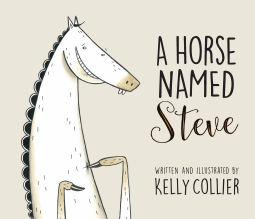
steveA Horse Named Steve, by Kelly Collier, (April 2017, Kids Can Press), $16.95, ISBN: 9781771387361

Recommended for readers 4-8

Steve is a horse that’s just fine as he is, but he thinks he can be better. He wants to be exceptional. He finds a beautiful gold horn lying on the ground in the forest, and that’s it: he’s found the pass to being exceptional! He ties the horn on his head and showboats to all of his woodland friends, who are so taken, they find items to tie on their own heads: sticks, rocks, anything they can find. But Steve accidentally loses his horn – oh no! What’s an exceptional horse to do when he loses his exceptional horn?

A Horse Named Steve is hilarious in its side commentary (notes throughout the book explain words like devastated: “that means really, really bummed”, or refer to his moods: “Mr. Mopeypants”) and its execution of an image-obsessed horse, but kids will get it: it’s not what you wear, or how you look. The commentary adds a little wink, wink, nudge, nudge humor to kids, bringing them in on the joke, and the raccoon that isn’t quite as enamored of Steve gives kids an entry point to a discussion: why doesn’t he think Steve’s so great? Do you think Steve is treating his friends with respect? What really makes our friends special?

Kelly Collier’s two-color ink and watercolor art, finished in Photoshop, is adorable and fun. Steve’s physicality plays up his ego for laughs, and there are visual jokes aplenty, especially when his golden horn slips from on top of his head to under his chin. Playing with fonts brings more humor to the page by emphasizing different words and making Steve’s very name a standout with curlicues and bolding.

You can have a lot of storytime fun with this book: make horns with your readers! For older readers, pair this one with Dr. Seuss’ The Sneetches for a good discussion on the value we place on appearances.
Posted in Animal Fiction, Early Reader, Fiction, Preschool Reads, Toddler Reads

Stanley’s Store Blog Tour!

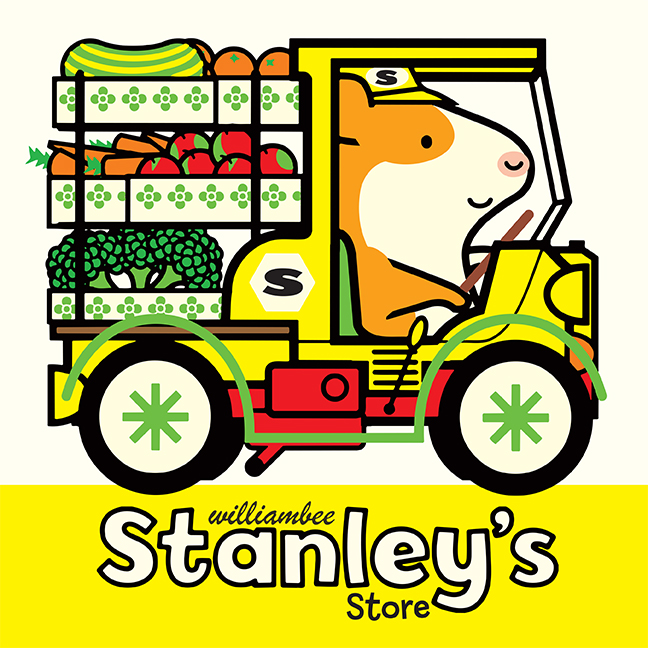
The hardest working hamster in town is back in his sixth book, Stanley’s Store (by William Bee, March 2017, Peachtree Publishers, $14.95, ISBN: 978-1-56145-868-4) . It’s a busy day at Stanley’s Store: Stanley’s got to unload fresh fruits and vegetables; Mattie helps customers pick out cheese, and there’s some excitement when Charlie doesn’t know how to control his shopping cart! Stanley’s always there to help, though, and at the end of a busy day, it’s time for him to go home.

stanley

My colleague LOVES Stanley. When we opened this library, she made darned sure we had the full line of Stanley books ready for the kids, so when I told her there was a new book coming out, she was thrilled! I sat down and read the first five books, and they’re adorable. They introduce kids to different careers (builders, business owners – stores and diners, farmers, mechanics, and mailmen) that shape their world, and provide a little look into the events of each job’s day. Stanley’s Store is a good book to read with your child and talk about your experiences at the grocery store; it’s also a good opportunity to point out safety and paying attention, illustrated by Charlie’s mishap. I love Shamus and Little Woo, a father and son duo, whose cart mysteriously fills up with cookies and sweets when Shamus’ back is turned. The story also slips in shape and color awareness, making this a great book for toddler and pre-k audiences.

Play store! Save some packaging and let your kiddos “shop” and create displays! Plastic food is huge with the kids in my library (and with my own kiddos, when they were younger) and is available everywhere. Talk about shapes and colors and talk about what foods are good for you. This could be paired with a fun flannel board activity and there are many food-related songs available to put together a fun storytime and playtime.

Posted in Early Reader, Fiction, Preschool Reads

A bedtime story that you can Whisper

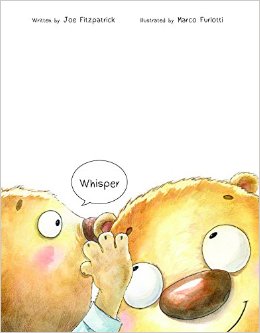
whisperWhisper, by Joe Fitzpatrick/Illustrated by Marco Furlotti, (Sept. 2016, Flowerpot Press), $16.99, ISBN: 9781486709465

Recommended for readers 4-7

A parent and child bear read a special bedtime story together; the little bear lovingly asks for its parent to whisper the story so he’ll listen close, cuddle in, and have more fun. This rhyming story has a quiet cadence to the text that makes for a soothing bedtime read; the little bear’s requests are great for getting little ones corralled and ready for bed. The story encourages a bedtime routine through words and loving illustrations of a caregiver and child cuddling and settling in for the night.

My 4 year-old is normally a wild man by bedtime – especially if there was no nap earlier in the day – and this helped wind him down when I read it. It’s by no means a sleep guarantee, though – we read about 4 books after this one – but it’s a nice way to introduce a nighttime routine. The illustrations are largely close-ups of the bears, heads together, snuggling, making the reader feel like they’re part of the story. Neither grownup nor child is gendered, allowing any child, any caregiver, to identify with the characters. Have your little ones whisper along with you – the word is emphasized with smaller text throughout the book – for a shared reading experience. A sweet bedtime selection.

Posted in Early Reader, Non-Fiction, Non-Fiction, Preschool Reads

Do you like to play? Animals do, too!

animals-doAnimals Do, Too!, by Etta Kaner/Illustated by Marilyn Faucher, (May 2017, Kids Can Press), $16.95, ISBN: 9781771385695

Recommended for ages 4-8

Do you like to dance? Do you like to play leapfrog? Play tag? Well, guess what: animals do, too! This fun book features pictures of families at play on one spread, and a corresponding spread on the next two pages, with a group of animals engaged in the same fun. The alternating question and answer format engages kids right away, and the activities that we humans do for fun, while animals do them to find food and care for their young will spark discussion with young learners.

Animals Do, Too! features animals that differ from the usual farm and jungle animals kids meet in their books. Sure, we’ve got bumblebees and frogs, but we also meet cattle egrets and marmosets, gazelles and leaf-cutter ants. A spread at the back of the book provides fast facts about each animal in the book.

There is some lovely watercolor work here, featuring lovely nature scenes. The families are enjoying one another, and the animals are playful while completing their everyday work. The parallels between humans and animals should engender interest and empathy in kids and will start some great conversations – ask the kids around you to think of animals they see every day: what does a cat do that a person does? (Stretching is a good one!) What does a dog do that a person does? (Jump and play!) You can create matching games that match the activity with the animal, for younger learners; bonus: they get to color.

The question and answer pattern of the text invites kids to interact with the text and gives them a chance to contribute before revealing the answer on the following spread. This is a good additional purchase for nature, life science, and animal collections.

Posted in Early Reader, Non-Fiction, Preschool Reads

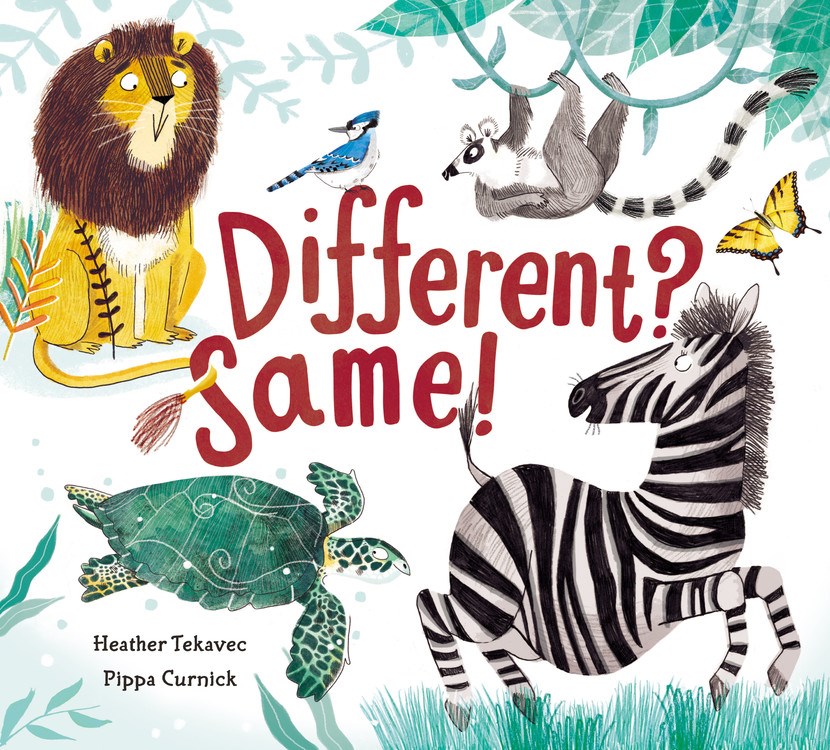
Different? Same! looks at repeating patterns in nature

different-sameDifferent? Same!, by Heather Tekavec/Illustrated by Pippa Curnick, (May 2017, Kids Can Press), 416.95, ISBN: 9781771385657

Recommended for ages 3-6

Zebras gallop, bumblebees fly, lemurs leap, and a tiger prowls, but look closer: they all have STRIPES! Different? Same! celebrates the similarities among animals that would otherwise seem very different. Each spread features a group of animals that mentions a different trait, inviting readers to look closer to find the common characteristic. One animal from the previous spread shows up in each new spread – ask your eagle-eyed readers to spot them! A final spread puts all forty animals together and asks readers to search for animals with specific characteristics: who’s furry? Who would make good pets? Who would you NOT like to touch? Brief paragraphs at the end of the book explain why animals have the characteristics they do.

The digital art is very colorful and cute, creating happy, friendly animals that kids will love. The book is useful when introducing the concept of patterns to young learners and when discussing similarities and differences, which can lead to a talk on a greater scale about diversity; what makes us different, what makes us the same. This is a good additional purchase to concept collections.

Posted in Early Reader, Preschool Reads

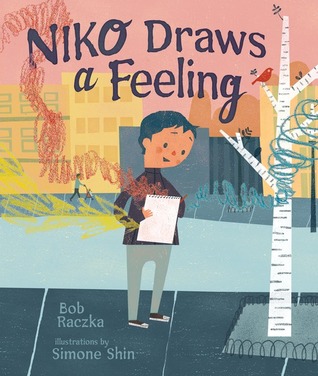
Niko Draws a Feeling: What do you see?

niko-draws-a-feelingNiko Draws a Feeling, by Bob Raczka/Illustrated by Simone Shin, (April 2017, Carolrhoda Books), $17.99, ISBN: 9781467798433

Recommended for ages 4-8

Niko loves to draw the world around him. Everything inspires him, and ideas flow through him, from his brain down to his fingers. He captures feelings, not images: the ring-a-ling of an ice cream truck; the warmth of the sun; the hard work of a mother robin building a next. No one seems to understand Niko. They’re looking for the bell of the truck; the sun and Niko’s face; the mother robin. Niko captures the feelings these things inspire, but no one seems to grasp that, until he meets Iris, a new girl moving into the neighborhood. She understands exactly what he has to say, because she feels, rather than looks.

I adore this book. It reaches in and touches the reader, just like Niko’s drawings. Younger children will appreciate that someone out there understands what they’re trying to communicate, much like Niko and Iris finding one another. Raczka and Shin create a story that relies on feelings and emotions inspired by the world around us, and reminding us that art, like feeling, is abstract, and able to be communicated in many ways. Simone Shin’s mixed media, digital and acrylic paints give us a world that looks like it could have been drawn by Niko himself.

There are so many ways to use this book beyond a simple storytime. Ask kids to draw their own feelings, their own experiences of the world around them. Let them explain what they see, and see it with them. Pair this with Andrew Larsen and Mike Lowery’s A Squiggly Story for a great storytime on self-expression and art.

Bob Raczka is an award-winning children’s author and poet. Simone Shin is an award-winning illustrator.

Posted in Early Reader, Intermediate, Non-Fiction

Wild Animals of the South – beautiful animals, beautiful artwork

wild_1Wild Animals of the South, by Dieter Braun/Translated by Jen Calleja, (March 2017, Nobrow), $35, ISBN: 9781909263970

Recommended for ages 5+

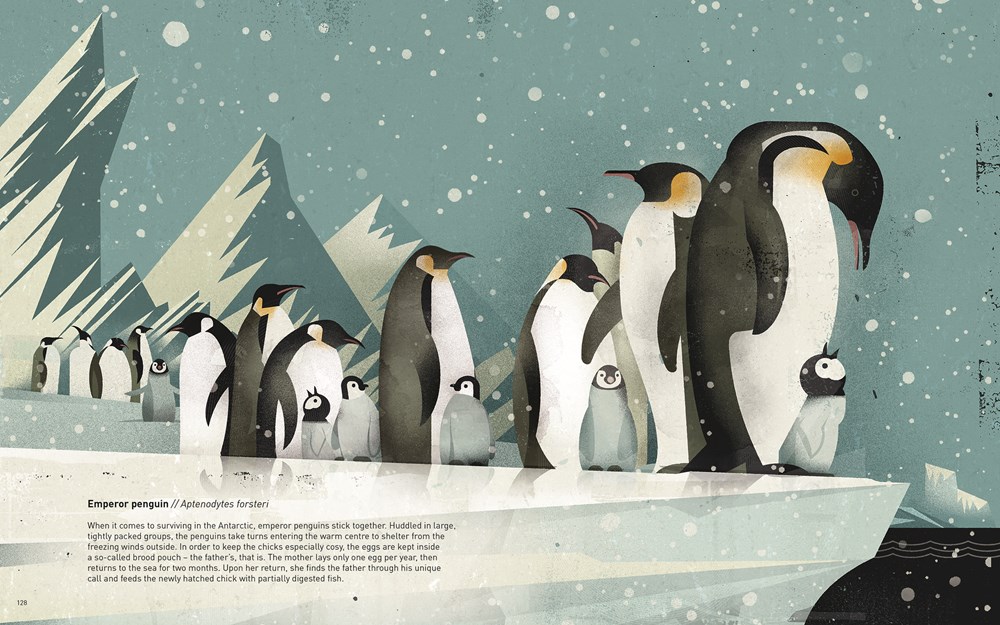
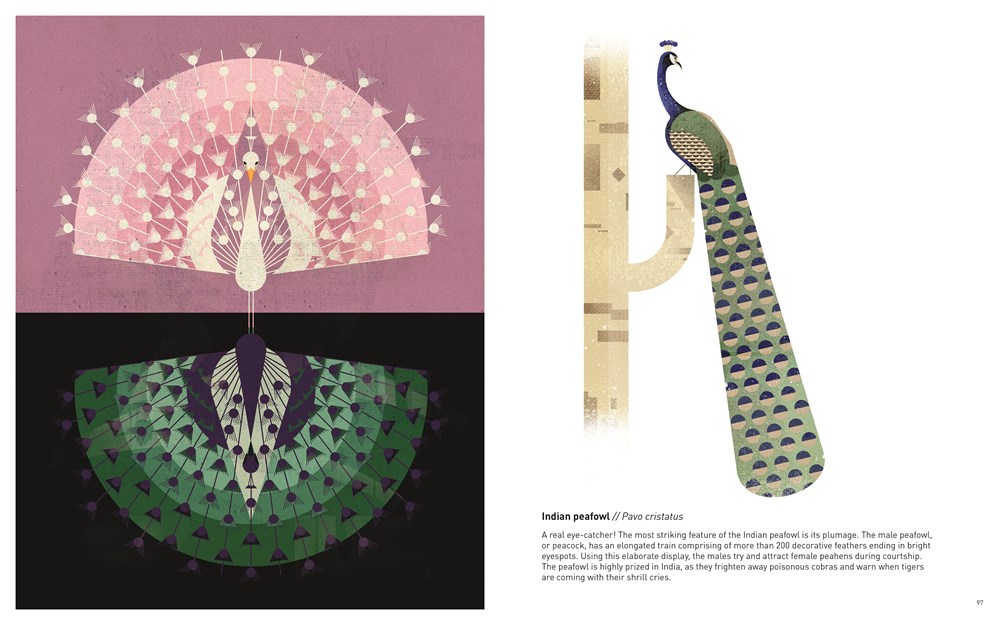
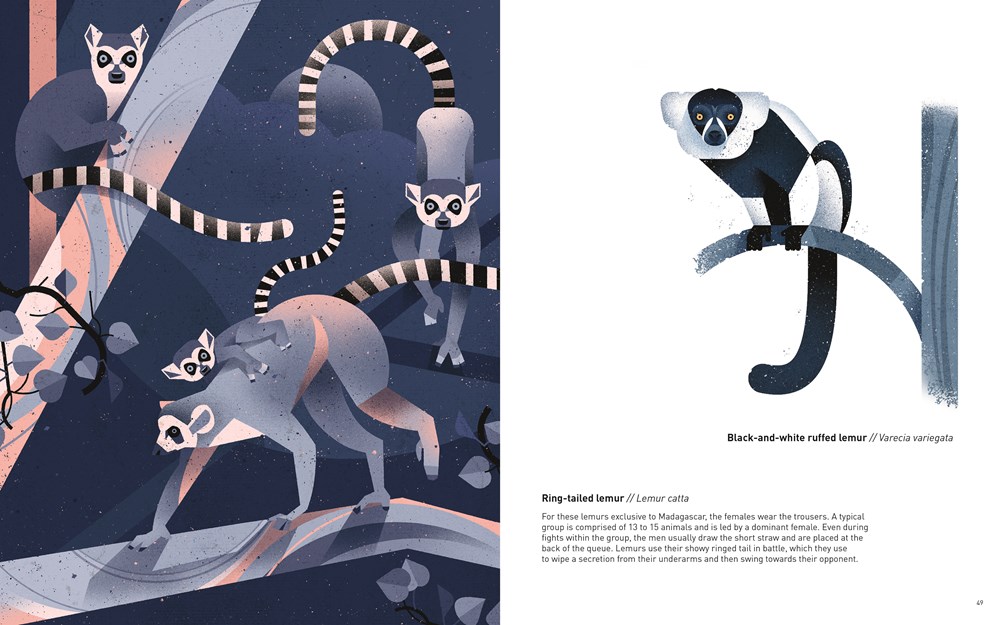
This gorgeous companion to Braun’s Wild Animals of the North (Nobrow, 2016) introduces readers to animals in the Southern hemisphere. Organized by continent: South America, Africa, Asia, Australia, and Antarctica, readers will enjoy the beautiful, colorful illustrations. The emphasis here is on the illustrations, making this a great starter book for younger children; caregivers can read the short passages on featured animals, which offer fun facts. For example, while most know that a male lion’s mane is his crowning glory, did you know that female lions prefer males with more beautiful and lustrous manes? And that other males will hold back when a male with a more impressive mane appears?

The art is stunning. Braun’s illustrations are geometric, with strong lines and rich colors. There is a wry sense of humor in some – the lion’s lush mane, for instance – while others, like the breaching humpback whale, are breathtaking. A waddle of penguins, under a snowy sky, stand in the stark shadow of glaciers. Braun captures habitats with the same beauty the he sees in the animals themselves.

wild_5

The $35 price tag may be a bit steep for some readers, especially those who are looking for more information than artwork (but that’s what libraries are for!), but this book is gorgeous for wildlife lovers and art lovers. For more of Dieter Braun’s illustrations, make sure to visit his website.

wild_4wild_3

wild_2


Posted in Animal Fiction, Early Reader, Fiction, Fiction, Graphic Novels, Intermediate

Narwhal & Jelly: Besties under the sea!

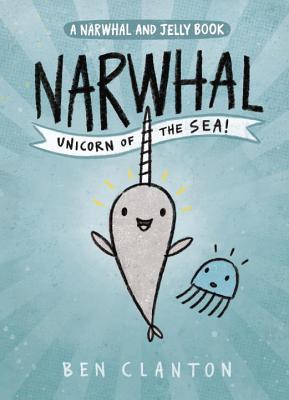
narwhalNarwhal: Unicorn of the Sea, by Ben Clanton, (Dec. 2016, Tundra Books), $7.99, ISBN: 9781101918715

Recommended for ages 5-8

Narwhal is a happy-go-lucky narwhal is a wild imagination. Jelly is… not. That’s okay by Narwhal, they both bond over a mutual love of waffles, parties, and having adventures! Together, the two friends recruit other sea friends into their own little group and read the best book ever – so what if it doesn’t have words or pictures? They have imagination!

This hybrid intermediate novel/graphic novel is perfect for beginning readers (psst… and grown-ups) who love silly jokes, adorable art, and fun. Kids will enjoy this Odd Couple under the sea, and learn that friends don’t have to enjoy all of the same things to get along. The art is squeal-worthy adorable, and the dialogue between the two friends is light and fun. Narwhal: Unicorn of the Sea has hit it big with readers, too: the book has received multiple awards and praise, including a starred Kirkus review, designation as the Best of the Year in 2016 by both Amazon and Kirkus, and was put on the Texas 2×2 Reading List.


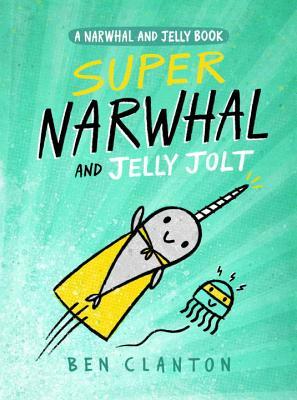
If you lovsupernarwhaled Narwhal’s first book, get ready: Super Narwhal and Jelly Jolt (May 2017, Tundra, $12.99, ISBN: 9781101919194) is coming in May! In their second outing, the two best friends become super heroes – now, if they could just figure out what their powers are… As with the first book, Super Narwhal and Jelly Jolt features three short stories connected by the overall plot thread: in this case, being a superhero and a friend. Friendship, imagination, and self-esteem are enduring themes.

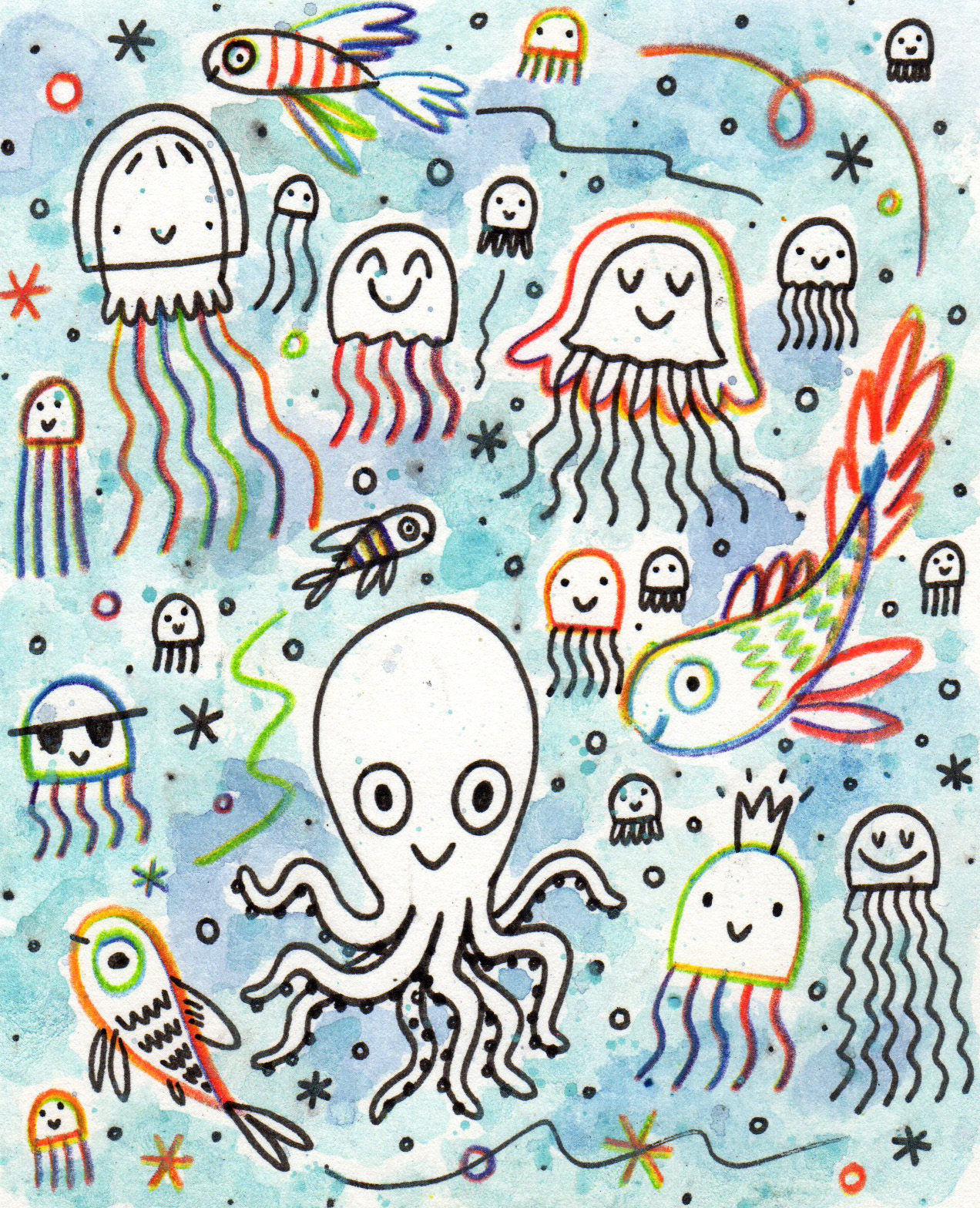
Ben Clanton has some fun extras available online. His website links to his Instagram, if you want to see even more of his art as he posts it; the site hosts his blog, which spotlights even more of his artwork, including this awesome “Jellin'” piece:

jellin

There’s also a Narwhal and Jelly site, with comics, printables, jokes, and early art mock-ups. This is a super-fun set to add to your graphic novels and intermediate books, and you can display with the veritable plethora of narwhal-related books coming out, like Jessie Sima’s Not Quite Narwhal and Wendell the Narwhal by Emily Dove. Make a display and feature some non-fiction narwhal and jellyfish-related books, or get a whole sea life shelf up, featuring fiction and nonfiction for some related reads.

Posted in Early Reader, Fiction, Preschool Reads

A rabbit mother and child find The Way Home in the Night

the_way_home_in_the_nightThe Way Home in the Night, by Akiko Miyakoshi, (Apr. 2017, Kids Can Press), $16.95, ISBN: 9781771386630

Recommended for ages 4-7

A mother bunny carries her little bunny home at night. Narrated in the first person by the young bunny, readers see what he sees from the its vantage point in bunny’s mother’s arms. Shops are closing; phones ring; bunny smells a pie. Neighbors have parties, watch television, and say goodbye, all visible through their open windows. As the father bunny tucks the little one into bed, little bunny wonders about all the neighbors: are the party guests saying goodnight? Is the restaurant cook taking a bath, and is the bookseller reading on the couch?

Children love being out at night. It’s a magical thing; everything looks different. The bunny’s descriptions of the sights, sounds, and smells of night time, carried in mother’s arms, will appeal to readers who have had the same experience. The story also provides an opportunity for interactivity – ask kids to think of a time they, like the bunny, were carried home, and what they remember. Take your own kids outside at night for a walk down the street – what do you see together?

Akiko Miyakoshi’s black and white pencil, charcoal, and acrylic gouache artwork adds gently placed color for emphasis, and the hazy look to the artwork makes the story almost dreamlike; like the young bunny’s sleepy memory. Invite kids to draw their neighborhood at night – what are the neighbors doing? Do they hear cars, people talking, a train rumbling by, a dog bark, or silence?

The Way Home in the Night received a starred review from Publisher’s Weekly. The original Japanese release received a 2016 Bologna Ragazzi Award. Miyakoshi’s first picture book, The Storm (2016), won the Nissan Children’s Storybook and Picture Book Grand Prix.

Posted in Animal Fiction, Early Reader, Fiction, Preschool Reads

Miles McHale, Tattletale teaches the difference between tattling and reporting

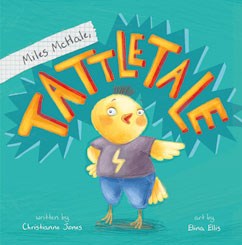
mchaleMiles McHale, Tattletale, by Christianne Jones/Illustrated by Elina Ellis, (March 2017, Capstone), $14.95, ISBN: 9781515807537

Recommended for ages 3-6

Miles McHale is funny, smart, and sweet, but he’s also a tattletale. He tattles all day long, to anyone who will listen. Mrs. Snitcher, Miles’ teacher, decides to seize the teachable moment and decrees a Tattle Battle: two teams, one week, no tattling, and gives them a pledge: “If a friend is sick, hurt, or in harm’s way, then telling someone is okay.” It’s a hard lesson for him to learn, even when his friends stop talking to him over it, but when Miles’ little sister gets hurt, it’s up to him to figure out what the difference is between tattling and asking a grownup for help.

Tattling is a rite of childhood passage. Kids can be little town criers, and Christianne Jones is spot on with Miles. Kids will recognize their friends, relatives, and classmates (and maybe even themselves) as they read about Miles telling on his friends for scratching arms, standing on one foot, or sharpening a pencil. Miles provides an excellent opportunity to teach children the difference between tattling and reporting: when to seek help from an adult.

Miles McHale is an especially good book for preschoolers and kindergarteners, who are just starting to sharpen their tattling skills, and are navigating social relationships in a school setting. There are some good tattling vs. reporting resources available online, including articles and activities on tattling management in the classroom and coping skills and activities for kids.