Posted in Non-Fiction, Non-Fiction

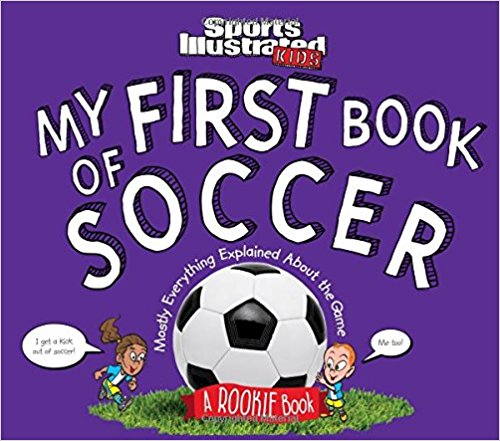
My First Book of Soccer explains the game to rookies!

My First Book of Soccer: Mostly Everything Explained About the Game (A Rookie Book), by the Editors of Sports Illustrated for Kids (May 2017, Sports Illustrated), $11.99, ISBN: 978-1-68330-002-1

Recommended for readers 4-8

Sports Illustrated’s newest book in their Rookie series introduces readers to Soccer – football, if you’re from anywhere other than the U.S. As with previous Rookie books, there are two Rookies on hand to show readers the ins and outs of the sports. I’m particularly excited about the Soccer Rookies, because we have a girl and a boy, and the girl – also the more knowledgeable of the two – is a lovely, brown-skinned young lady who’s too happy to teach her friend about the sport!

My First Book of Soccer is a light-hearted, informative introduction to the sport, featuring photos of current soccer stars (with silly word bubbles providing funny commentary) and the Rookies alike, interacting from the sidelines. The fonts are big and bold, with key words and ideas in capital, larger size. Scoreboards in the upper left- and right-hand corners keep track of the quarter and game time, giving kids a breakdown of what goes on during each part of a game.

Kudos to Sports Illustrated Kids for adding female players AND a female child of color Rookie! A must-add to sports bookshelves and collections for early readers, My First Book of Soccer joins previous Rookie books on football, baseball, and hockey. Put these out for a great sports-themed display and add them to a sports-themed storytime. I’d pair these with the Dino-sports series by Lisa Wheeler for a fun fiction/non-fiction pairing. Add some printables, courtesy of Sports Illustrated, for even more fun – check out My First Book of Soccer activity sheets.
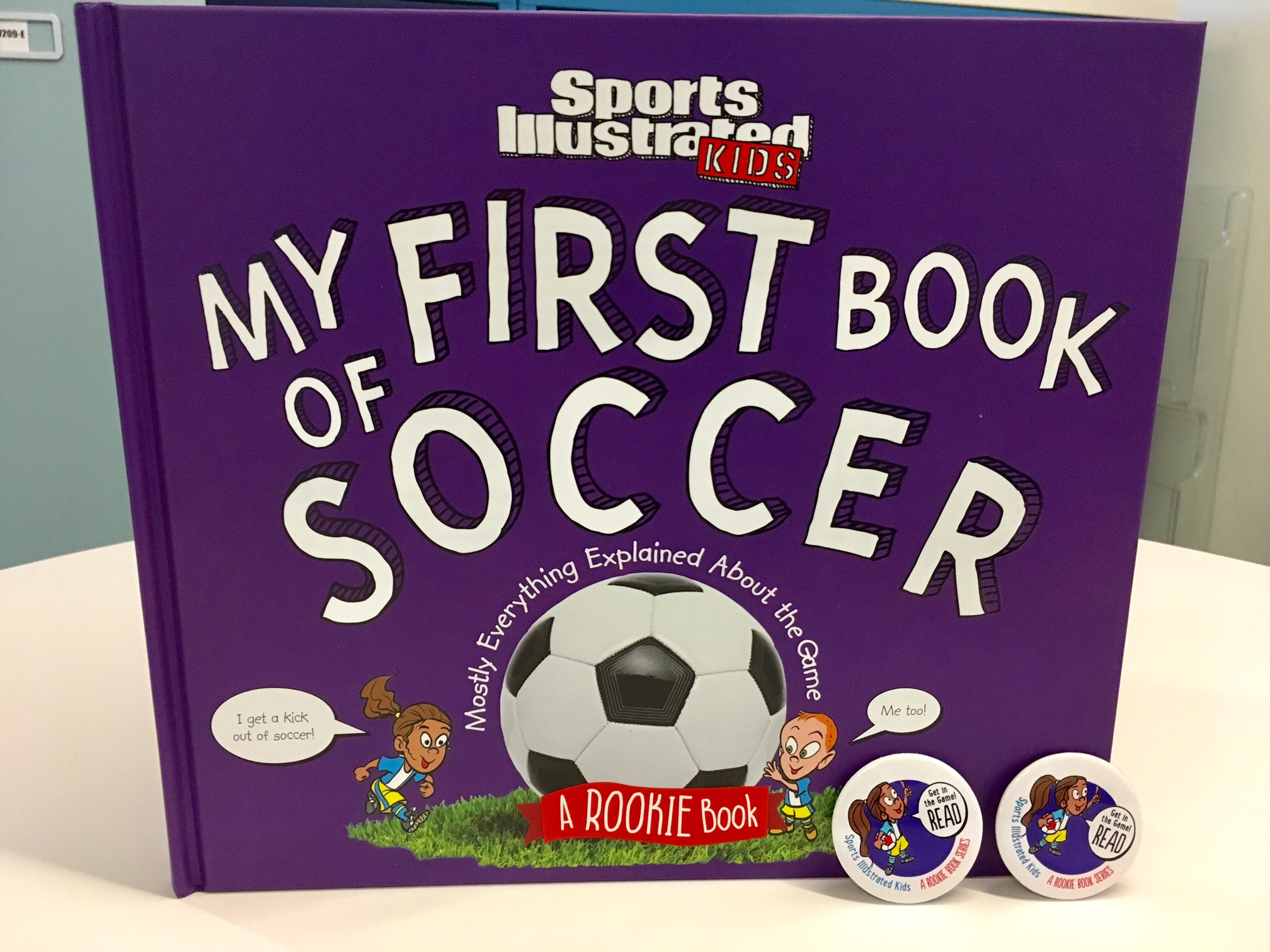
Check out this giveaway! Get a copy of My First Book of Soccer plus two Rookie buttons! Enter this Rafflecopter giveaway!
https://widget-prime.rafflecopter.com/launch.js

Posted in Early Reader, Non-Fiction

Clavis non-fiction picture book series: Want to Know

Clavis Books’ non-fiction picture book series, Want to Know, introduces non-fiction concepts for younger readers, providing information in a light-hearted, fiction-meets-non-fiction way. With cut-out pages, foldout illustrations, and facts and quizzes throughout each book, each topic provides opportunities to learn and do.

This season’s additions to the Want to Know series include The Romans, by Suzan Boshouwers and illustrated by Boshouwers and Veronica Nahmias, and Traveling by Train, by Pierre Winters and illustrated by Tineke Meirink.

The Romans, by Suzan Boshouwers/Illustrated by Boshouwers and Veronica Nahmias, (Apr. 2017, Clavis), $16.95, ISBN: 978-1605373195

Recommended for readers 6-8

The Romans falls under Want to Know’s History category. We meet Theo and his little sister, digging a deep hole in hopes of finding Roman artifacts. Suddenly, Theo, his sister, and we readers are transported back in time to the Low Countries – part of the Roman Empire, where we now call the Netherlands, Belgium, and the Rhine, Meuse, Scheldt, and Ems rivers. We learn where the Romans lived, how they celebrated, the story of Romulus and Remus, and about the Roman gods. Endpapers include a map of the Roman Empire un der Emperor Trajan, and a look at some Roman artifacts recovered near the Netherlands.

The book provides a wealth of information for younger readers, but while the author doesn’t shy away from slavery being a part of Roman life, the slaves are depicted more like servants; they’re pretty happy around their captors. There are other books available, like books by DK and the Step Into Reading series, but if you’re looking for a more picture book-based introduction to Ancient Rome, this is an additional add to collections.


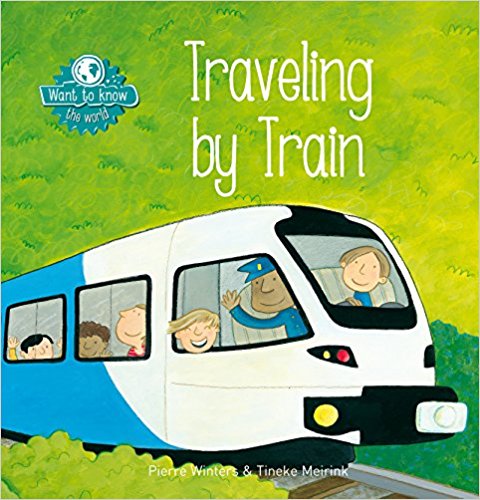
Traveling by Train, by Pierre Winters and illustrated by Tineke Meirink, (Apr. 2017, Clavis), $16.95, ISBN: 978-1605373409

Recommended for readers 4-7

Traveling by Train, from Want to Know’s The World section, is a fun addition for transportation fans. From learning about the first trains to trains in other countries, this book is loaded with fun information, quizzes, activities, and rhymes for young readers. Wrapped around the story of a boy named Sam’s first train trip, readers journey through the book, learning fun facts and discovering the story behind how trains run: who works for the railroad, and who does what; what trains look like on the inside; what schedules and connections are, and what a modern train station looks like. Endpapers feature artwork depicting an overcrowded train in India. The artwork kid-friendly, fun, and nicely detailed for its age group. I’d gladly add this one to my train books, and introduce it during a vehicle storytime.

Make this one a centerpiece with Thomas the Tank Engine books, or a host of vehicle-related books, for your readers to love.


Posted in Early Reader, Non-Fiction, Preschool Reads, Toddler Reads

Cultivate your little scientist with Baby University’s books

Baby University, from Sourcebooks Jabberwocky, are a cute series of board books that break down principles of science for little ones. Written by quantum theorist and dad Chris Ferrie,  the first four books: Newtonian Physics for Babies, General Relativity for Babies, Rocket Science for Babies, and Quantum Physics for Babies all use the example of a child’s toy – a ball – to explain science to the littlest scientists in training. The covers are adorable, incorporating pacifiers into the scientific art.

newtonian

Newtonian Physics for Babies (May 2017, Sourcebooks Jabberwocky, $9.99, ISBN: 9781492656203) introduces babies to a bouncy ball, explaining in short, bolded sentences how gravity affects the ball, which leads to an exploration of mass, acceleration, and force. Being Newtonian Physics, we also see the apple, and gravity’s effect on the apple and Sir Isaac Newton. The ending proudly exclaims that the reader is understands Newtonian physics.

relativity

General Relativity for Babies (May 2017, Sourcebooks Jabberwocky, $9.99, ISBN: 9781492656265) uses the ball to explore mass, black holes, and gravitational waves. Babies are pronounced experts in general relativity at the end.

rocket-science

Rocket Science for Babies (May 2017, Sourcebooks Jabberwocky, $9.99, ISBN: 9781492656258) looks at the ball, but changes the ball’s shape to a wing to explain air movement, lift, and thrust. From there, we learn how to put wings on a rocket to make it move, and how a rocket requires an explosion to propel it forward. Readers are affirmed rocket scientists at the book’s end.

quantum

Quantum Physics for Babies (May 2017, Sourcebooks Jabberwocky, $9.99, ISBN: 9781492656227) demonstrates energy and atoms – starring the neutrons, protons, and electrons – by using the ball. Readers learn about movement within the atom, and are bestowed with the quantum phycisist title at the end.

The books are simple and fun, with clean, computer-generated art and simple explanatory text. Are my toddlers at storytime going to get this? No, but it’s not going to stop me from handing out small rubber balls to parents to let the kids play with and get a feel for as I read the books. It’s exploring scientific topics early, introducing babies to the words and letting them become household names, words that maybe won’t frighten them when they get older, if they grow up hearing them. I’d read these with preschoolers, too, when they can grasp ideas a bit more.

I love STEM, and I love helping young children fall in love with science, especially the sciences (and their accompanying mathematics) that scared me away when I was a kid. These are fun, bright books to get in front of babies, toddlers, and preschoolers now, if just to introduce exciting new words to their vocabularies. At least, your little one learns that Sir Isaac Newton was beaned on the head by an apple. At most, you get a Nobel Prize winner who thanks you in his or her speech.

Posted in Early Reader, Non-Fiction, Non-fiction, Non-Fiction, Preschool Reads

Welcome #NationalPoetryMonth with Animal Ark

Animal Ark, created by photographer Joel Sartore/text by Kwame Alexander, (Feb. 2017, National Geographic), $15.99, ISBN: 978-1-4263-2767-4

Recommended for ages 3+

Newbery Award winning author Kwame Alexander lends his voice to award-winning National Geographic photographer Joel Sartore’s beautiful book of wild animals. Animal Ark is inspired by the National Geographic Photo Ark: a project between Sartore and the National Geographic Society to document every species in captivity, with the goal of raising awareness and protecting these animals for future generations.

Kwame Alexander writes amazing verse. If you’ve read The Crossover or Booked, you know this. His Animal Ark verse is at once playful and a call to action; paired with Sartore’s visually stunning photos, they pack a powerful punch to the psyche. A full-page photo of a wolf’s face in profile proclaims, “Howl like you mean it… the world is listening”; brightly colored beetles stand out against a black background, reading “Color me ancient and sacred”. The words placement is also playful, winding across the page and around the animals, to create a full visual experience for the reader. Several gatefolds throughout the book surprise the reader with a “chorus of creatures”, collages of photos. Here, the text reminds us of what we have and not to squander our gifts: “There are too few remaining/in the rain forest/in the big blue sea/in the whole wide world/because of you and me”.

Joel Sartore has photographed more than 6,000 species for the PhotoArk project, more than 100 of which are featured in Animal Ark. A companion adult book, National Geographic The Photo Ark: One Man’s Quest to Document the World’s Animals (March 2017) includes more photographs and a foreword by Harrison Ford.

This is a perfect book to read and display for National Poetry Month (starting April 28), and for Earth Day (April 22nd). It’s a beautiful photo book with lovely verse that will draw readers in. Animal Ark received a starred review from School Library Journal and the companion adult book received a starred review from Publisher’s Weekly.

Have a look at the blooper reel – photographing animals isn’t always easy!

Posted in Early Reader, Non-Fiction, Preschool Reads, Toddler Reads

Adorable animal books for toddlers and preschoolers!

Anita Bijsterbosch has two adorable animal books out this month and next, perfect for toddlers who love to explore their books.

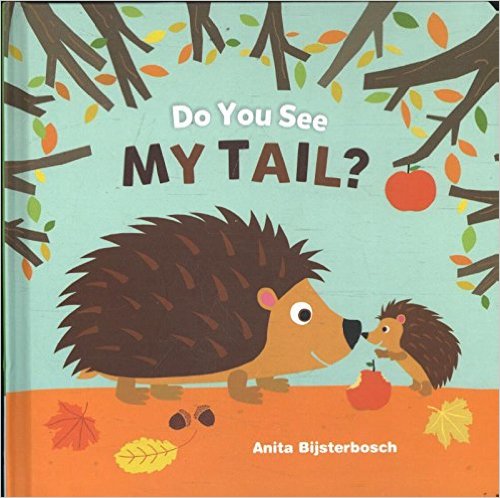
do-you-see-my-tailDo You See My Tail? (March 2017, Clavis Books, $12.95, ISBN: 978-1605373201) introduces readers to seven animals – well, seven animal tails; the rest of the animals are hidden behind local flora. The text drops a hint, and a gatefold reveals the full answer: an animal family! The repetitive question/answer format, and greeting to the animals and their babies, creates a fun discovery experience for little hands. An extra challenge: find the little ladybug hiding on every spread.

Preschoolers will like being able to control finding out more about the animals and learning about animal habitats: beavers play in a nest of tree trunks and branches, rabbits in a hole under the ground. Toddlers will love the excitement of discovery and the very cute artwork.

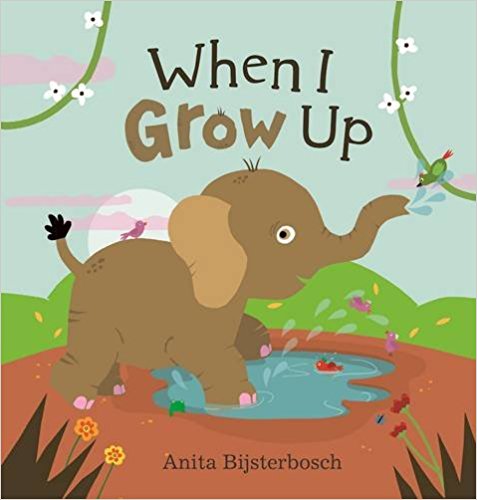
Whewhen-i-grow-upn I Grow Up (April 2017, Clavis Books, $14.95, ISBN: 978-1605373348) features six young animals who dream about what they’ll be able to do once they grow up: a little lion who can only growl softly now will be a big lion whose roar will be heard by all the animals; a little giraffe whose nose barely touches the leaves in a tree will one day be able to reach everything with his long neck. Die cut pages let readers flip the page to reveal the adult animal in the young animal’s place within the same setting.

As with Do You See My Tail?, When I Grow Up offers toddlers the excitement of discovery, with something new on every page. The pages are sturdy and will hold up to multiple page flips (always a concern in my library). Preschoolers can focus on habitats, food, and other animals sharing the living spaces.

Originally published in 2016 in Belgium and Holland, these are fun new choices to bookshelves and collections.

Posted in Early Reader, Non-Fiction, Non-Fiction, Preschool Reads

Do you like to play? Animals do, too!

animals-doAnimals Do, Too!, by Etta Kaner/Illustated by Marilyn Faucher, (May 2017, Kids Can Press), $16.95, ISBN: 9781771385695

Recommended for ages 4-8

Do you like to dance? Do you like to play leapfrog? Play tag? Well, guess what: animals do, too! This fun book features pictures of families at play on one spread, and a corresponding spread on the next two pages, with a group of animals engaged in the same fun. The alternating question and answer format engages kids right away, and the activities that we humans do for fun, while animals do them to find food and care for their young will spark discussion with young learners.

Animals Do, Too! features animals that differ from the usual farm and jungle animals kids meet in their books. Sure, we’ve got bumblebees and frogs, but we also meet cattle egrets and marmosets, gazelles and leaf-cutter ants. A spread at the back of the book provides fast facts about each animal in the book.

There is some lovely watercolor work here, featuring lovely nature scenes. The families are enjoying one another, and the animals are playful while completing their everyday work. The parallels between humans and animals should engender interest and empathy in kids and will start some great conversations – ask the kids around you to think of animals they see every day: what does a cat do that a person does? (Stretching is a good one!) What does a dog do that a person does? (Jump and play!) You can create matching games that match the activity with the animal, for younger learners; bonus: they get to color.

The question and answer pattern of the text invites kids to interact with the text and gives them a chance to contribute before revealing the answer on the following spread. This is a good additional purchase for nature, life science, and animal collections.

Posted in Early Reader, Non-Fiction, Preschool Reads

Different? Same! looks at repeating patterns in nature

different-sameDifferent? Same!, by Heather Tekavec/Illustrated by Pippa Curnick, (May 2017, Kids Can Press), 416.95, ISBN: 9781771385657

Recommended for ages 3-6

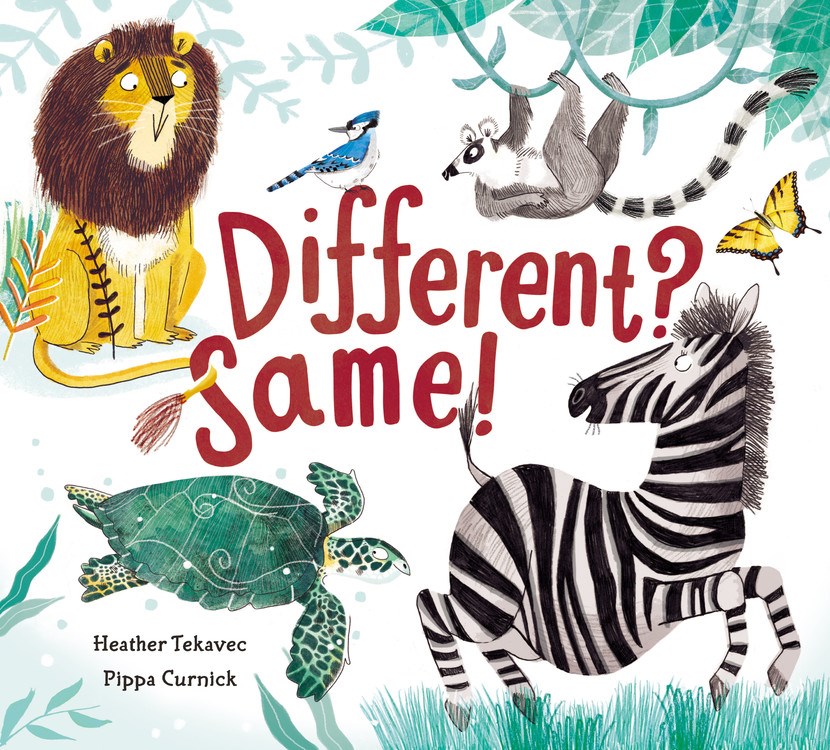
Zebras gallop, bumblebees fly, lemurs leap, and a tiger prowls, but look closer: they all have STRIPES! Different? Same! celebrates the similarities among animals that would otherwise seem very different. Each spread features a group of animals that mentions a different trait, inviting readers to look closer to find the common characteristic. One animal from the previous spread shows up in each new spread – ask your eagle-eyed readers to spot them! A final spread puts all forty animals together and asks readers to search for animals with specific characteristics: who’s furry? Who would make good pets? Who would you NOT like to touch? Brief paragraphs at the end of the book explain why animals have the characteristics they do.

The digital art is very colorful and cute, creating happy, friendly animals that kids will love. The book is useful when introducing the concept of patterns to young learners and when discussing similarities and differences, which can lead to a talk on a greater scale about diversity; what makes us different, what makes us the same. This is a good additional purchase to concept collections.

Posted in Early Reader, Graphic Novels, Intermediate, Non-Fiction, Non-Fiction

Something’s Fishy introduces kids to fishy fun

fishy_1Something’s Fishy, by Kevin McCloskey, (April 2017, TOON Books), $12.95, ISBN: 978-1-943145-15-7

The man behind Toon’s Easy to Read Giggle and Learn series is back again with his fun blend of science and art. Something’s Fishy teaches young readers about fish – from the ABCs (there’s a fish for every letter of the alphabet), to biology, to the history of keeping goldfish as pets, Mr. McCloskey uses his acrylic and gouache artwork to illustrate all kinds of fish. He also discusses responsible pet ownership by mentioning that some fish, while popular film characters, aren’t really supposed to be pets: they’re much happier in their natural environments. A just-about-actual-size rendering of a foot-long goldfish will make readers giggle… and learn!

I love the trend of graphic novels as nonfiction texts, and Kevin McCloskey’s work for young readers and listeners are among some of my favorites. We Dig Worms and The Poop On Pigeons are in constant rotation at my library, and I can’t wait to introduce kids to fish with Something’s Fishy. His books make for excellent nonfiction storytime reading and pair nicely with picture books. You can very easily pair Something’s Fishy with Rainbow Fish, Lois Ehlert’s Rain Fish, or any number of fish or sea life-related stories. This is a fun add to nonfiction collections and a great gift for your younger Nemo and Octonauts fans.


Posted in Early Reader, Intermediate, Non-Fiction, Non-Fiction, Non-Fiction

Tales from the Backlist: Christy Hale’s Dreaming Up

dreamingup_1Dreaming Up: A Celebration of Building, by Christy Hale, (2012, Lee & Low Books), $18.95, ISBN: 9781600606519

Recommended for ages 5-10

When I started at my current library last year, the younger kids were in the middle of a school project on architecture. I was able to give them books like the most current picture book retelling of Robert Louis Stevenson’s poem, Block City and Byron Barton’s Building a House, but after I exhausted the fiction section, I was stumped. Luckily, a quick tour of my nonfiction section brought me to Christy Hale’s beautiful book, Dreaming Up: A Celebration of Building.

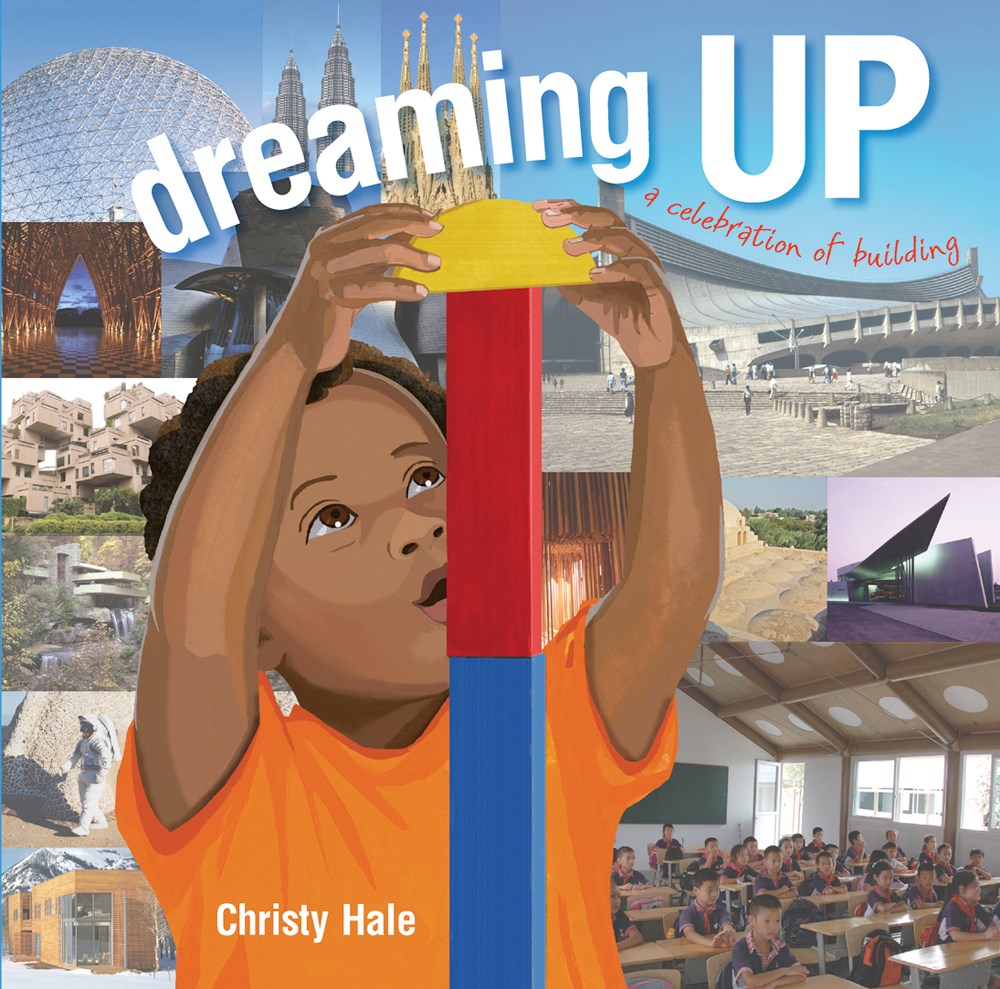
Dreaming Up combines illustrations of multiethnic children at work on their own constructions, with rhyming text building and swirling in construction of its own, and pairs each illustration with a photo and description of a notable work of architecture. Kids will experience the works of Frank Lloyd Wright and Antoni Gaudi, and they’ll see such masterpieces as the open-air church in Cartegena, Columbia, inspired by Gothic cathedrals; a temporary Chinese school constructed by students and teachers from plywood and recycled paper tubes, and New York City’s Gugghenheim Museum. It’s an exciting way to experience the world and emphasizes the importance of play in the creative process.

dreamingup_2

I put this book out during a storytime for my preschoolers, and just read the rhyming text. After storytime, I brought out stacking cups, blocks, and foam building pieces, and let the kids go to work. Watching the little ones work with their parents was amazing; there were walls, buildings, and winding roads by the time they were done. This is a great book for school-age kids, but you can easily modify it for younger ones. Booktalk it, let them draw or work with their hands, and see what the kids can create for you.

dreamingup_3

Dreaming Up has received multiple awards and honors, including Boston Globe-Horn Book Award Honors, the International Reading Association (IRA) Children’s and Young Adult Book Award Honor, and the 2012 California Book Award. It has been designated a Notable Children’s Book by the American Library Association (ALA) and was included on the Read! Build! Play! Summer Reading list of Books that Inspire Play, ALSC (Association for Library Service to Children) and LEGO.

dreamingup_4

Posted in Early Reader, Non-Fiction, Non-Fiction, Preschool Reads

Gear Up! Sports Illustrated Kids Talks Hockey!

si_hockeyMy First Book of Hockey: Mostly Everything Explained About the Game (A Rookie Book), by the Editors of Sports Illustrated for Kids (Sept. 2016, Sports Illustrated), $11.95, ISBN: 978-1618931771

Recommended for ages 4-8

Sports Illustrated Kids’ Rookie Books series are great for burgeoning sports fans, big or small. Hey, I’m honest: whenever I’ve needed to learn something from the bare bones, I’ve gone to the children’s section. It’s how I learned to crochet more than a basic single stitch, it’s how I’m relearning all the high school Spanish I forgot, and it’s how I learned exactly what goes on during a hockey game.

An illustrated, cartoony “rookie” appears on the endpapers and throughout the book, acting as our guide. through Hockey 101. He gears up in the beginning, putting on all of his protective hockey equipment, and shows up on every spread, offering fun side commentary over the action photos.  There are photos of real NHL players from several teams (don’t ask me who they are, please, I just learned what a slap shot is), with comic book word bubbles, big, fun fonts, and simple explanations to give readers a good starting point on understanding and enjoying hockey. Digital numbers add to the sports feel as the book, divided into three “periods” like a hockey game, breaks down what happens during each period.

There are great photos – think Sports Illustrated photography, after all – a glossary of terms, and a friendly introduction to the sport. Other books in the Rookie series include My First Book of Baseball and My First Book of Football. If they ever decide to release a My First Book of Soccer, I can guarantee it will circulate like wildfire in my library!

If you have sports fans in your community, these are a must-have. I’ll be adding a few of these to my shelves, and suggesting that my colleagues, who have field hockey teams in their communities, add My First Book of Hockey to theirs.