Posted in Early Reader, Fiction, Fiction, Intermediate

A boy and his friend must act fast to save The Last Tree

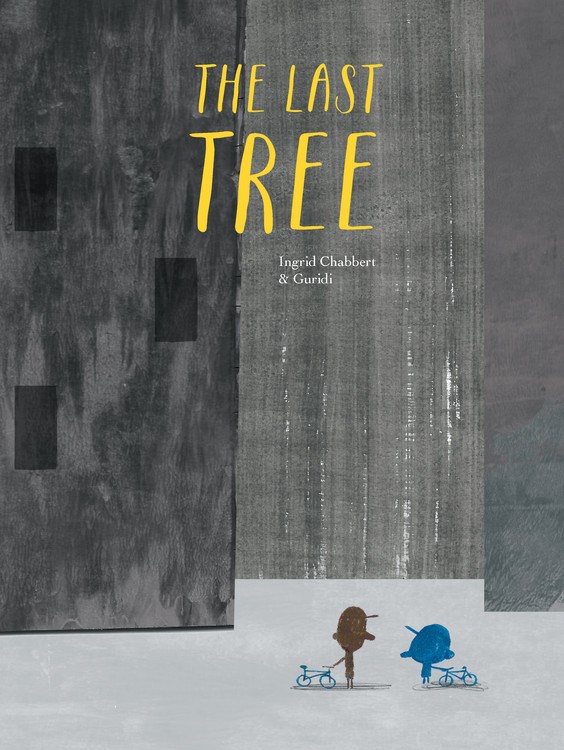
last-treeThe Last Tree, by Ingrid Chabbert/Illustrated by Guridi, (April 2017, Kids Can Press), $17.95, ISBN: 9781771387286

Recommended for ages 4-7

A boy listens to his father describe running and playing in the grass as a child, but has only a concrete playing area with a diminishing patch of grass available to him. One day, the boy and his friend discover a baby tree – a sapling, really – hidden behind a wall and are amazed: it’s the first tree they’ve ever seen up close. The boy goes home and discovers, to his horror, that a luxury condo complex is scheduled to begin construction right in the very spot where the tree is growing, and the boys spring into action to save the last tree.

This is a powerful look at how lack of green spaces affects children. Ingrid Chabbert’s narrator is an adult, looking back on his childhood, and how important saving that tree was to him and his friend. It sends a message about the importance of conservation and preservation today, and offers some hope for tomorrow. Artist Guridi communicates this message using charcoal, gravure ink, gouache, pencil, and digital art to create a spark of hope in the grey, bleak future that faces us as we see more green spaces disappear under development.

A strong addition to collections for Earth Day, conservation units, and to empower kids who may not understand that they can have a long-lasting impact on the world with the smallest and kindest of acts. The Last Tree invites a discussion on empathy by examining the boys’ actions and asking children to contribute by sharing a time when they took action to help someone or something that needed it.


Posted in Early Reader, Fiction, Preschool Reads, Toddler Reads

Surprises await toddlers in See How I Sleep

see-how-i-sleepSee How I Sleep, by Liesbet Slegers, (March 2017, Clavis), $12.95, ISBN: 978-1605373331

Recommended for ages 6 mos-2 yrs

Animals greet readers and surprise them with a hidden friend in this slide-and-see board book full of surprises for little hands. Find a hedgehog curled up next to its friend, a mouse has a visiting friend, and a teddy bear waits for its best friend under the blanket. Toddlers will love the thrill of the unexpected reveal, and the sturdy pages will hold up to multiple uses. This one will enter heavy storytime rotation in my storytimes; the bright, boldly outlined art is adorable and eye-catching and the vivid handwriting font makes for easy reading to groups. A creative add to toddler book collections.

Posted in Animal Fiction, Early Reader, Fiction, Preschool Reads

Join Porcupine’s Picnic!

porcupines-picnicPorcupine’s Picnic: Who Eats What?, by Betsy R. Rosenthal/Illustrated by Giusi Capizzi, (Feb. 2017, Millbrook Press), $19.99, ISBN: 9781467795197

Recommended for ages 4-6

Porcupine is going on a picnic! He packs a basket full of clover and settles into a perfect spot. Nearby animals ask to join him, and bring their own food: koala loves his eucalyptus, squireel enjoys his acorns, and giraffe nibbles on his leaves. When Tiger shows up, though, the picnic comes to a very quick end!

This is a cute introduction to different animals and what they eat. An explanation at the end of the book introduces readers to herbivores, carnivores, and omnivores, and points out which animals from the story belong to which group. The digital art is very cute, and the reptitive pattern of the story – animal asks to join, Porcupine offers clover, animal declines and eats his or her own food – will appeal to younger readers, who can predict what will happen next. The story does tend to go on a bit long, at 40 pages, and could have used a few less animals; I worry about younger readers’ interest as the story proceeds. This would be a good flannel story candidate: create animals and foods, and invite storytime audiences to match the animal with the food on the flannel board, or even make up a worksheet and/or memory game to hand out after the story. An additional purchase for animal collections.

Posted in Early Reader, Fiction, Preschool Reads, Toddler Reads

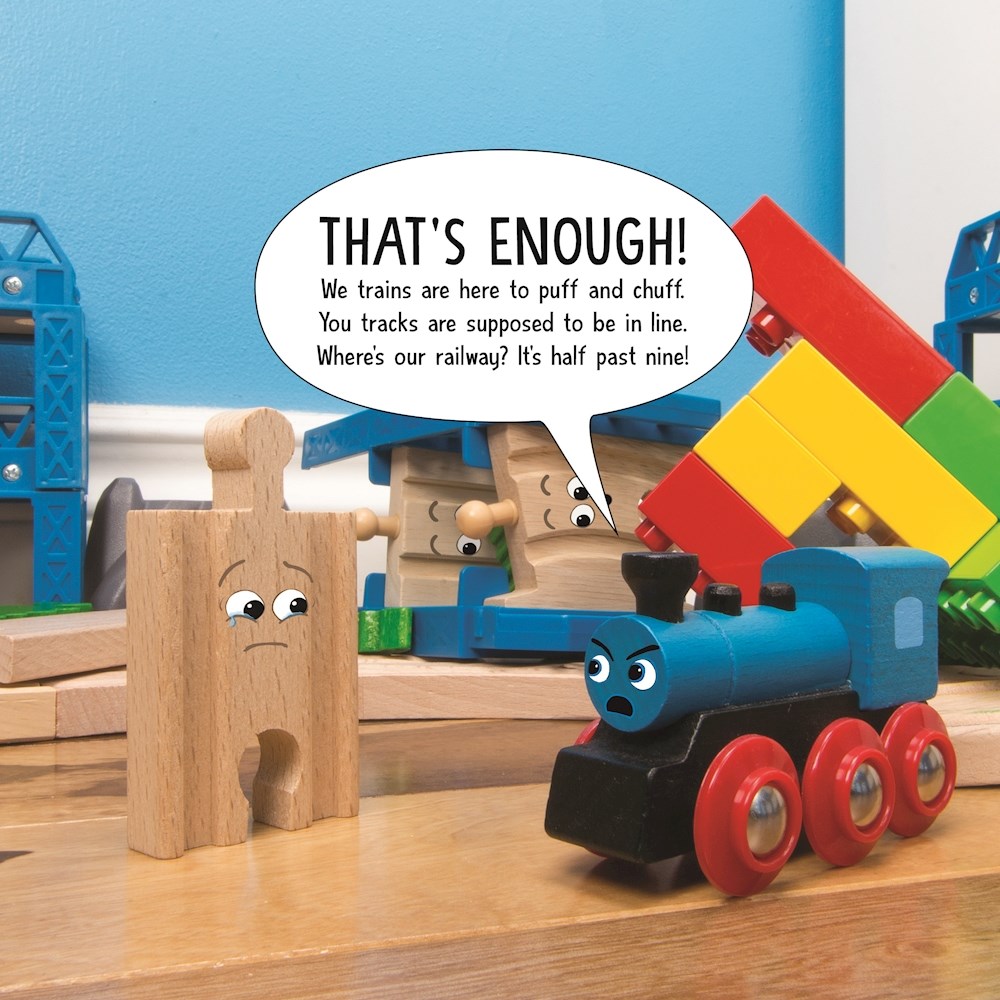
Trains and tracks love to play in Old Tracks, New Tricks

oldtracks_1Old Tracks, New Tricks, by Jessica Peterson, (March 2017, The Innovation Press), $16.99, ISBN: 978-1943147243

Recommended for ages 3-6

Trixie, Tracky, and Tinker are three wooden toy tracks that are excited when a little boy brings them home. They’ve been waiting to join a train set of their own! Things are a little different than they expected, though, when they arrive.  The trains are bossy and mean, and the old tracks just snore on the floor. These tracks aren’t about to just snooze their days, away, though – they get to work and show the old tracks (and trains) some new tricks – and then share them with readers!

This is such a fun little rhyming story full of adorable photo and digital art! The facial expressions digitized onto the toys give a fun feel to the story and little additions, like stickers, paint, and crayon, personalize the characters, really making the toys look and feel like they’ve come from a child’s room. Younger audiences will love the rhyming cadence, and the bright colors really catch a reader’s attention.

oldtracks_2


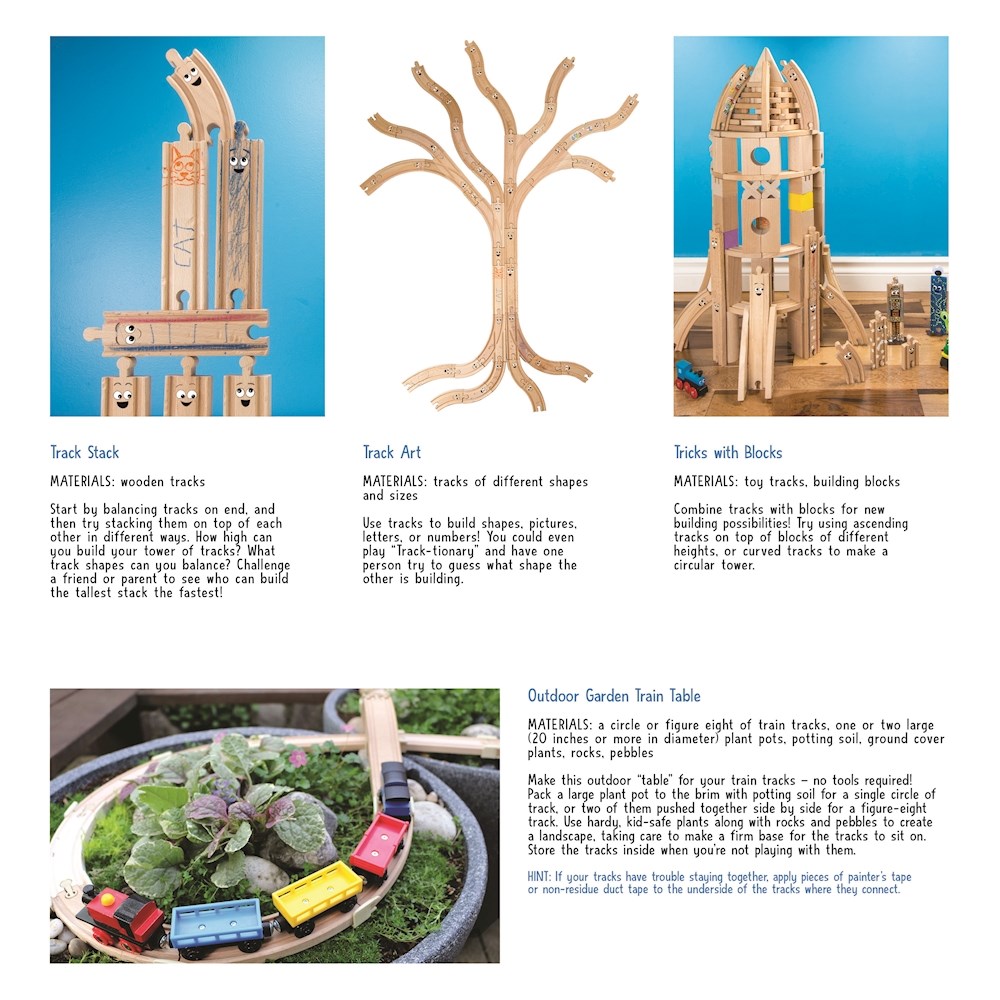
The book includes instructions for the track tricks used in the story. Tips offer ideas for experimenting and suggest adult help where necessary. A website dedicated to the book (maybe it will become a series?) is coming in January, and further resources, like printables and educator resources, may be on the way in the future.

oldtracks_5

This is a fun go-to for storytime, especially if you’ve got room for a couple of trains and tracks to keep out so the kids can play and explore with parents after storytime. If space or budget is an issue, there are fun paper trains you can make as a post-storytime craft. You can hand out some paper track printables, if time permits, and have parents and kids fit together their own train routes. This is one of those books that will be a great resource for preschoolers and school-age kids alike; you can discuss ideas like teamwork, bullying, and welcoming a new friend.

oldtracks_3

oldtracks_4


Posted in Early Reader, Fiction, Preschool Reads

Holiday Giveaway: How to Catch an Elf!

The holidays are just around the corner and it’s time to catch an elf!

catch-and-elf

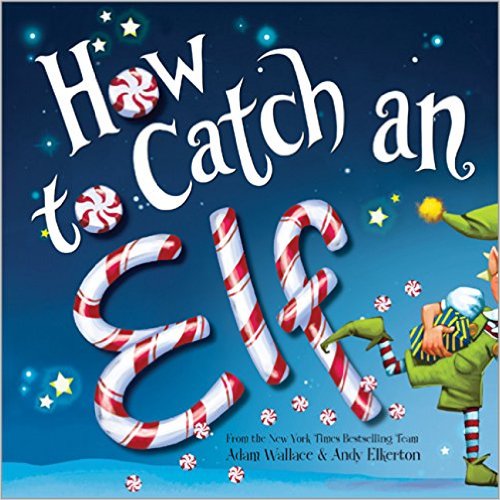
Sourcebooks’ newest holiday picture book, How to Catch an Elf (ON SALE; October 2016, $10.99), is the latest from the gang who brought us the New York Times bestseller, How to Catch a Leprechaun. This time out, one of Santa’s elves is wise to kids’ tricks: they can’t catch Santa, so they’re going to try and catch him! He’s got to navigate all the traps that kids set – and keep Santa safe and delivering presents! -as Christmas Eve progresses.

The endpapers bring you right into the fun, with peppermint candies across a pale blue background. The digital over sketched artwork is adorable – I love Santa’s and the elf narrator’s sweet facial expressions, and the traps are hilariously complex, like mad scientists in training got together and worked on them. The rhyming text makes for some fun reading, and watching the duo dodge flying food, prowling pets, and the Elf Snatcher 3000 allow for kids to point out some wacky Christmas fun. This is a great Christmas read-aloud – make sure to get those milk and cookies ready before you settle down with this book and your favorite little elves on Christmas Eve.

Want a chance to win a $50 gift card for some last-minute holiday shopping? It’s simple – snap a photo of your very own #elftrap and post it with the hashtag #catchanelf, to be entered to win a $50 gift card for last-minute holiday shopping! There are more details on the Sourcebooks Pinterest page. Good luck!

Want a chance to win your own copy of How to Catch an Elf? If you’re a US or Canada resident, just enter this  Rafflecopter giveaway and I’ll contact you if you’re a winner! This giveaway also runs through December 16, so enter now!

Posted in Fiction, geek, Guide, Non-Fiction, Non-fiction, Tween Reads

Holiday Book Shopping: Science and Tech

Books make fantastic holiday gifts! Need a stocking stuffer or are stumped by a kid who has seemingly everything? Try one of these!

I am guilty of favoring books in the STEM/STEAM areas, because that’s what I love evangelizing to my own kids and the kids at my libraries. Take a look – you don’t need to be a Stephen Hawking-in-the-making to enjoy these.

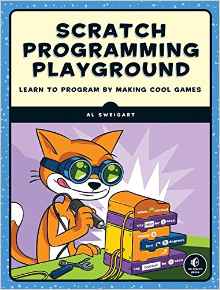
scratch-playgroundScratch Programming Playground, by Al Sweigart, (Oct. 2016, No Starch Press), $24.95, ISBN: 978-1593277628

Recommended for Ages 8-12

I love working with Scratch for young coders. It’s all about teaching kids how to computer code using interconnecting blocks of code, and the Scratch program, developed at MIT, is free and available online. Scratch Programming Playground walks kids (and grownups – I used this book extensively while putting together programs for this coming winter) through the process of learning Scratch by making cool games, like Fruit Slicer (a Fruit Ninja clone), Brick Breaker (where my ’80s friends at?), and Asteroid Breaker (Asteroids! Remember that one?). There are tons of full-color visuals and step-by-step breakdowns that will have kids programming in no time. I buy No Starch books for my libraries all the time – they’re great to have on hand.


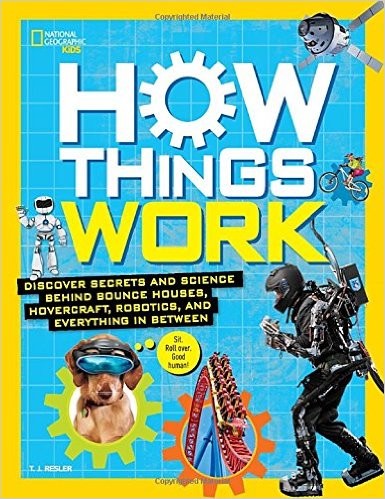
how-things-workHow Things Work, by T.J Resler (Oct. 2016, National Geographic Kids), $19.99, ISBN: 978-1-4263-2555-7

Recommended for ages 7-12

Know a kid who’s constantly taking everything apart to see how it works? This is the book for her or him. It’s loaded with gadgets and how they work; fun facts; in-depth pieces on technology and how it works; profiles of scientists and innovators, and yes, experiments that are totally safe to try at home (with adult supervision, please). Learn how a tablet really works, how an aquarium works to keep fish healthy and happy, even how a toilet works, complete with diagram. Design a roller coaster with your kids – it’s easier than you think! Because it’s a NatGeo Kids book, you know the writing is great; it speaks to kids in easy, clear, fun language that educates and never talks over their heads or down to them. The photos are amazing, and the dog on a surfboard (page 131) is worth the cost of the book all on its own.

science-encyclopediaScience Encyclopedia: Atom Smashing, Food Chemistry, Animals, Space, and More!, by National Geographic Kids, (Oct. 2016, National Geographic Kids), $24.99, ISBN: 978-1-4263-2543-4

Recommended for ages 8-13

I know, it’s a NatGeo Kids lovefest right now, but it’s well-deserved. The Science Encyclopedia is info-packed with everything kids need to know about physical and life sciences, covering matter, energy, electronics, the universe, and more. There are record breakers, key dates in atomic science, and activities to try at home. Information is presented in 2-page spreads broken out into subject-specific blocks, with stunning photos, fun facts, and hilariously bad jokes (Where does bad light go? A prism!) A glossary, index, and additional resources round this volume out. Fantastic gift for any tween who wants to know more about everything.


These are all available now, either in your local bookstore or online through Amazon, Barnes & Noble, Books-a-Million, or IndieBound.

Posted in Animal Fiction, Early Reader, Fiction, Preschool Reads

Sugar and Spice and everything… Candy Pink?

candy-pink-coverCandy Pink, by Adela Turin/Illustrated by Nella Bosnia, (Nov. 2016, NubeOcho), $15.95, ISBN: 978-84-944446-7-8

Recommended for ages 5-8

A classic written 40 years ago with the goal to promote equality between boys and girls arrives in the United States for the first time. Candy Pink is written in the style of a folk tale, explaining how elephant all became gray. You see, male elephants were always gray, but female elephants were candy pink. To get that color, they ate only peonies and anemones, wore bibs and shoes, and stayed together in a little walled garden, while the boy elephants playing in the mud, eating yummy grass, and sleeping beneath trees. When one little elephant named Daisy doesn’t turn pink, her father is harsh and cruel, her mother, sad. They pressure her to eat more pink food and threaten her by telling her no one will want to marry her. When they finally give up, the girl elephant embraces her freedom, sheds her bib and shoes, and enjoys life – something that doesn’t go unnoticed by the other female elephants. And, well… you can’t tell the difference between boy and girl elephants anymore, can you?

I was taken aback the first time I read Candy Pink, because it seems harsh on a young girl: the emphasis on appearance and girlish pursuits, Daisy’s parents’ terrible reaction to her inability to fit their mold for her. A second reading put more in perspective for me – the little elephant embraced her uniqueness and wasn’t ostracized for it – the other female elephants flocked to her, and made a huge change that exists to this day. It’s a powerful little story for school-age kids that lends itself to some pretty big ideas. Originally published in Italian in 1976 with the title Rosaconfetto, Adela Turin tackled gender identity and the pressure society puts on appearances by using a parable that everyone could understand and that young girls could relate to. Forty years later, Candy Pink is just as relevant.

Award-winning illustrator Nella Bosnia’s artwork is beautiful. She uses shades of gray and pink against muted background colors for the world of the story; primarily greens, blues, and yellows for the assorted flora and fauna. The bibs, shoes, and bows on the elephants tails are frilly and exaggerated, even pinker than the pale pink elephants; against Daisy’s natural gray, it’s a true contrast.

An interesting and still-timely look at gender, society, and the expectations parents put on their own children. A good addition to bookshelves. Booktalk and display with self-esteem boosters like Karen Beaumont’s I Like Myself!, Peter Reynolds’ Ish, and Todd Parr’s It’s Okay to Be Different. Want another elephant fairy tale? Emma Dodd’s Cinderelephant is a light-hearted, fun take on the classic fairy tale.

Posted in Animal Fiction, Early Reader, Fiction, Preschool Reads

Catch Ralfy Rabbit, the Book Burglar!

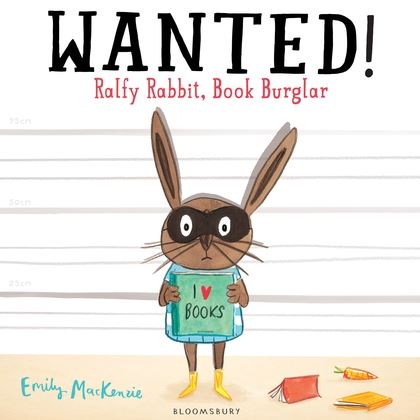
ralfyWanted! Ralfy Rabbit, Book Burglar, by Emily MacKenzie, (May 2016, Bloomsbury), $16.99, ISBN: 978-1681192208

Recommended for ages 4-7

Ralfy Rabbit LOVES books: he dreams about them; he makes lists of them; he wants to be surrounded by books ALL THE TIME. He loved books so much that he started sneaking into people’s bedrooms and reading their books while they were sleeping, but even that wasn’t good enough; he upgraded to taking the books home! One little boy named Arthur noticed that his books were starting to go missing, and to add insult to injury, soggy lettuce and half-eaten carrots were left behind. He makes a plan to catch the book burglar, but can Ralfy be rehabilitated?

A fun story with a good subplot about borrowing (and a great shout-out to libraries!), Wanted! Ralfy Rabbit, Book Burglar is a great storytime book and a great independent read. Kids can appreciate Ralfy’s single-minded love for books and understand Arthur’s dual frustration at having his books go missing and have no one believe him. Arthur’s confrontation and solution makes for good conflict resolution and problem-solving that works for everyone.

Emily MacKenzie’s artwork is adorable. Ralfy is wide-eyed and innocent, even when he’s up to no good; when he’s caught red-handed, his eyes fill up with tears and readers can’t help but feel bad for the poor book bandit. Arthur is drawn with a kindness that will invite readers to put themselves in his place right away. The pictures are sketched with defined outlines, and the font changes for emphasis: bolds, enlarged fonts, angled text to keep readers’ attention.

I’ve paired this with Helen Docherty’s Snatchabook and Ian Schoenherr’s Read It, Don’t Eat It! for library visit read-alouds; the kids love Ralfy and Arthur, but know that Ralfy’s “not being nice” when he takes books. One Kindergartner even called out, “He should just go to the library!” (Love that kid!) You can have a great discussion about borrowing versus taking things with kids as young as preschool; for younger audiences, use Ralfy’s adventure as a good starting point for talking about sharing and forgiveness.

Originally published in 2015 in the UK, Ralfy’s just arrived on US shores. Give him a welcome space on your shelves! There’s an activity kit available from Bloomsbury UK, and you can see more of Emily MacKenzie’s art and books at her author site.

Posted in Early Reader, Fiction, Preschool Reads

My Dad is a Clown heals bodies and souls

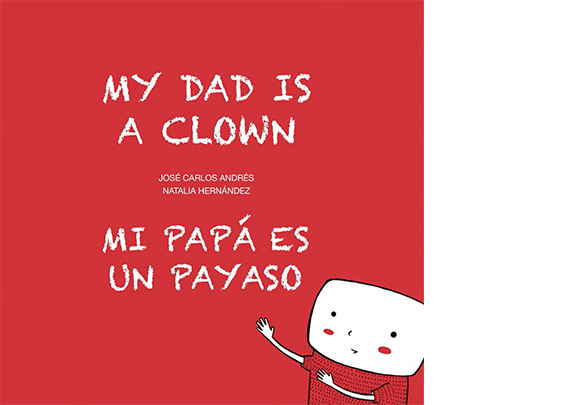
my-dad-is-a-clown-coverMy Dad is a Clown/Mi papá es un paysaso, by José Carlos Andrés/Illustrated by Natalia Hernández, (Jan. 2017, NubeOcho), $14.95, ISBN: 978-84-944137-6-6

Recommended for ages 4-8

A boy with two dads is proud of what they do for a living, and wants to be like them both when he grows up. Both of the boy’s dads are healers: one dad, Pascual, is a doctor and heals his patients’ bodies; his other dad, whom he refers to as simply “Dad”, is a clown, and heals people’s souls. Pascual and the boy sneak into Dad’s rehearsal one day, where the boy realizes the hard work that goes into being a performer, and decides that he will combine the best of his fathers’ professions when he grows up.

This is a sweet story about a boy who loves and is proud of his parents. We also see a loving relationship between the boy’s parents, who happen to both be men. The cartoony two-color art, primarily black and white with reds added for visual interest and emphasis, is both sweet and dramatic. The family is tender with one another, unafraid to show affection. It’s a gratifying, emotional read, particularly when the family reunites after Dad’s rehearsal and they share happy tears.

This third edition of the story is a bilingual edition, translated into English and includes the Spanish text directly beneath the English text, both featured in a highlighted typewriter font that makes for easy independent and cuddle time reading. It’s good for English and Spanish language learners, and is a sweet story about family love to add to your bilingual collections and your storytime rotation. Put this 0ne on your shelves: there are families out there who need and deserve to have their stories told.

Posted in Early Reader, Fantasy, Fiction, Fiction, Intermediate

Blog Tour: Kid Crazy and the Kilowatt King rocks out!

Kid Crazy is a kid living in a desert, dying to go on adventures in the dazzling City of Ever. When he encounters a droid named Denunzio, who overhears him wishing he could visit the City, the droid tells him that the king is rude and sour – a real creep, really. Kid Crazy doesn’t want to hear it – as soon as Denunzio admits that he can get Kid inside the castle, he’s off. They head off in a car made of bread and travel to the castle where, sure enough, the king is rude as all get out. He demands that Kid Crazy sing him a song, but Kid’s not having it. He decides it’s time the king learned some manners! He tells the king a riddle that brings home how rude he’s been, then teaches him the power of one simple word: Please.


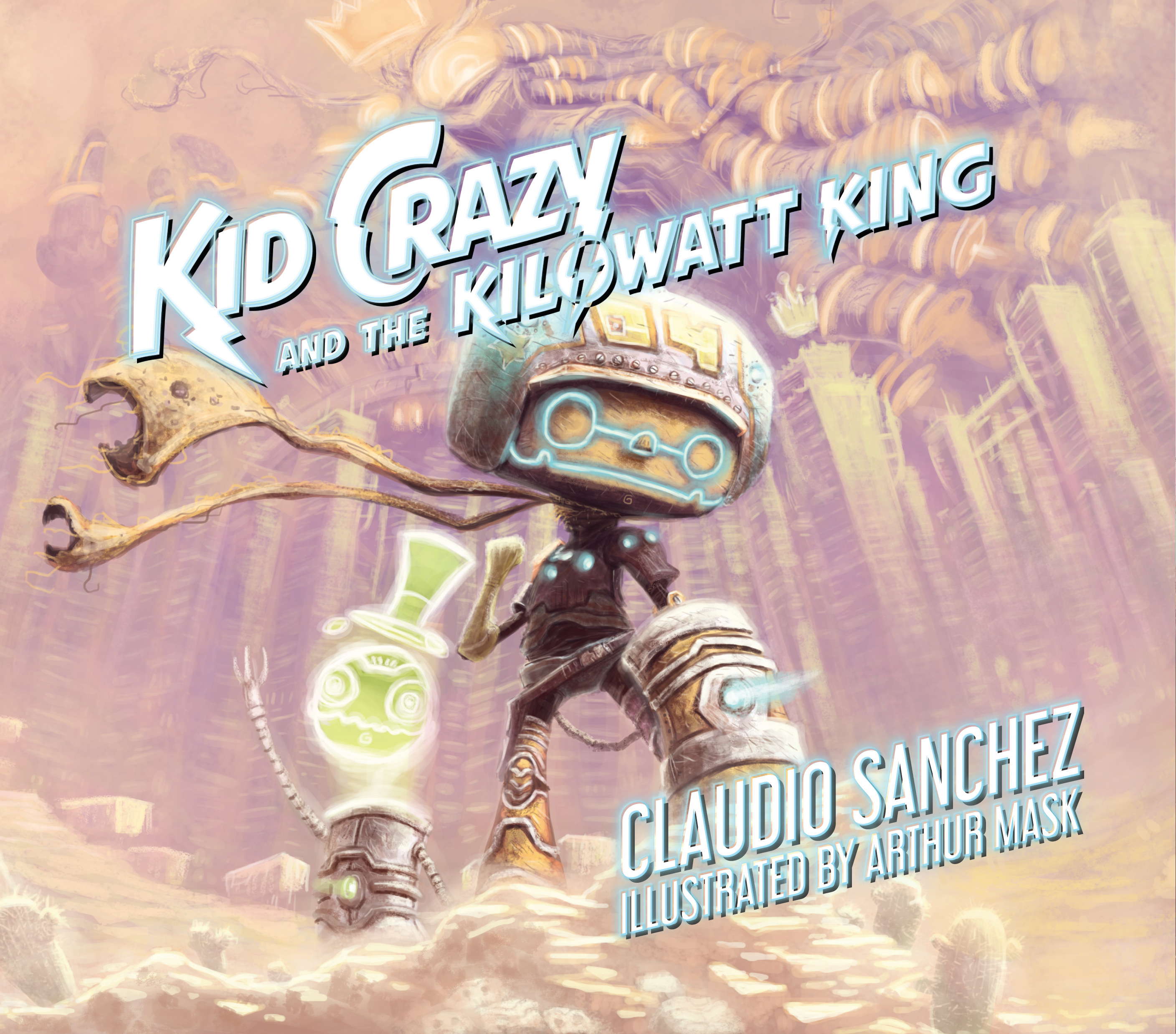
KKC_jacketKid Crazy and the Kilowatt King, by Claudio Sanchez/Illustrated by Arthur Mask, (Oct. 2016, One Peace Books), $24.95, ISBN: 978-1-944937-03-4
Recommended for ages 5-8

A wild ride through a retro-futuristic, tech-y landscape and a rhyming story about a kid teaching a monarch manners – this book is too much fun! The 80-page length may give younger readers some pause – my 4 year old fizzled out about halfway through – but school-age kids  and independent readers will get into this fun fantasy tale with a great message. Arthur Mask’s illustrations give life to the text, and you can tell that our author, Claudio Sanchez, is a musician, because the text flows beautifully; they’re lyrics in a song about a better world beginning with one person: you. Mask lets his imagination run wild on the pages and it’s to the reader’s benefit, because there’s so much to see. The landscapes, the droids in the City (I love the teddy bear bot), the king with his floating crown and electric beard – it’s a book you experience.

I’d add this to my collections and booktalk it to my school-age kids and parents. I may try to read an abbreviated version at my all-ages storytime, which brings in a lot of preschoolers and kindergarteners, and I think I’ll write up a discussion guide to be able to talk this one up at school visits. When I get it written, I’ll post it here.

This is a blog tour, so I’d be remiss if I didn’t have links for you, to show where you can get a copy of Kid Crazy and the Kilowatt King. There are several exclusive book bundles Sanchez’s own Evil Ink Comics website, www.evilink.com; one wild collectible is a Kid Crazy Limited Coke-Bottle-Green 7″ Vinyl, featuring an original song and the Kid Crazy and the Kilowatt King audiobook read by Claudio Sanchez. You can also get copies on Indiebound, Merchnow, and Amazon.

About the Creators

csanchez_creditmanelcasanova_13Claudio Sanchez (author) is the front man for the conceptual rock band Coheed and Cambria, with over 3 million albums sold worldwide. He is also the creator of several comic books, including The New York Times best-selling series The Amory Wars, and the critically acclaimed titles Translucid, Key of Z and Kill Audio, co-written with his wife, Chondra Echert. He is on tour in 2016 for Coheed and Cambria’s latest album, “The Color Before the Sun: Deconstructed.” He lives in Brooklyn with his wife and their son, Atlas. You can find him on Facebook, Twitter, and Instagram. EvilInk is on Facebook, Twitter and Instagram. You can see his video, “A Friend to Enemies”, written for Kid Crazy and the Kilowatt King, on Facebook.


Arthur Mask (illustrator) illustrates books, magazines, games and comics. An eclectic mix of passions inspire him: from horror movies and music to retro video games. His mother says his first drawing was of a mosquito, but now he prefers to draw monsters. He lives in Sao Paolo, Brazil.

Chondra Echert Sanchez (editor) is a comic book writer and the creative co-director of Evil Ink Comics. She is also co-founder of The Social Co., a social media agency. She writes about life on the road with her husband, Claudio Sanchez, and their 2-year-old son, Atlas, at http://www.ourtransientlife.com.

You can find the publisher, One Peace Books, on Facebook.