If the kids are reading it, chances are I have, too.
Author: Rosemary Kiladitis
I'm a mom, a children's librarian, bibliophile, and obsessive knitter. I'm a pop culture junkie and a proud nerd, and favorite reads usually fall into Sci-Fi/Fantasy. I review comics and graphic novels at WhatchaReading (http://whatchareading.com).
I'm also the co-founder of On Wednesdays We Wear Capes (http://www.onwednesdays.net/), where I discuss pop culture and geek fandom from a female point of view.
Just Breathe, by Mallika Chopra/Illustrated by Brenna Vaughan, (Aug. 2018, Running Press Kids), $12.99, ISBN: 978-0-7264-9158-2
Ages 7-12
Self-help guru Deepak Chopra’s daughter, Mallika, began meditating at age 9. In Just Breathe, she introduces mindful meditation practices to a younger audience. She discusses stress, how stress affects the body, and how meditation can help in her introduction; she ends her introduction with a baseline meditation; something to allow readers to create a “safe, happy place” inside them. Other practices in the book build on this base. Divided into subsequent sections on breathing, moving, being silent, noticing, asking, and creating, she leads readers through breathing and meditation exercises that help reduce stress and anxiety, cope with pain, and get them moving. There are sections on walking meditations, and on yoga, with each breathing exercise lasting anywhere fromn one to five minutes (the introductory exercise is the longest at 15 minutes, but she emphasizes that even one minute of meditation can greatly help).
The artwork is calming, featuring kids of all colors and genders in various stages of mindfulness, from yoga to walking to laying down. The muted colors and gentle expressions add to the calm, meditative feel of the text. Chopra provides prompts for thought throughout the book, which could be really helpful in a guided session where a reader can gently prompt meditative thoughts. Chopra encourages face-to-face interaction and disconnecting from devices, even for a little while; she also brings attention to our inner voices, the power of journaling, and the joy that comes with creativity. She applies these lessons to everyday stressors kids encounter, including bullying or test jitters, providing solid context.
Just Breathe is a solid introduction to mindfulness and meditative practices for kids. I’m looking forward to adding it to my yoga collection, and want to see how a meditation program for school-age kids will go over at my library. I miss my yoga storytime!
TOON’s doing it again: promoting authors and illustrators who know how to take abstract concepts and craft them into something exciting, beautiful, and fun. The two Fall graphic novels TOON has coming out: 3×4, by Ivan Brunetti, and We Are All Me, by Jordan Crane, play with multiplication, sorting, and sets; creation, DNA, and our relation to the planet and beyond. Sounds like weighty stuff, right? It is, but here’s the best part: these books are for kids, ages 3 and up. Let’s take a deeper look.
3 x 4, by Ivan Brunetti, (Sept. 2018, TOON Books), $12.95, ISBN: 9781943145348
Ages 3+
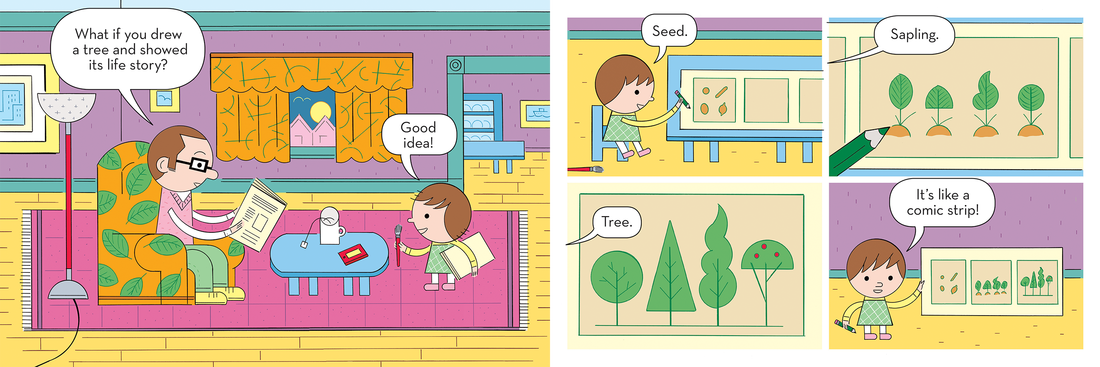
A teacher gives his class an assignment: draw 12 things, but in sets. Everything else is up to them: how many sets, what to draw, what colors to use. Annemarie, one of the girls in class, thinks deeply about what to create, as we see her classmates get to work on their sets. The book introduces readers to the beginning principles in multiplication; sorting; and thinking outside the box, as we see through the kids’ assignments. The book is so meta – it’s a math assignment within a math assignment – that teachers can easily use this as a math storytime.
Ivan Brunetti’s previous TOON book, WordPlay, played with language and compound words, and also starred Annemarie, a child of color in a diverse classroom of friends. As an art teacher, he has a gift for seeing things differently, and has the talent to make his ideas fun and relatable to a young audience. My 6-year-old read 3×4 to me, cover to cover, one night, after I read it to him and we worked through all the similarities between events in the book and what he’d done in his Kindergarten classroom the past school year. I’d love to try a math challenge for the kids in my library, asking them to start with 3 x 4, and go from there: make an art gallery and keep switching up the numbers. Have stickers and stamps and other creative materials handy!
3 x 4 has a starred review from Kirkus. As with all TOON books, a free, downloadable teacher’s guide is forthcoming.
We Are All Me, by Jordan Crane, (Sept. 2018, TOON Books), $12.95, ISBN: 9781943145355
Ages 3+
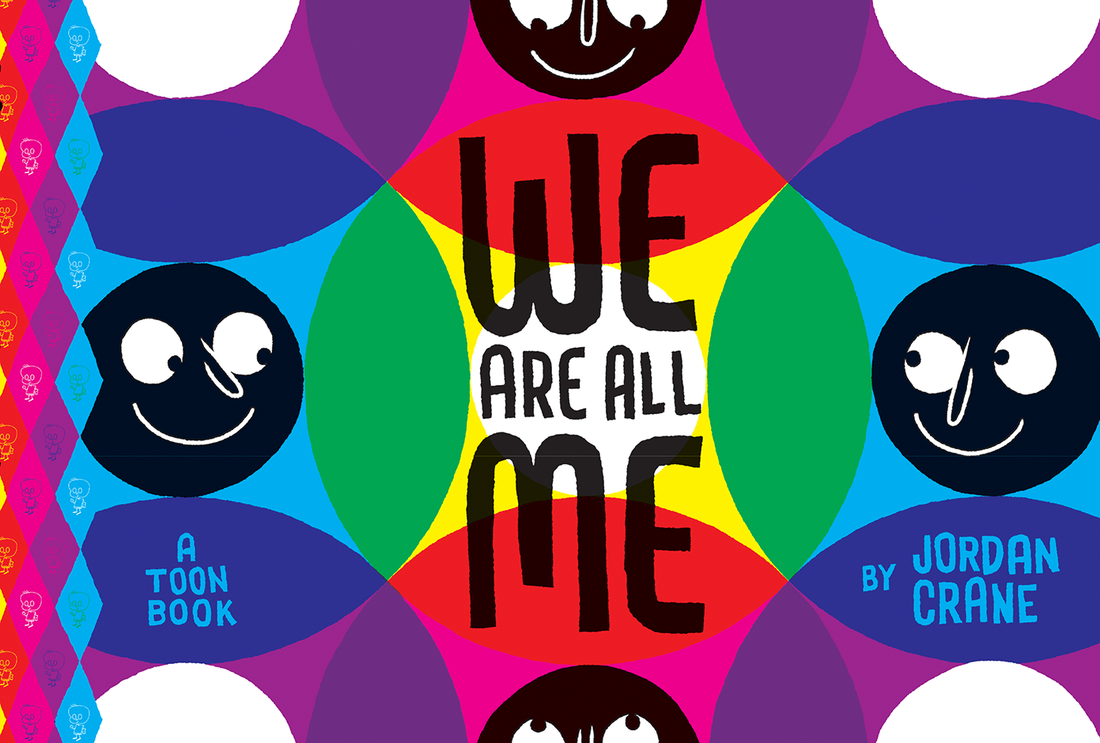
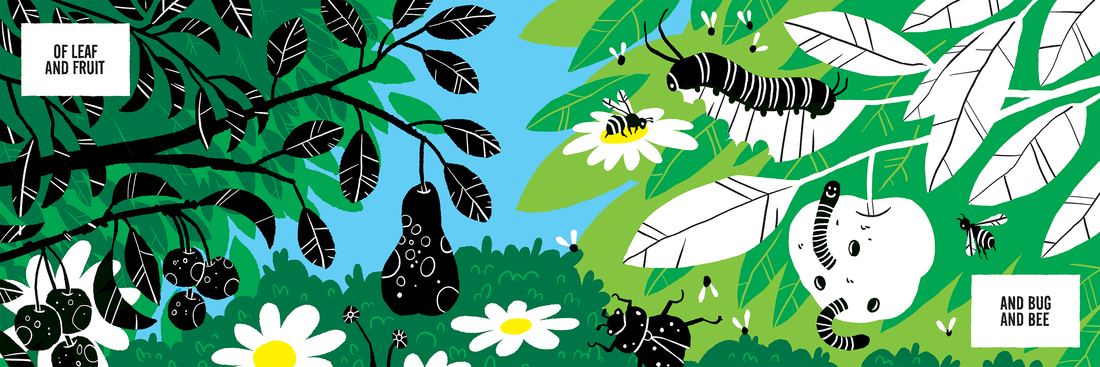
A dot forms and takes readers on a visual journey through existence. As it moves through bodies, nature, DNA, and space, readers experience evolution, our relationship to the Earth, and consciousness, all in vibrant, pulsing, day-glo pen, ink, and tablet artwork. Spare text reads lyrically, almost mantra-like, as we – via the dot – progress through time and space. The visual confirmation that we are connected to this world, and to one another, is exciting and humbling all at once; for young readers, it’s mind-blowing and beautiful. This is one of those books that left me speechless when I first read it, because it’s breathtaking and uses such brief, eloquent verbiage to explain… everything. A stunning must-have for all collections. Own it, and read it. Often.
The Ultimate Survival Guide to Being a Girl, by Christina De Witte, with Chrostin, (Aug. 2018, Running Press), $14.99, ISBN: 978-0-7624-9043-1
Ages 13+
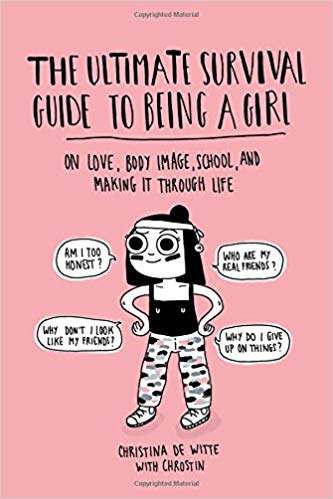
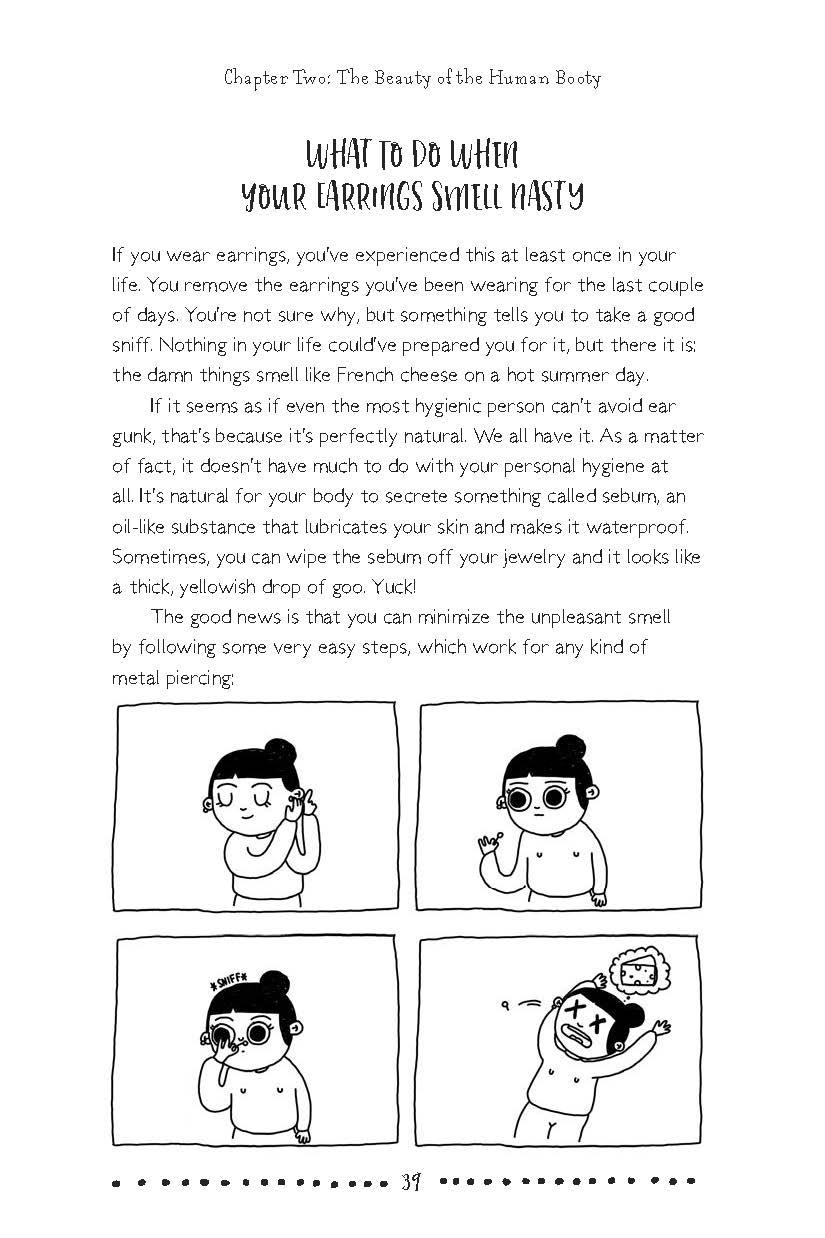
Being a teen is tough these days! Social media, body image, school, work… teens are under pressure. Webcomic author and illustrator, Christina De Witte, whose comic Chrostin follows the amusing day-to-day adventures of a young milennial, is here to help with advice on tattoos, sex and relationships, periods, mental and physical health, and more. Black and white illustrations starring Chrostin flow throughout the book.
The book may first present as a guide to puberty for tweens, but this is all for teen girls. Read Chrostin and you’ll quickly see that this is a comic for millennials, not up-and-coming kids. The author is only 20, putting her at a good age to offer advice; the book’s conversational tone and laid back language make this an easy read that readers can pick up at any point. The book is divided into 10 chapters, on issues including Internet safety, diversity, society, love, food, and fashion. She emphasizes healthy eating and endorses a vegetarian/vegan lifestyle, including some quick and tasty recipes that come together cheaply and quickly; she also shares beauty and fashion hacks for a student’s salary.
The Ultimate Survival Guide to Being a Girl is a good reference to have on your shelves for teens. Want to learn a little more about Chrostin? BuzzFeed has a fun Chrostin article from 2016, and you can follow her on Instagram.
Henry and the Yeti, by Russell Ayto, (Aug. 2018, Bloomsbury USA), $16.99, ISBN: 9781681196831
Ages 3-7
Henry is a little boy who loves yetis, but no one is quite sure whether or not yetis actually exist. Except for Henry, that is. He gets some time off from school, packs his equipment, and heads off on an expedition to the snowy mountains. Just when he’s ready to turn around and go home, SURPRISE! He finds a yeti! The two hit it off, snap some pictures, and Henry heads back home, delighted. But when he unpacks his gear, he discovers, to his horror, that he left his camera behind! How can he prove to his principal and classmates that he isn’t making things up? It’s a good thing that yetis are such good friends.
What an adorable book about friendship Henry and the Yeti is! I especially love the quirky, cool-hued artwork, making Henry and instantly likable little boy with huge glasses, expressive eyes, and a turtleneck that hides the rest of his face and covers most of his body. The yeti is an amorphous, white blob on two legs, and he, too, has tremendous, kind eyes. The size difference makes these two friends adorable together as they take selfies and share hugs. The sparse illustration allows readers to give Henry their full attention and sets him apart from his principal and classmates, all of whom stand taller and wear more shifty, less open, facial expressions. The text is tongue-in-cheek, working wonderfully with the artwork. When the principal uses a bullhorn to announce Henry’s punishment, we see the large yeti’s legs and body come into view, and the text reads, “Oh! Henry sees the yeti again. The yeti sees Henry. The principal sees the yeti. And everybody stops laughing.” The joke is on the mean crowd, and we’re there to savor it as it unfolds, as does on the next page… but I’ll let you read it for yourself. Suffice to say, Henry’s reputation is saved and he’s gained a friend for life; the principal and classmates have learned a valuable lesson about being kind. The book was originally released in the UK in 2017
Read this one out loud, and make sure you leave time for all the giggles and “awwwwwws” you’ll hear. Add Henry and the Yeti to your stories about empathy, friendship, and yes… yetis (psst… sasquatches work, too).
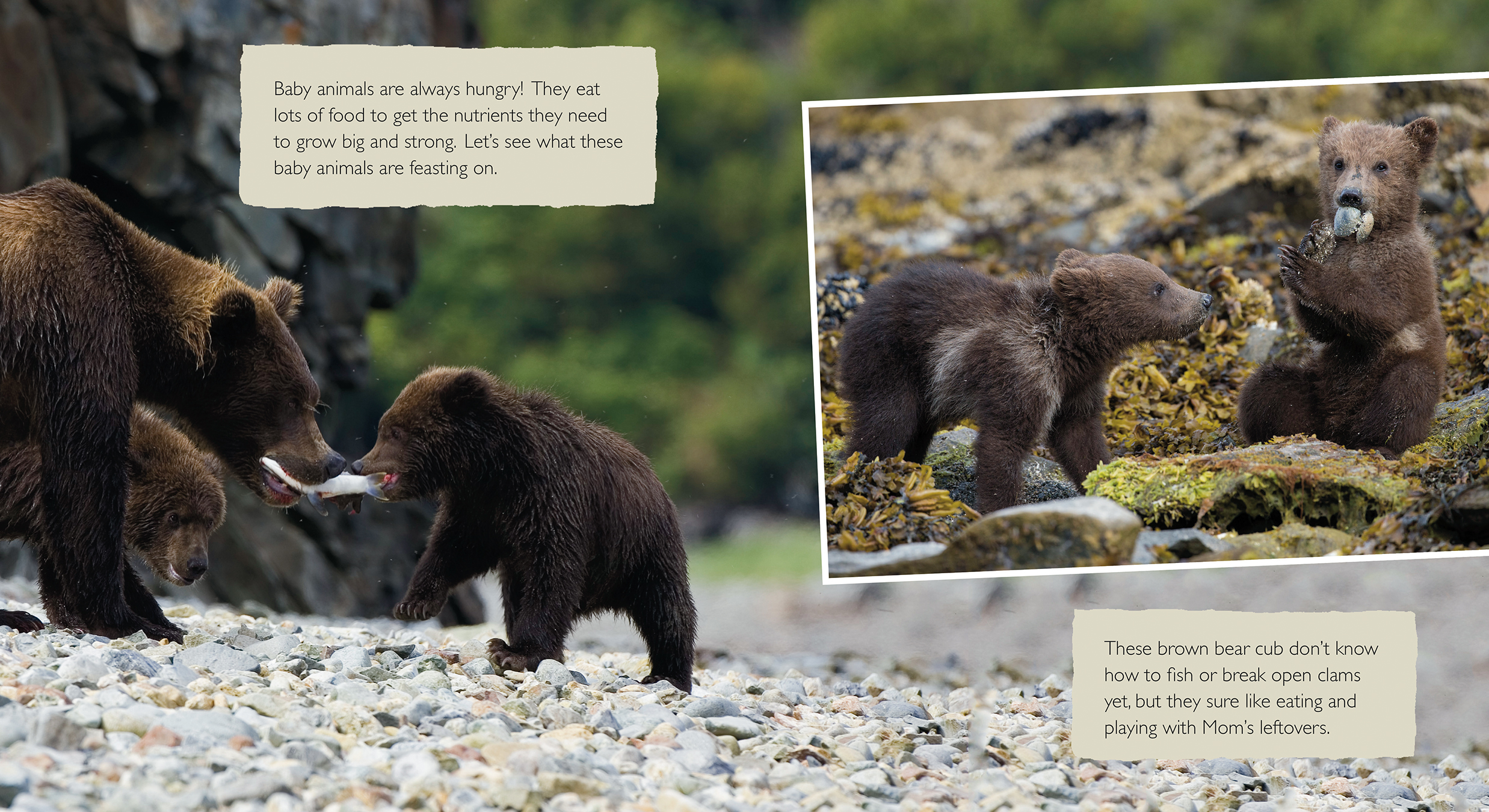
Wildlife photographer Suzi Eszterhas’ third Baby Animals book, Baby Animals Eating, spotlights more adorable baby animals, and their parents, enjoying foods from eucalyptus leaves to mother’s milk. The pictures are vibrant, and the text teaches readers about animal behavior and differing food needs. The previous books, Baby Animals Moving and Baby Animals Playing, come together to form a great introduction to natural science for early learners, and can lead to a good discussion on nutrition. Ask kids what they like to eat; ask for similarities and differences (Bears like to eat clams and fish; do you? Koalas eat eucalyptus leaves; what leaves do you like to eat?) Notice the relationships between parents, siblings, and babies: does your grownup carry you? Do you and your siblings like to eat the same things? Back matter includes more information about Suzi Eszterhas and some behind-the-scenes photos.
This is a great book for storytime, and the crisp pictures allow for early and pre-readers to explore independently. A nice series to add to early nonfiction collections, and a great book to give little ones who love animals. (Go around the room and point out different toys and stuffed animals, and see how many kids can point out from the book.)
Keep Suzi Eszterhas’ webpage on your list of reference links. She’s got a fantastic amount of information on the page, including her books, newsletter, tours and workshops, and a gallery with some of the most incredible wild animal photos you’ve ever seen (perfect for animal reports!). There’s also a link to Girls Who Click, an organization founded by Eszterhaus, empowering young women to enter the field of nature photography and further global conservation efforts.
I’m back after a week of radio silence! It wasn’t intentional; I was just enjoying a few days off and hanging out with my kids before the hectic new school year starts up.
I’ve got loads of books to talk about, and I want to get back into talking about programming, too. But first… I have a confession to make.
I received a promotion, and just passed my 6-month probation. I’m an assistant manager at my community library now, and we have a wonderful children’s librarian who’s inherited the room, and the kids. She’s a programming whiz, too, so the kids are having a ball over there, whether they’re learning Harry Potter coding or chasing bubbles at storytime.
I was terrified to write about my promotion, because for the longest time, I worried that no one would see me as a children’s librarian anymore. But I still love kidlit, and I am still passionate about children’s librarianship and early childhood literacy. Being at my small community library allows me the luxury of being able to still keep a toe in the children’s librarian world – the current children’s librarian knows I will gladly take on storytimes and class visits when she’s off – while still exploring this profession, and for that, I’m truly grateful. Plus, Carla Hayden started out as a children’s librarian, so if she has any advice for me, I’m listening!
Bottom line: I am still voraciously devouring kidlit and playing around with programming. I’ll always find a way to talk about children’s literacy and programming here, and nothing here at MomReadIt will change. Honest. I’m always going to be a children’s librarian at heart, because my heart is what led me to change careers and pursue children’s librarianship. Please stick around for more reviews and articles; I’d like to think that MomReadIt still has things to say.
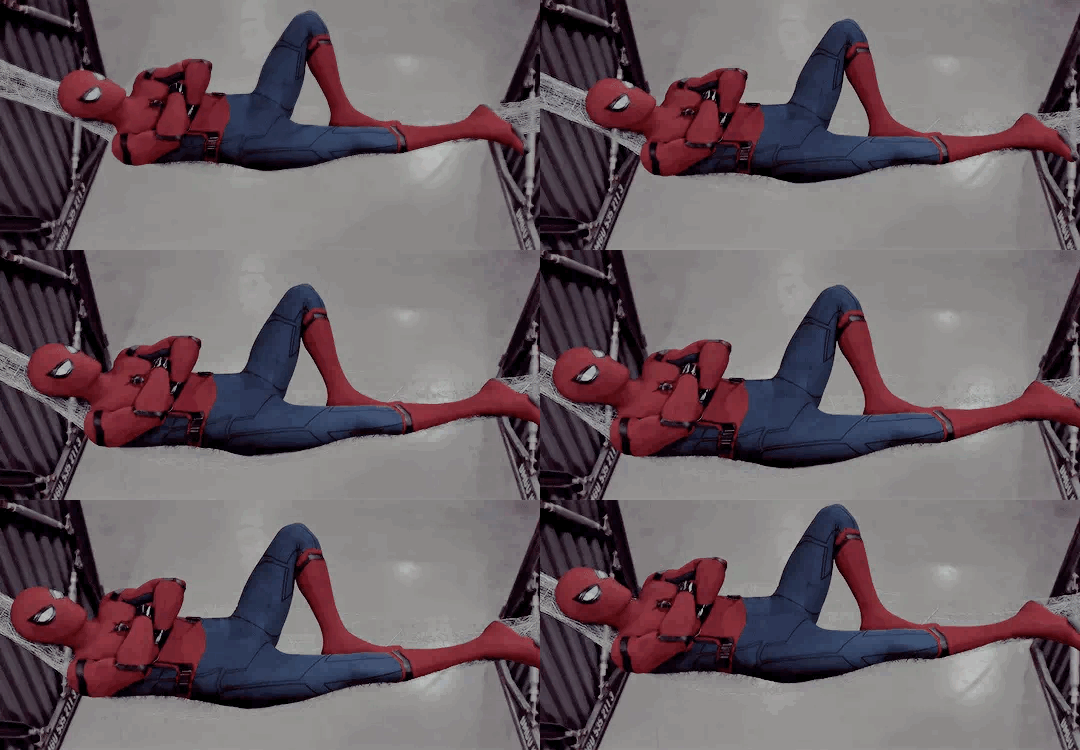
With that… my manager got a big laugh out of this picture, so I’ll share with you, too.
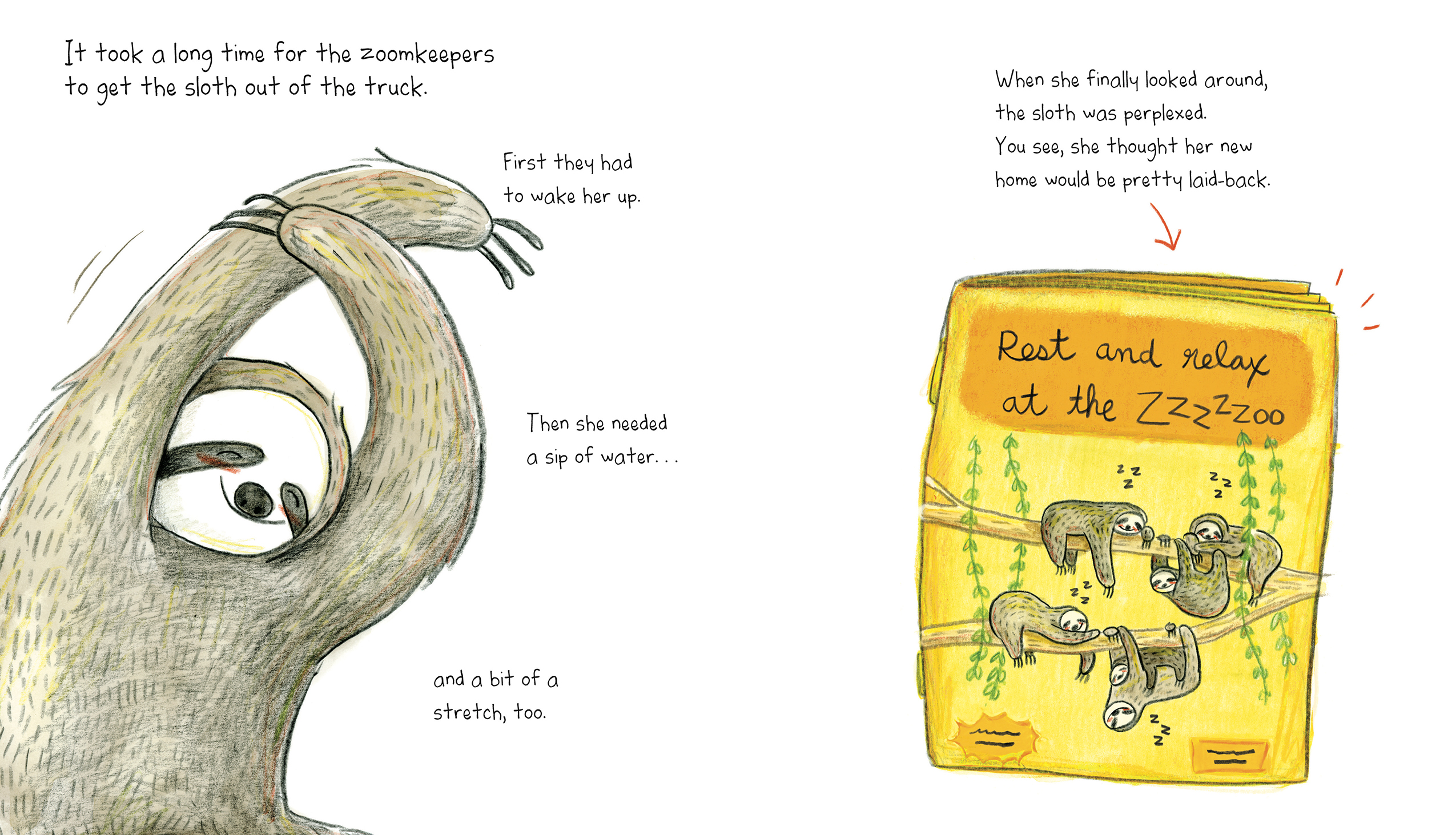
Sloth at the Zoom, by Helaine Becker/Illustrated by Orbie, (Aug. 2018, OwlKids), $17.95, ISBN: 9781771472494
Ages 3-7
Poor Sloth! She thought she was being dropped off at the Zzzzzoo, but something must have gone wrong with the paperwork: she’s been brought to the Zoom! It’s a very big difference, you see. At the Zzzzzoo, life moves along at a gentle pace; there’s time for naps in the sun, it’s relaxing, it’s all good. But at the Zoom? Whoosh! Zebras run by so fast, they leave their stripes in puddles! Parrots fly so fast, their tails draw rainbows across the sky! It’s VERY stressful, especially for poor Sloth, who wants to make friends, but no one has the time to give her. Finally, she meets Snail. Snail has time! Snail becomes Sloth’s friend, and the next thing you know, the Zoom is becoming a much nicer place to be. Sometimes, you just have to slow down and enjoy life, right?
It’s so nice to read a story that encourages life in the slow lane, isn’t it? I feel like we’re overscheduled and stressed out, our kids are overscheduled and stressed out, everyone’s got extracurricular activities, work, school, and deadlines seem to pop up everywhere, like neon signs. Kids are racing around like zebras, leaving their stripes behind, and so are we. Seeing two friends meet in the middle of this chaotic atmosphere, and bond over their shared moment of slowing down, gives hope to the rest of us, doesn’t it? Sloth at the Zoom shows readers that it’s in our hands to just stop, just slow down, and to discover the wonderful things that we often miss when we’re running by them. Slow living is contagious, too – if you slow down, someone else may, too. And that’s a good thing.
Sloth at the Zoom celebrates the Slow Living Movement, a lifestyle that puts the importance on mindfulness and embracing the slower aspects of life. There are blogs and websites dedicated to the movement, and there are books for adults and kids alike. One of my current favorites is The Slowest Book Ever, by April Pulley Sayre, which celebrates the science of slow in our world. But to start, all you really need to do is just take a deep breath and slow down.
Cuddle up with your little ones and enjoy a nice, slow read.
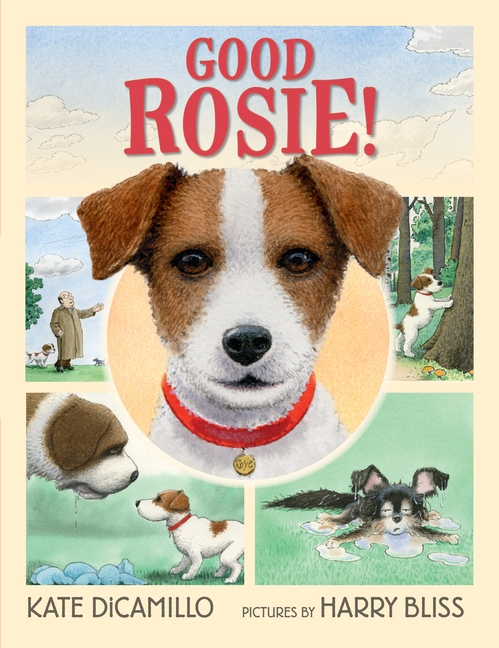
Good Rosie!, by Kate DiCamillo/Illustrated by Harry Bliss, (Sept. 2018, Candlewick Press), $16.99, ISBN: 9780763689797
Ages 4-7
Rosie is a sweet-faced Jack Russell terrier who lives with her human friend, George. She and George have a quiet life together, and Rosie feels lonely as the two go through their daily routine. George decides to shake things up a bit, and brings Rosie to a dog park, but Rosie’s a bit nervous, overwhelmed by all the new, strange dogs there. When a big St. Bernard named Maurice lumbers over to her with his stuffed bunny, Rosie is immediately on guard. How can Rosie make some new friends?
Kate DiCamillo has the gift of words, and Harry Bliss creates hilarious and poignant moments in this comic panel-styled story about making new friends. Rosie looks into her water bowl and sees her reflection, which she thinks is another dog; when she barks at the dog, she feels lonely, because “the other dog never answers”. Later, on her walk, she barks at a dog-shaped cloud; its lack of response makes Rosie “feel lonely in an empty-silver-bowl sort of way”. It’s just wonderful writing that speaks directly to the reader, eliciting that same disappointed, lonely feeling that Rosie experiences. And then, there are moments when the art and words come together to produce moments of sheer delight, as when Maurice introduces himself to Rosie: “‘My name is, uh, Maurice,’ says a very big dog. ‘And I have a bunny.'” The words are adorable, and the size difference between Maurice and Rosie make the full-page panel come to life.
The story addresses social skills when new friends come together: Rosie is lonely, but overwhelmed when thrust into a new social setting; Maurice needs a little bit of help with his social skills (and understanding his size in relation to other dogs), and Fifi, another small dog with a sparkly collar, is excitable and jumpy, which confuses Rosie and Maurice, who don’t immediately know how to react to her. With a little help from the grownups, and some get-to-know-you time between the pups, the day at the park ends with a group of new friends who look forward to playing together again.
This is a great back to school story for kids, especially for new Pre-K or Kindergarteners, who are starting school for the first time. I love this sweet story, and so will your readers (and you). Know a kid who’s starting school, or starting a new school, soon? Cuddle up with them and let them know that if Rosie can do it, so can they. Good Rosie! has starred reviews from Publisher’s Weekly, School Library Journal, and Kirkus.
NatGeo Kids rolled out a new series of books. The Absolute Expert series helps kids become experts on a favorite, high-interest topic: current topics are Dolphins, Dinosaurs, Volcanoes, and Soccer. Experts in the field act as guides, leading readers through the info-packed books. Stunning photos, facts, and activities make each volume a great reference for science and STEM collections, and great desk references for kids who just can’t get enough of their favorite topics.
Absolute Expert: Volcanoes, by Lela Nargi and Arianna Soldati, (Aug. 2018, National Geographic Kids), $14.99, ISBN: 9781426331428
Ages 8-12
Volcanologist Arianna Soldati guides readers through a solid volume on volcanoes. Kids learn about ocean volcanoes, volcanoes in space, and deadliest eruptions (psst… Vesuvius isn’t #1!) The book explains plate tectonics and features a world map noting explosive volcanoes, and gives readers a heads-up on staying safe during a volcanic eruption, including an evacuation plan strategy exercise. Four “Get in the Flow!” sections provide activities that will take kids deeper; from building and cataloging a rock collection to creating a volcanic (soda) eruption of one’s own. Resources for further reading and an index finish up this book.
I buy all the volcano/natural disaster books I can get my hands on, because the schools here do a science unit on natural disasters, and the kids raid our libraries, usually heading for the volcano books first. I remember my first year as a librarian, hosting a class trip, and having the teacher ask me where those books were. I pointed out the shelf, and the kids swarmed me. TWO SHELVES. EMPTY. Since then, I don’t play games with my natural disaster books, and neither should you.
The writing is geared for middle grade to early middle school, with scientific terms that may send kids to the dictionaries (and good for that!) for new terms, while photos and illustrations provide a look at volcanoes in various stages of being, from quiet to very, very active. If seeing lightning hit a volcano spewing lava doesn’t inspire an awesome respect for nature, I don’t know what will.
Absolute Expert: Dinosaurs, by Steve Brusatte and Lela Nargi, (Aug. 2018, National Geographic Kids), $14.99, ISBN: 9781426331404
Ages 8-12
Paleontologist Steve Brusatte combines forces with author Lela Nargi to make dino EXPERTS out of readers. My favorite section? The little callout box that tries to unravel the mystery of T-Rex’s itty bitty arms. Turns out, they were incredibly strong, and have to have served some purpose, but what? We still don’t know, but there will be countless memes to entertain us until we do. There are details on some of the biggest and smallest dinosaurs; a dinosaur family tree that shows how dinosaurs evolved as history marched on, and a nice section dedicated to feathered dinosaurs, including the evolution of dinosaur feathers, with a picture of a fossilized archaeopteryx feather! Photos of fossils and dino digs make this a perfect volume for budding archaeologists, and beautiful illustrations help readers put faces to those bones they see in the museums. (Jurassic Park does a pretty good job of that, too, but the dinos are usually trying to eat people; this is much less threatening.) A world map spread points out where dino evidence has been found, worldwide, and four “Dig In” sections teach kids about dino tracking, offer quizzes, and invite kids to make their own dinosaur teeth and paleontologist field kits.
Do I even need to say this book is a given in your collections? It’s NatGeo, and it’s dinosaurs. Put this NatGeo dino page on your reference resources list of links: there are videos, activities, and games, and there’s a YouTube video playlist of nothing but dinosaurs! That is a program all by itself!
Absolute Expert: Dolphins, by Jennifer Swanson and Justine Jackson-Ricketts, (May 2018, National Geographic Kids), $14.99, ISBN: 9781426330100
Ages 8-12
Marine biologist Justine Jackson-Ricketts serves as the guide in this volume, taking readers deeper into the world of dolphins. A world map spread shows kids the waters where dolphins tend to spend their time. There are tips on becoming a dolphin trainer, what to do if one encounters a stranded animal, and important life lessons dolphins have to impart (“Thanks for the all the fish” is not one of them). As Justine Jackson-Ricketts’ research involves ecology, there’s substantial information on preservation and conservation of our waters and of our dolphins; the authors also shed some light onto the captivity debate. Four “Dolphin Deep Dive” sections help kids design a dolphin study, offers suggestions on how to move and like a dolphin, tests kids’ ability to find dolphin figures in everyday objects, and organize a beach clean-up. Resources for further reading and an index are included.
There are wonderful pictures of dolphins and orcas in here, sure to please animal fans and make some new ones. There are great call-out facts here – perfect for adding to projects and classroom/library displays, too! There’s good scientific writing that challenges readers, and some information on the National Geographic Pristine Seas Initiative; National Geographic’s commitment to explore and help save the last wild places in the ocean. This is a good site to keep in your reference links: there are videos taken on the Initiative’s expeditions, mission descriptions, and updated news events as they unfold. Conservation projects and ocean research projects can get a nice boost from this site.
Absolute Expert: Soccer, by Eric Zweig and Mark Geiger, (May 2018, National Geographic Kids), $14.99, ISBN: 9781426330087
Ages 8-12
Professional soccer referee Mark Geiger is here to talk soccer with author Eric Zweig. Conversation goes into supporting one’s team and the different ways fans around the world show their love, including the now-famous vuvuzela; soccer jargon and the 17 Laws of the Game. There are maps of the field and the positions’ places on the field, an explanation of the penalty cards, and a history of “the beautiful game”. A Soccer Around the World section celebrates the diversity of the game and its fans, and since this is a book on sports, there are World Cup numbers, results by nation, and a US map of MLS teams, for us Americans just getting on the soccer bandwagon. Facts and stats throughout give readers some extra street cred knowledge, and four “Get in the Game” activities encourage kids to make up their own game and offer quizzes. There are great photos and illustrations of soccer players and equipment through history, and there are callout biographies on major players throughout. The text is easily readable by middle grade and middle schoolers; this is a volume that soccer fans are going to love.
Check out the National Geographic World Cup 2018 website for vintage photos, World Cup facts, and articles on the science of sport. This 2014 National Geographic blog post, Why the World Cup is About More Than Soccer, puts into words how the sport brings people together, worldwide.
NatGeo, keeping it real for my nonfiction section.
I love using interactive books in my storytimes. They get the kids involved, engage their minds and their bodies, and they’re just a load of fun. I’ve just received two new interactive books from Bloomsbury that will be big fun for pre-k and Kindergarten readers, and that can easily be applied to lessons incorporating music time or a sensory storytime. Let’s read on.
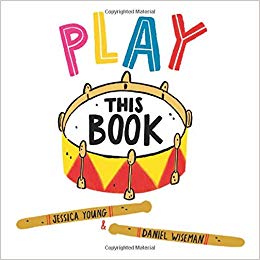
Play This Book!, by Jessica Young/Illustrated by Daniel Wiseman,
(May 2018, Bloomsbury USA), $15.99, ISBN: 9781681195063
Ages 4-7
A group of friends is getting ready to put on a show, but they need some extra hands to play in their band! This rhyming story invites kids to try out their musical skills on each spread: strum a guitar, bang on a drum, tickle the ivories on a piano, or shake some maracas! Every instrument has its own sound in bold, expressive fonts. Pass the book around and let your readers take a turn on the instruments in the book, or lead a band of your own with toy instruments! A diverse group of children march across the stage playing their song, and invite readers to make their own music: take the book up on that offer, and lead your little band on a march around the room. It’s absolute fun to read, and the art is big and eye-catching. Endpapers get into the fun, with a stage bearing a “Welcome” banner in front, and a custodian cleaning up afterward.
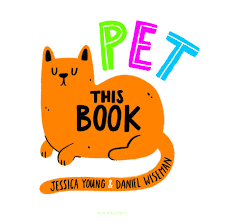
Pet This Book!, by Jessica Young/Illustrated by Daniel Wiseman,
(May 2018, Bloomsbury USA), $15.99, ISBN: 9781681195070
Ages 4-7
Bust out the stuffed animals and get cuddly for this fun book about the senses. A child of color (reminiscent of Doc McStuffins) invites readers right into her world, where she’s getting ready to take care of pets. Readers can pet a cat, scrub a pup in a tub, and feed a lizard a tasty treat. Each spread features a bright, boldly illustrated animal and a bold animal sounds. As with Play This Book, there’s time for a break, where kids can count to three and continue. There are no textures here for the kids to touch, but the book provides a perfect opportunity to ask kids what they think a cat, bird, or a lizard feels like. Have some textured toys available for kids to touch and explore! The rhyming text moves the book along at a fun pace, and a there’s good advice about the responsibility of caring for a pet built into the rhyme. A diverse group of kids line up with their animals to sound off. Endpapers open with a daytime scene on a farm, and close with the same group of animal friends sleeping, moon and stars in the sky.
Each book has digital art created with “Photoshop, custom brushes, and a lot of bright colors”, and kids will thoroughly enjoy it. Author Jessica Young has free, downloadable resources, including printable activity sheets for both Play This Book and Pet This Book, at her website, so make sure to visit.
These are big fun for storytimes bookshelves. Check them out.
 Just Breathe, by Mallika Chopra/Illustrated by Brenna Vaughan, (Aug. 2018, Running Press Kids), $12.99, ISBN: 978-0-7264-9158-2

















 Mom Read It