Posted in Non-fiction, picture books

Nature is the artwork in Drawn from Nature

I think I can finally put away my winter coat, which has me embracing Spring and Spring-like books! I think I’ll devote today’s posts to nature-related artwork and storytelling.

Drawn from Nature, by Helen Ahpornsiri, (March 2018, Candlewick), $22.00, ISBN: 9780763698980

Recommended for readers 6-10

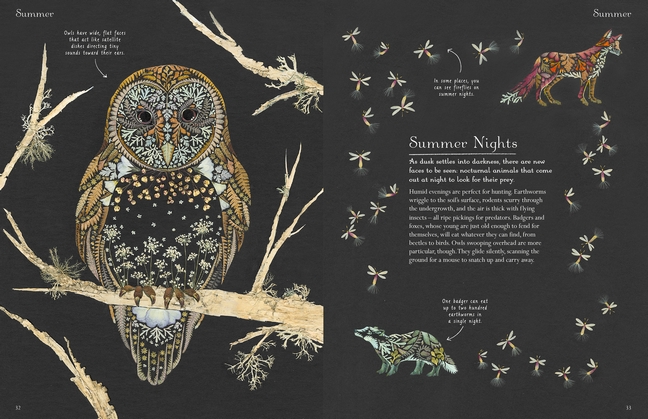
This look at the seasons is just stunning. The artwork is created using hand-pressed flowers and foliage (responsibly grown or foraged in the wild, as the artist/author’s note takes care to mention). Flowers and leaves create bird feathers and beaks; eggs and nests, ladybugs and butterflies. Helen Ahpornsiri takes readers through each season, making sure we notice the beautiful little notes from nature; from building a nest in Spring, to swooping swallows and chirping crickets in the Summer; from the fragile dandelion puffs of Autumn to the bare branches of Winter, each season reveals itself through delicate and exquisite art.

The endpapers delight with colorful garden scenes and each season’s nature maintains its color palette: Spring is verdant and green, bright and bold; Summer is deeper, vibrant, with an emphasis on fireflies and nocturnal animals who hunt by night; Autumn colors become more yellow and red, crisping at the edges, and Winter is spare, fragile, with clustered and hibernating animals and bare branches; evergreen leaves holding onto their leaves.

As Booklist notes, Drawn from Nature is a beautiful blend of art and science and is a wonderful inspiration for art classes as well as nature and earth science classes. A glossary includes terms mentioned throughout the book. Get those leaves, twigs, and stones for the kids, then let them have at it! Drawn from Nature has a starred from Kirkus.

Posted in picture books, Preschool Reads

Little Brothers and Little Sisters just want to play!

Little Brothers & Little Sisters, by Monica Arnaldo, (Apr. 2018, OwlKids Books), $16.95, ISBN: 9781771472951

Recommended for readers 3-7

Little brothers and sisters all want the same things: a turn at the wheel, the secret password, a place on the team… they also want a bodyguard, a partner in crime, and a best friend. Monica Arnaldo’s picture book looks at the ups and downs of being a younger sibling, through the eyes of a diverse group of children living in and around an apartment building.

The first half of the book illustrates a group of younger siblings waiting for their older siblings to make space for them as they hog the TV, monopolize play time, or keep them out of the fun; the second half looks at the upsides of having a loving sibling who will be a protector, a teacher, a friend. Four pairs of siblings from varying cultural backgrounds will appeal to kids with older (or younger) siblings, sure, but it’s also great to read to kids in a classroom setting, comparing what it’s like to be in lower grades versus upper grades. It’s a lesson in empathy for older children, and a gently encouraging story for younger kids who may feel like the older kids get to do everything. Invite kids to talk about the great parts about being older versus younger; invite them to talk about the ups and downs in their own lives. Many older siblings are responsible for watching over their younger siblings; this story gives kids a chance to talk about their experiences and may help frustrated readers see the benefits of being a positive role model.

Muted but colorful artwork and expressively illustrated characters, paired with simple text make this a nice choice for storytime and individual reading. Definitely a great big brother/big sister gift. Little Brothers & Little Sisters received a starred review from Kirkus.


Posted in Fiction, Middle Grade

Spotlight on THE DOUGHNUT FIX

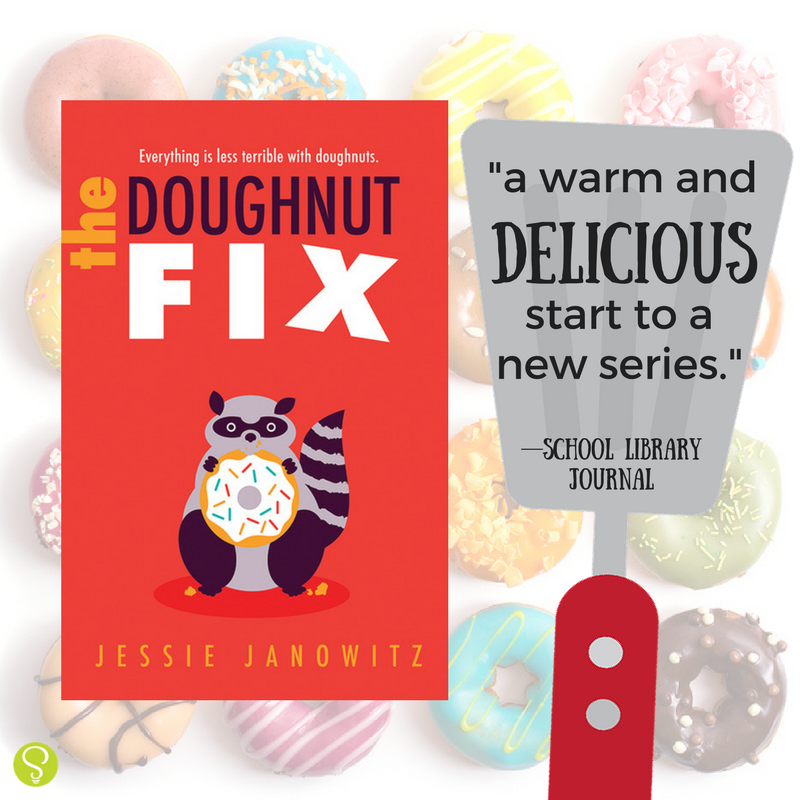
Yoinks! I had a scheduling malfunction yesterday; please enjoy today’s spotlight on Jessie Janowitz’s book, The Doughnut Fix (also reviewed here last month): and enjoy a giveaway opportunity (read through to the end of this post)!
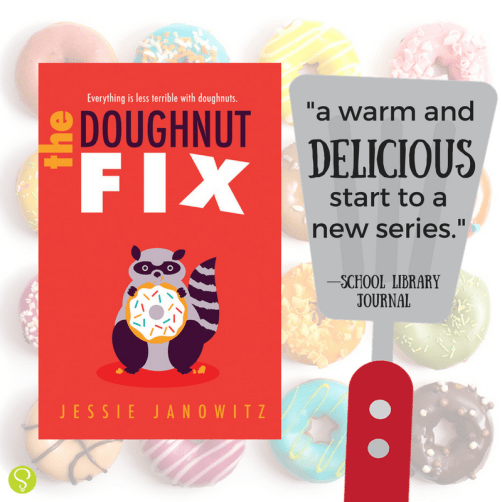
Title: The Doughnut Fix

Author: Jessie Janowitz

Pub Date: April 3, 2018

Superfudge meets The Lemonade War in this funny, heartwarming series debut about change, adventure, family, and of course, doughnuts.

Tristan isn’t Gifted or Talented like his sister Jeanine, and he’s always been okay with that because he can make a perfect chocolate chip cookie and he lives in the greatest city in the world. But his life takes a turn for the worse when his parents decide to move to middle-of-nowhere Petersville—a town with one street and no restaurants. It’s like suddenly they’re supposed to be this other family, one that can survive without bagels and movie theaters.

His suspicions about his new town are confirmed when he’s tricked into believing the local general store has life-changing chocolate cream doughnuts, when in fact the owner hasn’t made them in years. And so begins the only thing that could make life in Petersville worth living: getting the recipe, making the doughnuts, and bringing them back to the town through his very own doughnut stand. But Tristan will soon discover that when starting a business, it helps to be both Gifted and Talented, and It’s possible he’s bitten off more than he can chew…


Jessie Janowitz grew up in New York City and is still living there with her husband and three children, all of whom love doughnuts as much as she does.

Buy Links: Amazon | Barnes & Noble | Books-A-Million | Indiebound

 

Rookie Cinnamon Sugar Doughnuts*

Parental supervision necessary for frying

Makes 8 doughnuts and 8 doughnut holes

Ingredients

Vegetable oil

1 (8-count) tube of premade, large biscuit dough (found in the refrigerated dough aisle at supermarkets)

½ cup sugar

¼ teaspoon ground cinnamon

Directions

Fill a large saucepan with vegetable oil to a depth of 1 inch.

Heat oil over medium heat until it reaches 365°F. You can measure the temperature with a cooking oil thermometer. Or, drop a single kernel of popcorn into the oil as it’s heating. When the kernel pops, you’re ready to fry.

While the oil heats, open the biscuit tube and separate the rounds. Use a 1-inch-round cookie cutter to cut a hole in the center of each biscuit. Save the holes.

Mix the sugar and cinnamon in a large shallow bowl.

Add 2 doughnuts to the hot oil at a time. Cook, turning once, until golden brown—about 1 minute per side.

Drain on paper towels and immediately toss in the cinnamon sugar to coat. Cool on a wire rack. Repeat with the remaining doughnuts and holes.

* Ready to graduate from rookie to experienced baker? You can make the Doughnut Stop’s life-changing chocolate cream doughnuts too. Visit jessiejanowitz.com for the original recipe.


Perfect Chocolate Chip Cookies

Makes 3 dozen cookies

Ingredients

1 cup light brown sugar

¼ cup granulated sugar

2 sticks unsalted butter, softened

2 eggs

1 teaspoon vanilla extract

1 teaspoon baking soda

1 pinch of salt

2 cups all-purpose flour

18 ounces semisweet chocolate, in bars

½ cup unsweetened shredded coconut

1 cup chopped walnuts

Directions

Preheat the oven to 350°F.

Cut parchment paper to cover baking sheets.

Put the light brown sugar, granulated sugar, and softened butter into a large mixing bowl and cream together in an electric mixer on medium.

In a small bowl, crack the eggs and mix them with the vanilla extract.

Combine the egg mixture with the sugar and butter mixture and mix thoroughly on medium.

In another bowl, combine the baking soda, salt, and all-purpose flour.

Add the flour mixture to the sugar and butter mixture in the large bowl and mix on low. Don’t overmix.

Break the chocolate bars into chunks.

Add the chocolate, coconut, and walnuts to the mixture and stir with a spoon.

Once combined, scoop the dough out with a tablespoon and place the balls on the baking sheet. Leave about two fingers width between each cookie.

Bake cookies for 12 minutes.

Remove cookies from the oven and leave on the baking sheet for 1 minute. Then, transfer the cookies to a wire rack to cool.

 

Want a chance at winning your own copy of The Doughnut Fix? Check out this Rafflecopter giveaway! U.S. addresses only, please. Good luck!

Posted in picture books, Preschool Reads

Rusty the Squeaky Robot wants to be your friend!

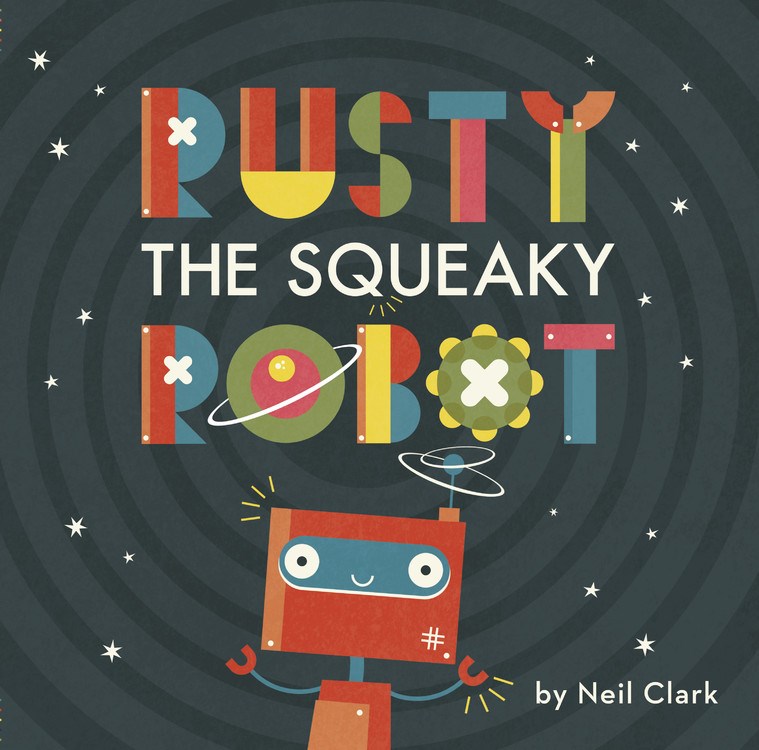
Rusty the Squeaky Robot, by Neil Clark, (Apr. 2018, words & pictures), $17.95, ISBN: 9781910277522

Recommended for readers 3-6

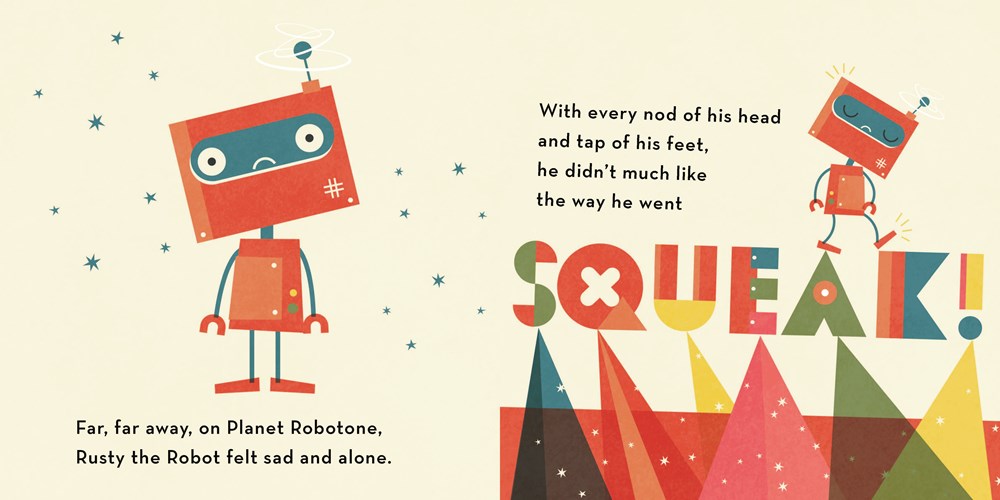
Rusty is a friendly robot who’s uncomfortable with the way he sounds. He squeaks, and he really doesn’t like it: “If he couldn’t like his squeak/Then he couldn’t like himself”; he’s really letting this squeak get him down. Luckily, the other robots on on Planet Robotone are there to show him that everyone’s got something to make them different, whether they Squeak!, Boom!, Twang!, or Hoot!, and when differences come together, they can create some great music!

This is such a positive story about owning one’s own individuality and embracing diversity. It’s a positive story about friendship, sending a message to kids about empathy and acceptance. The rhyming text is light and fun, inviting kids to move with the words, and the retro artwork is bright and fun, with basic black fonts setting the story apart from the big, colorful sounds each robot makes. Robot fans will love this upbeat story!

Posted in Middle Grade, Non-fiction, Preschool Reads

NatGeo Kids is going to the dogs!

NatGeo Kids has two books on dogs out, and they are ADORABLE. We’re in the Lunar Year of the Dog, May is National Pet Month, and today is National Pet Day – so what better time to celebrate our best friends? (Full disclosure: My cat scoffed at me as I ran this by her. But she’s a cat, so…)

Dog Days of History: The Incredible Story of Our Best Friends, by Sarah Albee, (March 2018, NatGeo Kids), $19.99, ISBN: 978-1-4263-2971-5

Recommended for readers 8-13

Dogs have been our companions from the beginning: humans have had canine companions for more than 15,000 years. Dog Days of History is a kid-friendly look at that relationship through time; author Sarah Albee starts with the origins of the dog, from wolf to domesticated companion, to mixed breeds, and then takes us through an illustrated history of this long-lived relationship: from dogs in the ancient world, through the Middle Ages and Renaissance, to the present day and the future. We learn about dogs as pampered companions and hard workers; dogs like Balto, the famous sled dog who braved the Alaskan snow to bring medicine to the people of Nome, Alaska, and Laika, the canine cosmonaut who went to space in 1960.

There are great photos – it’s a NatGeo book – and fun facts aplenty throughout the book. One of my favorites is the list of common names for dogs in Ancient Egypt, which include “Good Herdsman”, “Grabber”, and “Blackie”. There are Algonquin names, too; my favorites are “Where’s That?” and “Ask Him”. Top Dog callouts highlight famous dogs in history, like Stubby, a stray bull terrier found by an American soldier in 1918, smuggled into France, and who went on to win medals of valor after warning a sleeping sergeant about a gas attack, locating wounded soldiers on the battlefield, and capturing a German spy. Want to translate dogspeak in other languages? There’s a list of how other dogs say “Bow-wow” in other languages. A comprehensive biblidography (that is not a typo) and list of rufferences (that’s not one, either), index, and further sources and places to visit make this slim volume a perfect gift for dog fans or an addition to your domestic animals collections.


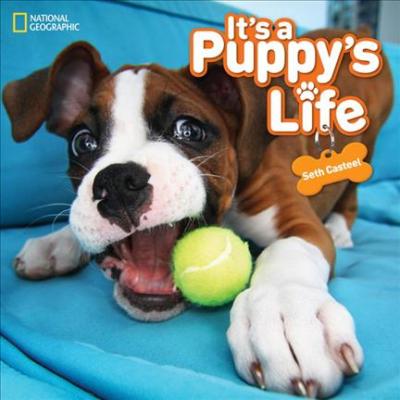
It’s a Puppy’s Life, by Seth Casteel, (March 2018, NatGeo Kids), $16.99, ISBN: 978-1-4263-3069-8

Recommended for readers 3-6

Join the cutest group of puppies ever in this easy-to-read, fully illustrated chronicle of a puppy’s day! Join these pups on a daily routine of adventure as they wake up, explore and play, nap, have a nighttime treat, and get ready for bed. Is it ruff to be a pup? You be the judge.

This is one of those books I still haven’t been able to get through without squealing. Several times. My kiddo and I will be cuddling and reading, and I’ll just squeal, “LOOK AT THIS PUPPY FACE!”, which leads to my son looking at me and saying, “Mom. You SAY THAT ALL THE TIME.” But I digress.

There are spreads and standalone pages of full-color photos of puppies eating, playing, cuddling, and sleeping. The simple text is big, easy to read and great for storytime, and has colorful backgrounds to set them apart from the rest of the page. It’s a great way to talk about daily routines: ask the kids what they have in common with puppies!

I’m currently building up my pets and domesticated animals collection at my library, so these will be a nice, eye-catching add to my shelf. Make a nice doggie display with Science Comics’ volume on Dogs, and put some fun picture books and fiction on the shelf, too. Mainstays like Clifford and Carl books are great, as are books like Peter McCarty’s Hondo and Fabian, Jane Yolen’s Henry and Mudge and Puppy Mudge Easy Readers,  Beverly Cleary’s classic, Ribsy, Ann M. Martin’s Autobiography of a Stray, and Because of Winn-Dixie. If you’re like me and don’t want to read doggie tearjerkers, From the Mixed-Up Files has a suggested “No Dead Dogs” reading list.

Posted in picture books, Preschool Reads

Let Wallpaper take you on an adventure!

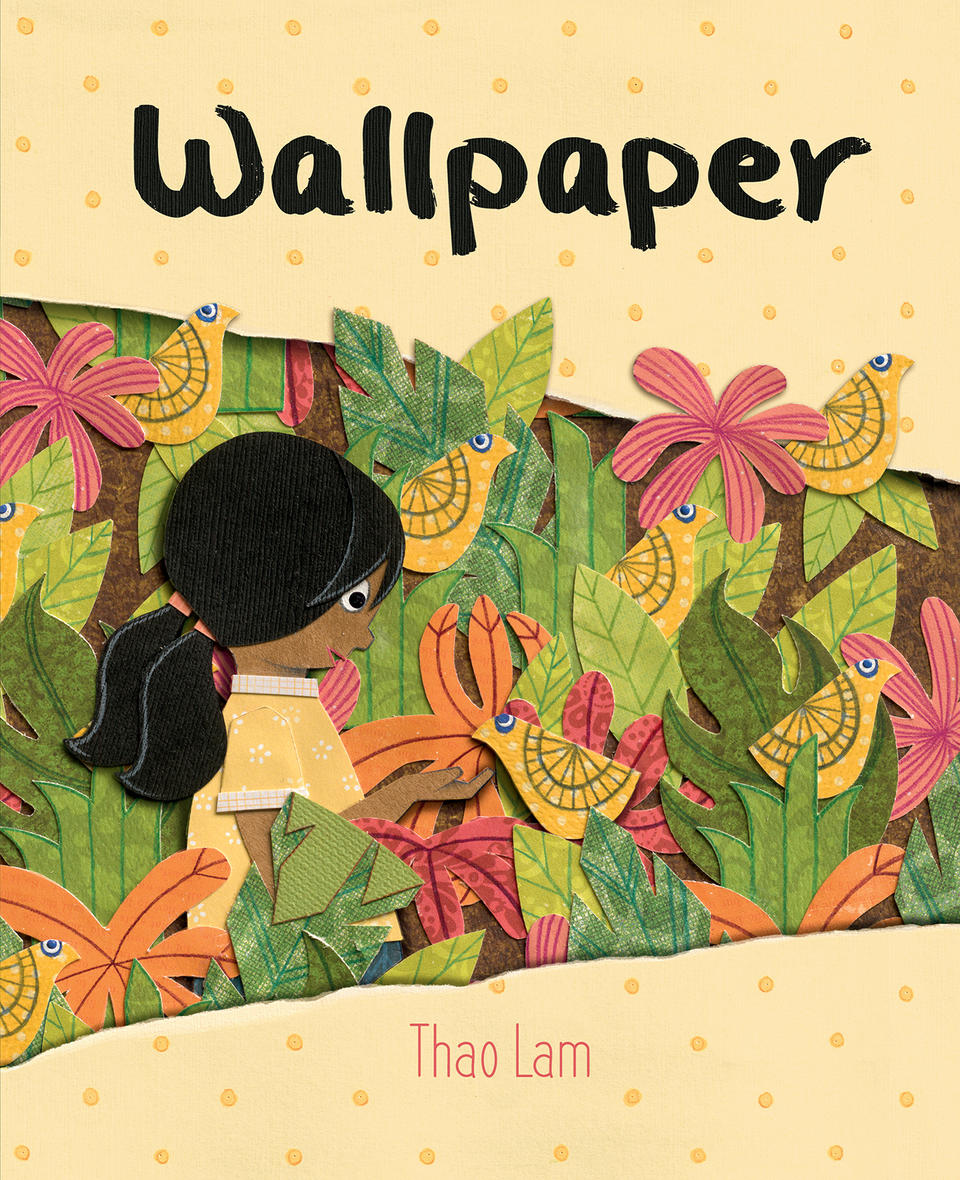
Wallpaper, by Thao Lam, (Apr. 2018, OwlKids Books), $16.95, ISBN: 9781771472838

Recommended for readers 3-7

A young girl moves into a new neighborhood, but is too shy to greet the neighborhood kids playing outside her window. She notices a little bird peeking at her from an upturned piece of wallpaper, and follows the bird on an exciting journey! She releases a flock of birds, wanders into a flower-filled garden, and escapes from a monster as she discovers world after world.

The collage illustration is breathtaking. This is a wordless book that could be used as easily in a storytime as it can in a creative writing class or an art class. The collage artwork is so colorful, so crisp, and so textured, that it appears to stand apart from the page – my own son tried to tap my tablet, seeing if it would cause a flap to lift, or a bird to fly. Thao Lam creates world after world for her protagonist, and us readers, to explore, marvel at, and thrill to. Her protagonist is a child of color and the children in her neighborhood are a wonderfully diverse group, making Wallpaper an exciting journey for all kids. As a librarian in an urban system, I can put this book out on my desk and have the kids in my children’s room identify with all of the children in this book – now, I’ll have to figure out how to explain a possible rash of torn wallpaper to parents…

Wallpaper is a must-have book for collections. I’m interested in exploring this as a book discussion choice, where my kids tell me what worlds they’d like to find if they were in the same situation. And come on: how much fun will it be to have kids create their own collage art? Have magazines and some weeded picture and easy reader books available to cut up.

Wallpaper has starred reviews from Publisher’s Weekly and Kirkus.


Posted in picture books, Preschool Reads

The Funeral takes a sensitive look at a child’s perception of death

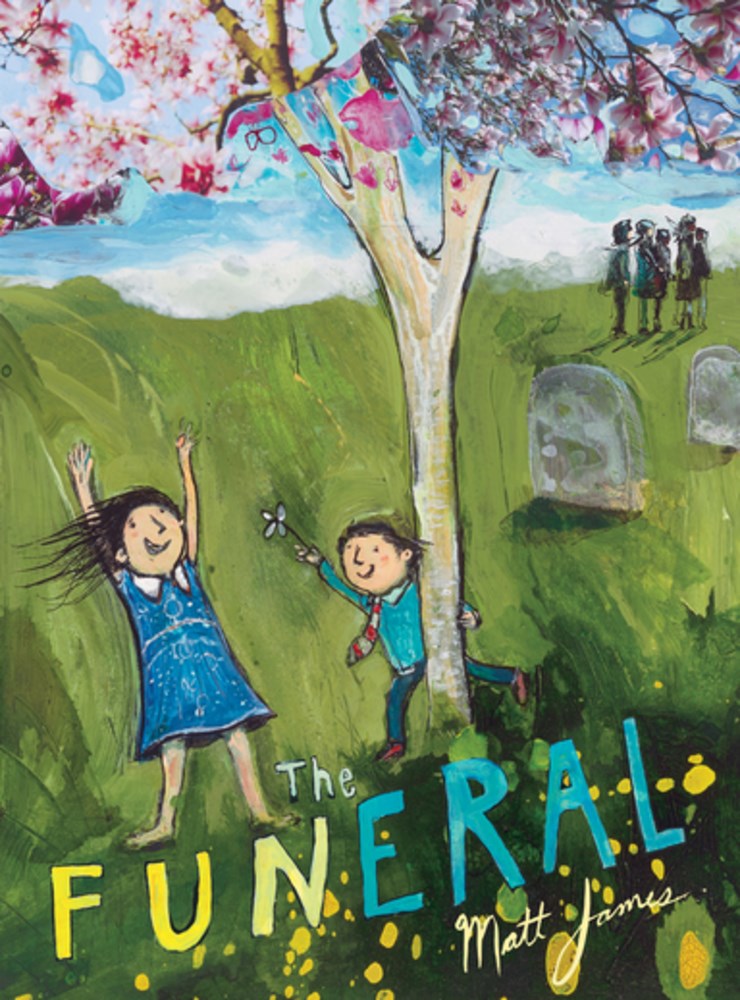
The Funeral, by Matt James, (Apr. 2018, Groundwood Books), $18.95, ISBN: 9781554989089

Recommended for readers 4-7

A young girl named Norma attends a funeral for her great-uncle Frank; she’s excited to see her favorite cousin, Ray, but she also has questions – Uncle Frank was old, right? Is Uncle Frank still a person? – and the whole funeral service is confusing, maybe even a little boring. At the end of the day, as Norma and Ray play together, they’re both pretty confident that Uncle Frank would have enjoyed his funeral.

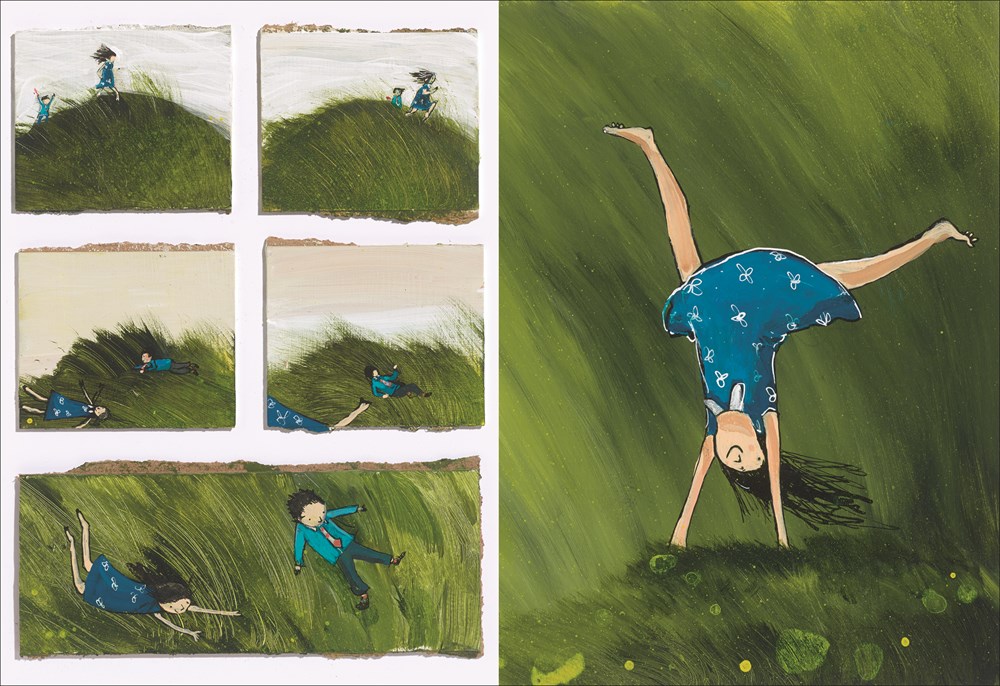
This is a refreshing story about grief and loss, because it focuses on the kids’ perspective. It’s a social gathering – we adults see it that way, too, but kids still have the innocence to mix their confusion at the whole idea of death with the joy of seeing family and friends that they may not see as often. Norma knows what’s expected: she models a sad face in the mirror; she quietly sits through the service, patiently waiting to spend time with her cousin. Death brings conflicting feelings and questionss, sure, and we can’t always give them the best answers, but at the end of the day, love and understanding is the best way to go. And why wouldn’t Uncle Frank have enjoyed a big party in his honor? The Funeral celebrates the optimism and hope that comes from a child’s perspective. It’s wonderful, and the mixed media artwork gives color and texture to the story.


The Funeral has starred reviews from Publisher’s Weekly, School Library Journal, and Booklist.

Posted in picture books, Preschool Reads

Mother’s Day book ideas!

Mother’s Day isn’t that far away. Wouldn’t a sweet picture book or three make for a nice cuddle time?

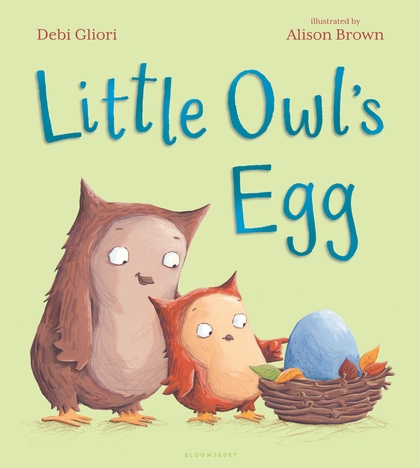
Little Owl’s Egg, by Debi Gliori/Illustrated by Alison Brown, (Nov. 2017, Bloomsbury USA), $16.99, ISBN: 978-1-68119-324-3

Recommended for readers 3-6

Mommy Owl has exciting news for Little Owl: she’s laid a beautiful egg with a new baby owl inside! Little Owl isn’t too thrilled with this turn of events, though: he’s the baby owl – she doesn’t need a new one! Because Moms are well-practiced in the art of deflection, Mommy Owl agrees. It’s so quiet, maybe it’s a baby worm inside the egg! Or is it a chocolate egg? Little Owl and Mommy Owl go back and forth, guessing who could be in the egg, with reactions going from “YUCK” (worms) to horror (dragons!), all adorably illustrated in acrylic paint and color pencil. Little Owl finally comes around to the idea of a new, little owl in the nest, and his role as a big brother owl… and Mommy has more than enough love for them both.

What a sweet way to introduce a sibling to a preschooler, especially one who may be a little resistant to the whole “new baby in the nest” idea. Little Owl takes his mother’s little guessing game and runs with it, coming up with outlandish ideas of his own. When he sees animal siblings play together, he finds himself warming to the idea of having a playmate, and Mommy Owl assures him that she will always love him. It’s a story that parents, caregivers, and kids can cuddle up and read together, talk about the new baby(ies), and how everyone feels about the baby. Let kids know it’s okay to be nervous about a new baby! This is a good gift for a sibling-to-be; pair with Émile Jadoul’s No Room for Baby! for more surly sibling fun.


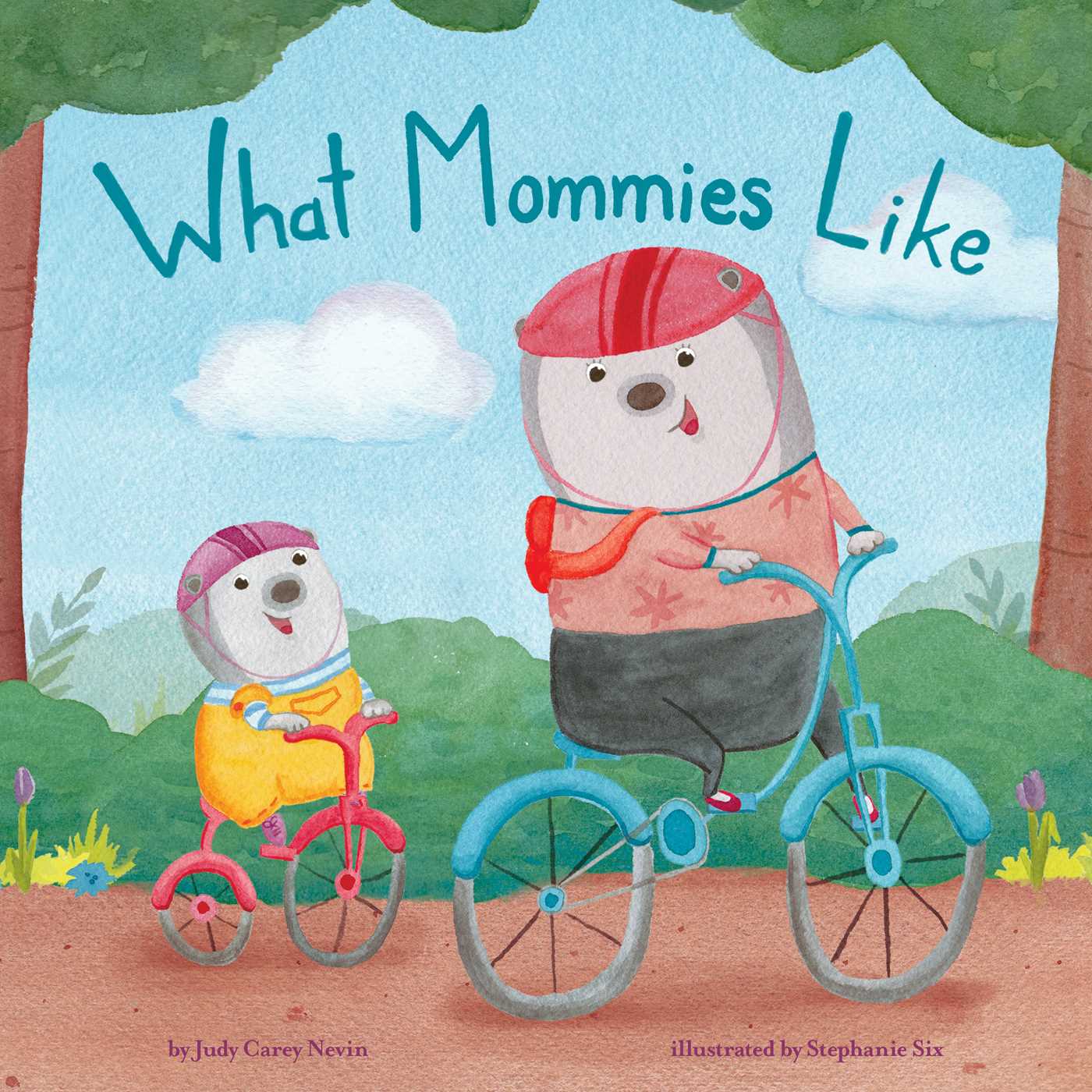
What Mommies Like, by Judy Carey Nevin/Illustrated by Stephanie Six, (Apr. 2018, little bee books), $16.99, ISBN: 9781499805284

Recommended for readers 2-5

Mommies like a whole bunch of things, especially when they’re with their little ones! Mommy Bear and her cub spend a day together doing all sorts of things that mommies like, end up at the library for storytime, and continue on to sing, play kazoo, and share an “I love you” at bedtime. Each page has a short sentence stating what mommies like, with a soft illustration. It’s a loving story about the bond between mother and child and a fun story about daily routines. Mother and baby bear share loving glances as they go throughout their daily activities; they’re out and about, doing super-healthy things like yoga and cycling; she’s an active part of storytime, taking part in the stomping and general hullabaloo; she’s even in a blanket fort. Mommies are pretty darn fun, aren’t we? This is an absolutely adorable book for toddlers and preschoolers; I think I’ll be using this one in a Mother’s Day storytime. Pair this one with Our Love Grows by Anna Pignataro for an extra-cuddly storytime.


Posted in Middle Grade, Non-fiction, Teen, Tween Reads

To Explore Strange New Worlds…

Pop quiz! We know that outer space is still largely unexplored, but did you know that we’ve explored less than five percent of the world’s oceans? There are some great new books on space and sea exploration for middle graders to dive into (see what I did there?). Read on!

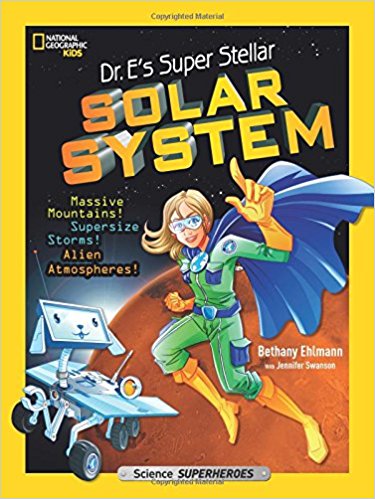
Dr. E’s Super Stellar Solar System, by Bethany Ehlmann with Jennifer Swanson, (Jan. 2018, National Geographic Kids), $12.99, ISBN: 978-1-4263-2798-8

Recommended for readers 8-12

Planetary geologist Dr. E (Bethany Ehlmann) and her sidekick, Rover, take readers on a trip around the universe, filled with activities, photos, facts, and comics. Readers will learn about space exploration and how our big blue dot fits in with our cosmic neighbors: who else has volcanoes and sand dunes; how plate tectonics work; how craters are formed. There’s information about robots and rovers; space exploration and technology; and how learning about space helps us learn more about Earth. Each chapter begins with a 2-page comic spread, following Dr. E and Rover on an adventure related to chapter material. There are scientist profiles throughout the book, thought-provoking questions to generate discussion, and incredible photos. A glossary, list of book and web resources, and index makes this a solid book to have in space collections and a fun gift for kids who love science.


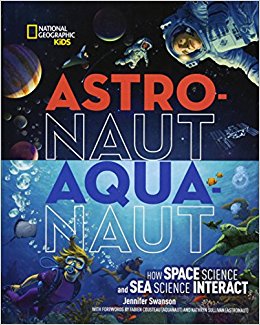
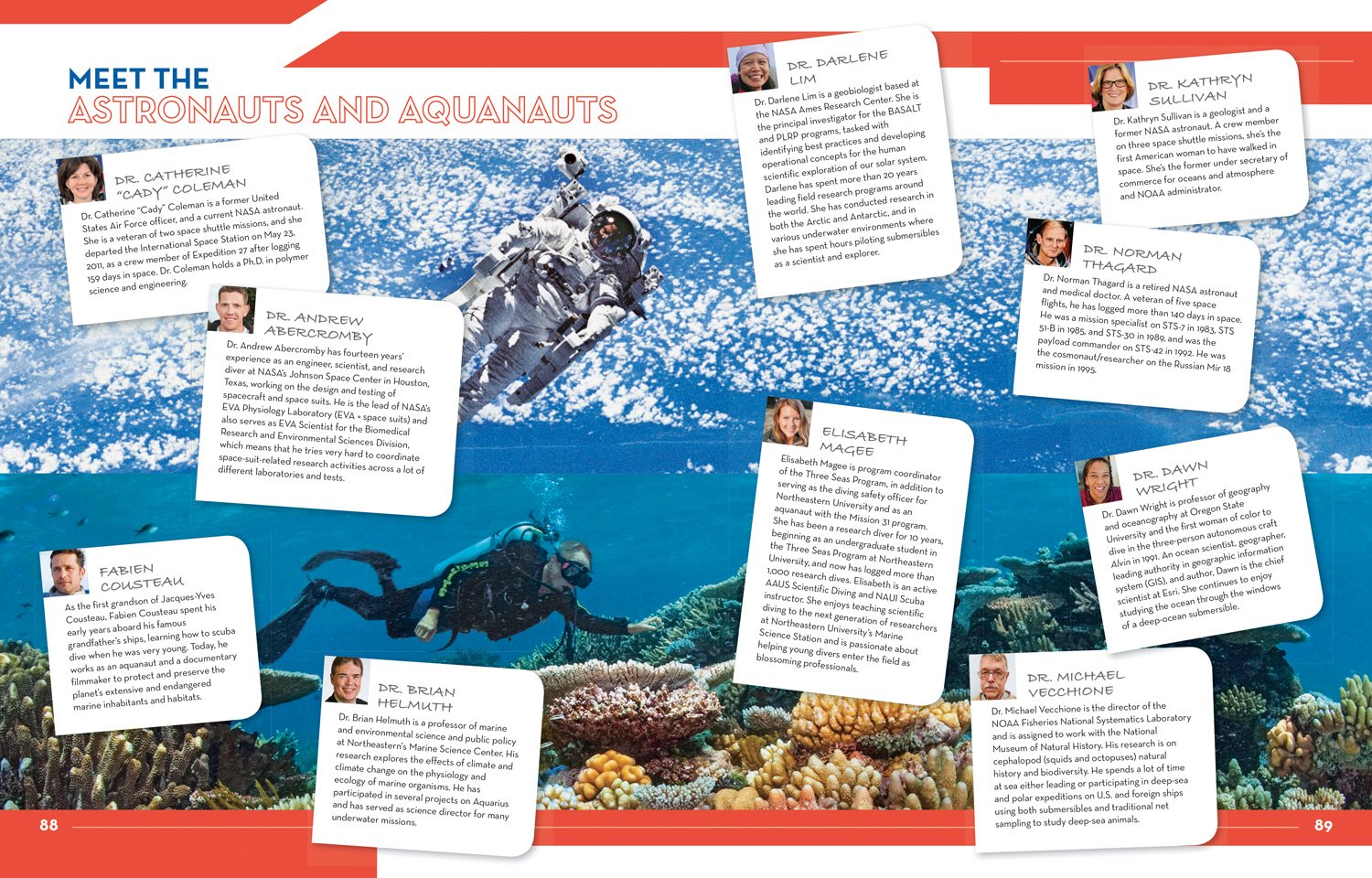
Astronaut-Aquanaut: How Space Science and Sea Science Interact, by Jennifer Swanson, (Jan. 2018, National Geographic Kids), $18.99, ISBN: 978-1-4263-2867-1

Recommended for readers 8-12

What do space and the ocean exploration have in common? SO much. There’s a reason we’re still trying to figure out how to explore both. Extreme pressure, temperatures and climates are all considerations scientists have to make when planning missions up above or far below. Author Jennifer Swanson (she’s co-author on Dr. E’s book, above!) gets a new generation of explorers ready for action with discussions about buoyancy and gravity; the shapes used in space and sea exploration (shape counts!); creating livable habitats; similarities and differences in each form of travel, and more. There’s consideration given to preservation and conservation for both sea and space: we leave a lot of garbage behind, and we need to stop that. Explorer’s Notebook callouts give readers a quick run-down on different topics, like training for a trip and how to create successful living and working environments – ideas that readers can apply to their daily lives while getting ready to be explorers. Activities give readers hands-on opportunities to learn about concepts like docking the International Space Station. There are detailed illustrations and color photos throughout, astronaut and aquanaut profiles, fun facts, resources, a glossary, and an index. NatGeo never disappoints: I love how Jennifer Swanson brings these two areas of exploration together; maybe it will inspire kids to become both astronauts AND aquanauts!


The Space Race: How the Cold War Put Humans on the Moon, by Matthew Brenden Wood/Illustrated by Sam Carbaugh, (May 2018, Nomad Press), $17.95, ISBN: 978-1-61930-663-9

Recommended for readers 12-15

The Cold War between the U.S. and Soviet Union led to a race for dominance, and space was best place to push for that dominance. Matthew Brenden’s book, The Space Race, is an interactive chronicle of this pivotal point in history. Beginning with a timeline to give readers background, Brenden takes us from the 1917 Russian Revolution, through World War II (when Russia was our ally) and the Cold War, to July 20, 1969: the date Neil Armstrong and Buzz Aldrin became the first people to walk on the moon.

A  comic strip running throughout the book illustrates and encapsulates the big ideas in the book, adding a little mental break for readers. There are loads of callout boxes, enhanced with QR codes that lead to historical reference and further learning; some topics include McCarthyism, duck-and-cover nuclear war drills, and the first anniversary of the Berlin Wall. Blast Fact callout boxes provide quick facts, and Inquire and Investigate sections provide rich inspiration for projects and research. Questions throughout the text challenge readers to think deeper about the material and would provide a great jumping-off point for book group or class discussions, and Vocab Lab sections offer new words to learn, all defined in the glossary at the end of the book. There are black-and-white and color photos throughout, providing a strong connection to history. Thankfully, there’s a metric conversion table, since science is metric and I’m not; there are additional resources, source notes, and an index.

I love Nomad Press’ books; there are so many entry points for students in each book. This one is a valuable reference for Science or History: in fact, The Space Race is one in a set of four Nomad books exploring great events of the 20th Century (others include Globalization: Why We Care About Faraway Events; The Vietnam War; and World War II: From the Rise of the Nazi Party to the Dropping of the Atomic Bomb).

The Space Race skews slightly older than the NatGeo books above: Nomad recommends this one for ages 12-15, but I think it can go a year or two younger, especially in my children’s room, where it will see more circ than in our teen section. Your library’s mileage, and your kids’ reading interests may vary. It’s a Guided Reading level Z, which can go as young as 9; I’d suggest at least 10 or 11.


Posted in Animal Fiction, picture books, Preschool Reads

Dormouse is afraid to sleep alone… do you have space for him?

Dormouse and His Seven Beds, by Susanna Isern/Illustrated by Marco Somà, (April 2018, NubeOcho), $16.95, ISBN: 978-84-946926-6-6

Recommended for readers 3-6

Green Forest is a pretty quiet, uneventful place until the morning that Rabbit wakes up to discover Dormouse is sleeping in his carrot box. Dormouse apologizes, and says he couldn’t sleep, so he decided to try a new bed. This quickly becomes a habit: Dormouse tries out Robin’s tie drawer, Deer’s antlers, Tortoise’s glasses case, Mouse’s cuckoo clock, and Squirrel’s music box! The animals have a talk with Dormouse: this has to stop; he’s giving everyone a fright! Dormouse disappears the next day, worrying his neighbors. When they start a search, they discover him in Gray Forest, in Wolf’s sock! After a quick rescue, they discover the reasoning behind Dormouse’s wandering: he doesn’t want to sleep alone.

This story is perfect for preschoolers who may have similar fears, and the parents and caregivers who wake up to discover an errant foot or arm lodged in a hip, the small of a back, or a neck. (Speaking from experience.) Dormouse’s desire for company overrides his sense of propriety, leading him to sneak into his neighbors’ homes to be near someone at night; understandably, it’s a little nerve-wracking to wake up with someone unexpected in one’s home, and the group confronts Dormouse, not giving him a chance to explain himself. Parents will understand the guilt the animal friends feel when Dormouse disappears, and both parents and caregivers will appreciate the arrangement everyone comes to for future sleepovers. A sweet addition at the tale’s end gives Dormouse a chance to pay it forward.

Marco Somà’s illustration is just beautiful, with small details that will keep readers noticing something new with every read; from the carrot wallpaper in Rabbit’s home, to the owl’s face built into Owl’s home, and beyond. The blue tinge throughout the artwork lends a peaceful vibe to the story, making this a loving bedtime read, perfect for snuggling with the kiddos before they fall asleep in their own beds (or at least, start out there).

Released in 2017 in Spanish (978-84-946926-5-9), Dormouse and His Seven Beds is part of nubeOCHO’s nubeclassics line, and reads like a classic fable should.