Posted in Middle Grade, Non-Fiction, Non-fiction, Tween Reads

NatGeo Kids sends kids back to school ready for everything!

I am an unabashed fan of NatGeo for my nonfiction sections. They have books on EVERYTHING, and the kids love it. They also make every single thing they cover amazing, hilarious, or both, which makes my life a lot easier when I have kids trudging into my children’s room, moaning that they have to read more nonfiction. Excuse me, do you see the GIANT WATER FAUCET on the cover of this book? Guess what? Nonfiction. Suddenly, they’re a lot more amenable to what I have to offer.
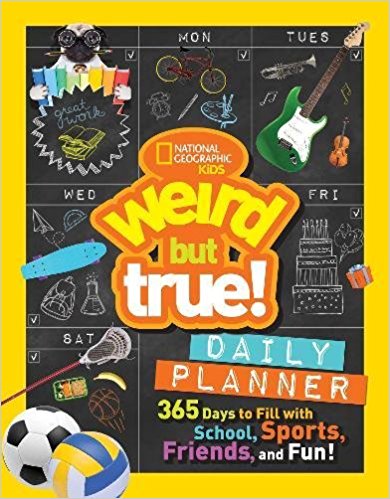
Let’s start with the backpack essential: The Weird But True Planner ($12.99, ISBN: 978-1426327933). The Weird But True books come in second only to the NatGeo Kids joke books when it comes to demand in my children’s room. It’s got the planner essentials: it’s spiral bound and sturdy, so kids can use it and it will hold up. It’s got paper that won’t tear when you turn a page. You know that paper; it’s usually the one that flies away and has the details of your homework on it. The space is smartly laid out, with NatGeo’s trademark gorgeous photos sharing space with planning and goal pages that help your kids keep it together during the school year. And because it’s NatGeo, it’s got the fun, weird holidays, crazy facts, pages for scribbling areas where you need homework help, little writing prompts, and an overall fun vibe that demands you embrace your weirdness. I have a copy that I desperately want to keep for my own library notes, programs, and scheduling the lives of my weird family; now, the key is making sure the kids don’t take mine off my desk at work OR at home.

Let’s be clear: this is not a library book; it’s a book meant to be written in, used, and yeah, even a little abused. But it IS an essential buy.
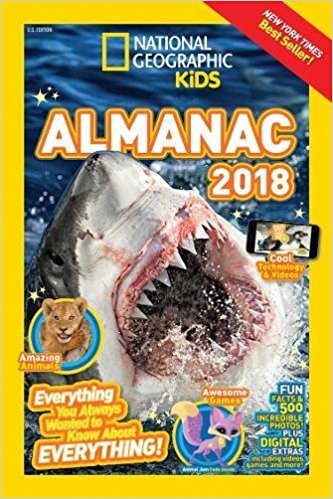
Next up is the NatGeo Kids 2018 Almanac ($14.99, ISBN: 978-1-4263-2772-8). Updated for 2018, this is another go-to for my library kids. There are 12 sections – up from last year’s 10 – and cover current events, life science, engineering and technology, space and earth, and more. The fun and games section is still here, and the overall fun spirit of discovery runs through the book. A spread in life science tells readers “18 Fantastic Facts About Fungi”, with facts about cheese mold, to mushrooms, to athlete’s foot (it’s just a photo of a bare foot). Feel bad for the Ugly Food, but rejoice in reading how being ugly doesn’t mean being garbage – make banana bread with those brown bananas (that’s when they’re the best), or make a smoothie using that bruised peach. A companion page on the time it takes different types of trash to decompose is a powerful call to action for recycling and re-purposing our trash. Homework help tips, quizzes, jokes, fun facts, and breathtaking photos make this Almanac a keeper.
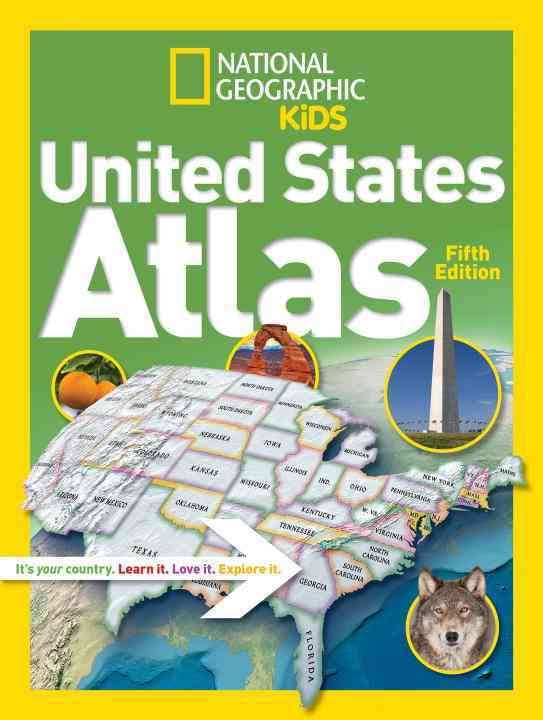
Atlases are always handy to have around, especially with increased importance on understanding global affairs and cultures. The United States Atlas (Fifth Edition, $12.99, ISBN: 978-1-4263-2831-2) gives readers a literal lay of the land, with political and physical maps by territory: Northeast, Southeast, Midwest, Southwest, and West. There are maps and statistics for each state within the territories; economy symbols to illustrate local economies like crops and industries. Photos and infographics round out each state’s profile. The atlas also includes U.S. territories, a glossary, postal abbreviations, and additional web resources.
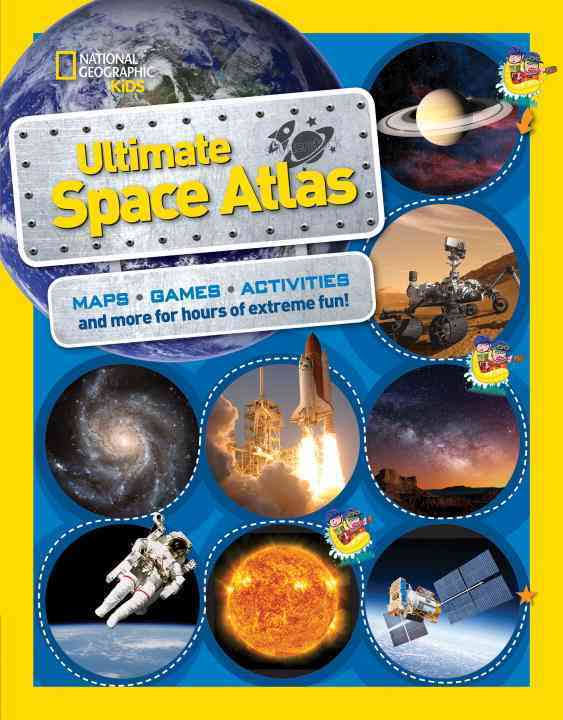
The Ultimate Space Atlas ($12.99, ISBN: 978-1-4263-2802-2) is a handy guide to what’s “up there”: phases of the moon, seasonal constellation maps for each hemisphere, what’s new in space exploration. “Digital Traveler” boxes help readers expand their learning by using going online. There are fun facts, amazing photos, diagrams, and Space Travel Attractions to visit… you know, from here. Earth. There’s a section with some fun activities at the end, and a glossary and index complete this handy astronomy desk reference. Both atlases will be helfpul during the school year, so load up your bookshelves if you’re in a library, or consider these when you’re buying school supplies.
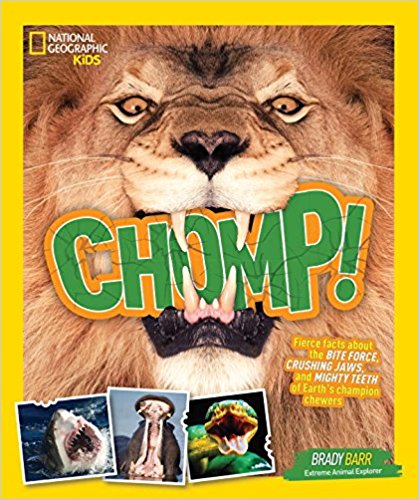
CHOMP!: Fierce Facts About the Bite Force, Crushing Jaws, and Mighty Teeth of Earth’s Champion Chewers ($12.99, ISBN: 978-1-4263-2839-8) has been on my shelves since this summer, and I see it wandering around the tables at the library (meaning, the kids are reading it while they’re in the library during the day) pretty regularly. Written by “Extreme Animal Explorer” Brady Barr, CHOMP! has a lot of pictures of a lot of big, mean teeth. The first page has a hippo, jaws open wide, greeting readers, and those choppers are intimidating! Barr organizes his chompers into four groups: the grippers, slicers, crushers, and gulpers; bite force and preferred menu for each animal profiled appear on each page. Barr jumps in with his own entertaining anecdotes, Brady’s Bite Stories, that will make kids squeal and cringe all at once; I’m thinking of reading the one about Barr squeezing a live otter out of a gator the next time I have a class visit. I like to be memorable. Further resources, a glossary and an index, make this a good companion guide for animal reports and fun reading for animal fans.
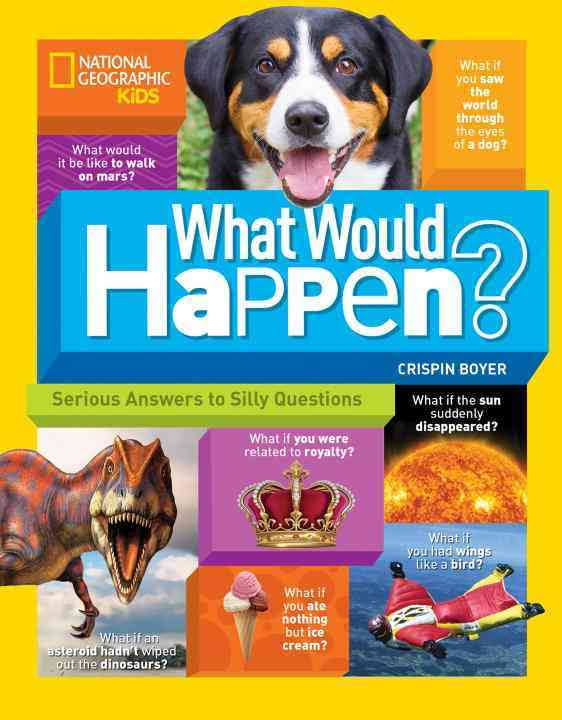
Last but never least, What Would Happen? Serious Answers to Silly Questions ($14.99, ISBN: 978-1-4263-2770-4) looks at the logic and science behind some wild, weird questions. Starting with questions like, “What if you ate nothing but ice cream?” (short answer: DON’T) and working their way up to “What if you could wield The Force?” (You may call me Lady Vader), questions are organized into areas covering humans, space, nature, time, technology, natural wonders, worst-case scenarios, and just plain surreal. Each question is examined by giving readers a background on the deeper question (ice cream tastes great, but without protein and fiber, you’re in for some problems); primary repercussions (those problems could include going to the bathroom, no matter how much you love butter pecan); side effects (you’ll get weak and possibly develop scurvy from lack of Vitamin C); and finally, could it happen (unless you’re putting chunks of chicken or tofu, plus some broccoli and tomato on that ice cream, probably not)? This is going to move right along with my Weird Facts books. Heck, I may just turn this one into a program – write your own What Would Happen? and let’s swap; research it and find out the answer. But I’m totally developing The Force.
Go forth and fill up backpacks, and have a great school year!
Posted in Middle Grade, Non-Fiction, Non-fiction, Tween Reads

Sports Illustrated Kids has the info kids need for back-to-school sports trivia

Sports Illustrated Kids is getting ready for the fall sports with the release of two need-to-have books for backpacks and bookshelves.

The Football Handbook, by Gary Gramling, (Aug. 2017, Time Inc. Books, $19.99, ISBN: 978-1-6330-007-6) is the perfect size for a sports fan’s backpack, and loaded with facts, stats, and football history. It’s essential reading for beginners and dedicated fans alike, with full-color photos, activities (so that’s how the guys in school folded those little paper footballs, all those years ago…), obscure facts, and need-to-know skills like how to draft a fantasy football team: the pizza is essential; my husband concurs. The “He Reminds Me Of…” section is a nice walk down Memory Lane for us folks of a certain age, with juxtaposed pictures, stats, and a bio on a “current guy” whose style matches that of an “old guy” gridiron great.

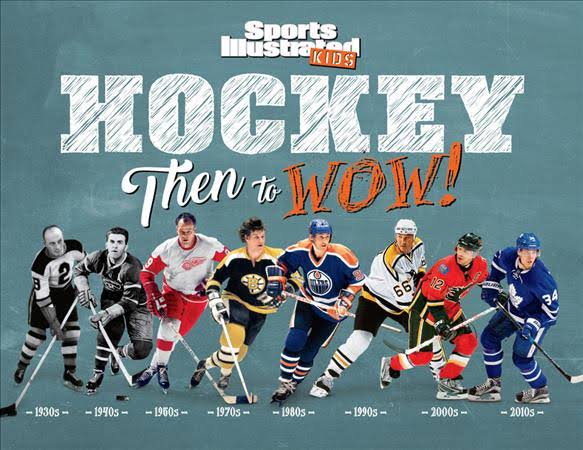
The National Hockey League (NHL) turns 100 this year, and Hockey: From Then to WOW! (Sept. 2017, Time Inc. Books, $19.99, ISBN: 978-1-68330-011-3) by the writers at Sports Illustrated Kids is part love letter, part time capsule, to the sport. The hockey rink endpapers set the vibe for you from the second you crack open the book, and an illustrated timeline of how hockey rules have evolved over the last century. (Can you believe that helmets weren’t mandatory until 1979?) Stunning photos of equipment and arenas show the progression of the sport and of sports technology. Legendary players, infamous fighters, and colorful characters all have a spotlight here, as do the best coaches. There are stats, sure – and then there are stats: the fan stuff. From the best playoff beards, fan fashion, and trading cards, to stuff thrown onto the rink and hockey games for fans, from air hockey tables to the latest in gaming, it’s all here.

Put these on your shelves where sports fans gather, and watch the circs fly. Great for middle graders and middle schoolers alike.

Posted in Fiction, Historical Fiction, Middle Grade, Realistic Fiction, Tween Reads

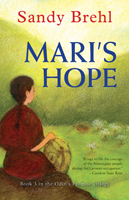
Mari’s Hope brings Odin’s Promise to a beautiful close

Mari’s Hope, by Sandy Brehl (Sept. 2017, Crispin Books), $14.95, ISBN: 978-1-883953-89-8

Recommended for readers 9-12

The conclusion of Sandy Brehl’s Odin’s Promise trilogy is finally here! Mari’s Hope continues the story of Mari, a Norwegian girl living under the German occupation during World War II. Mari, who was 11 when the story began, is approaching age 14 when the latest book begins. Her family is active in the resistance, and Mari’s involvement increases as she is older now, willing and able to take greater risks. She works with the local doctor to care for the sick and elderly in her village, Ytres Arna; travels to the city of Bergen to procure more medicine – and information – for her village, and tries to stay out of the way of the Nazi officers who live in her home; particularly the one she calls Goatman, who is a drunk and a thief.

Written in third-person narrative with first-person journal entries from Mari to her brother, Bjorn, Mari’s Hope is written with the same gentle strength as the previous two entries in the series. We see Mari grow over the three books from girl to young woman – a change that has come too quickly under the occupation – and deal not only with being a member of the Norwegian resistance, but with the stress of worrying about her brother; grieving her dog, Odin, killed by Nazi soldiers in the first book; struggling with a former friend who threw in his lot with the NS – Nasjonal Samling – Norway’s version of Hitler Youth. The family and neighbors stick together, sharing what little they have to provide for one another, whether it’s to have a birthday party for Mari or a holiday dinner for Jul. There are tense moments that kept me turning pages, sometimes biting my lip with concern, and there are moments where I just needed a moment to process my relief. Sandy Brehl never whitewashes the German’s devastation; rather, she states it quietly, eloquently, and leaves it there for Mari – and us – to process and move on.

The Odin’s Promise trilogy is a gorgeously written series of books that take us into a part of World War II history we don’t often hear about. Hitler invaded Norway with the lie that he was sending soliders to “protect” his “Viking brothers”, but proceeded to strip all freedoms from them and tried to supersede his vision of Aryan superiority over their rich culture. Odin’s Promise, Bjorn’s Gift, and Mari’s Hope tell this story through the experiences of one village, one family, one girl, who pushed back. I love spending time with Mari and her family; while I’m sad to see this story end, the beauty of books lies in knowing I can meet them again whenever I want to.

Odin’s Promise received the 2014 Midwest Book Award for Children’s Fiction. It was also noted as one of A Mighty Girl’s Best Girl-Empowering Books of 2014 and one of Foreword Magazine’s Ten Best Indie Middle Grade Novels of 2014.

Posted in Graphic Novels, Non-Fiction, Teen, Young Adult/New Adult

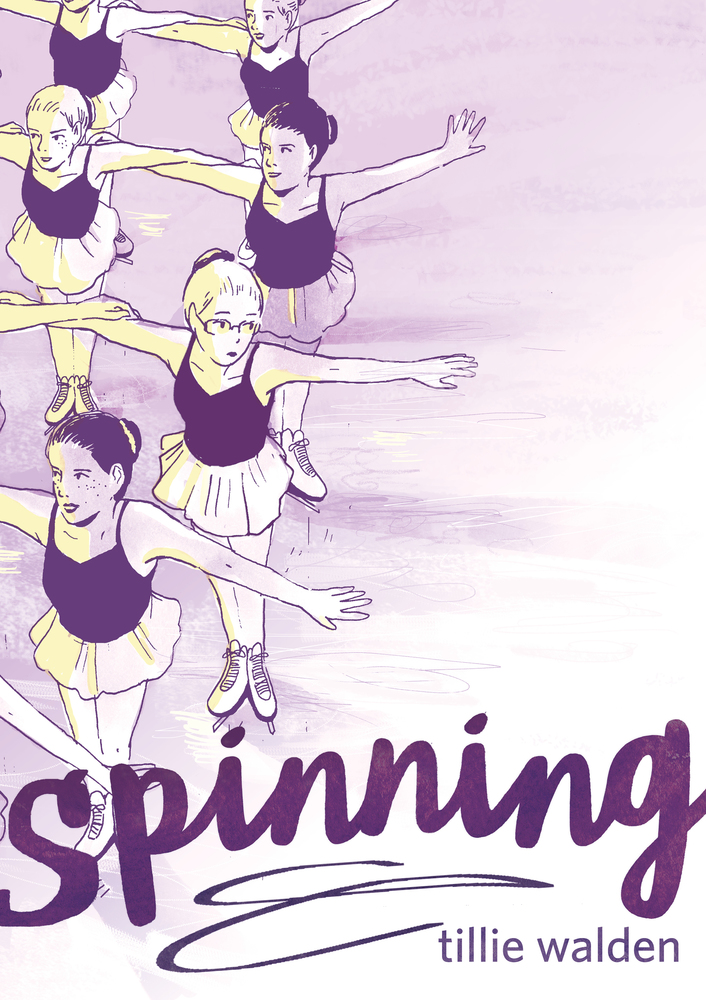
Spinning: a memoir of skating and self

Spinning, by Tillie Walden, (Sept. 2017, :01First Second), $17.99, ISBN: 9781626729407

Recommended for readers 12+

Cartoonist and illustrator Tillie Walden’s graphic memoir looks at her childhood and adolescence as a competitive figure skater and her journey out of the closet. Spinning is Walden’s chance to look back at skating (a key part of her identity for over a decade), bullying, first love, sexual abuse, depression, coming out, and the stress of outgrowing a passion.

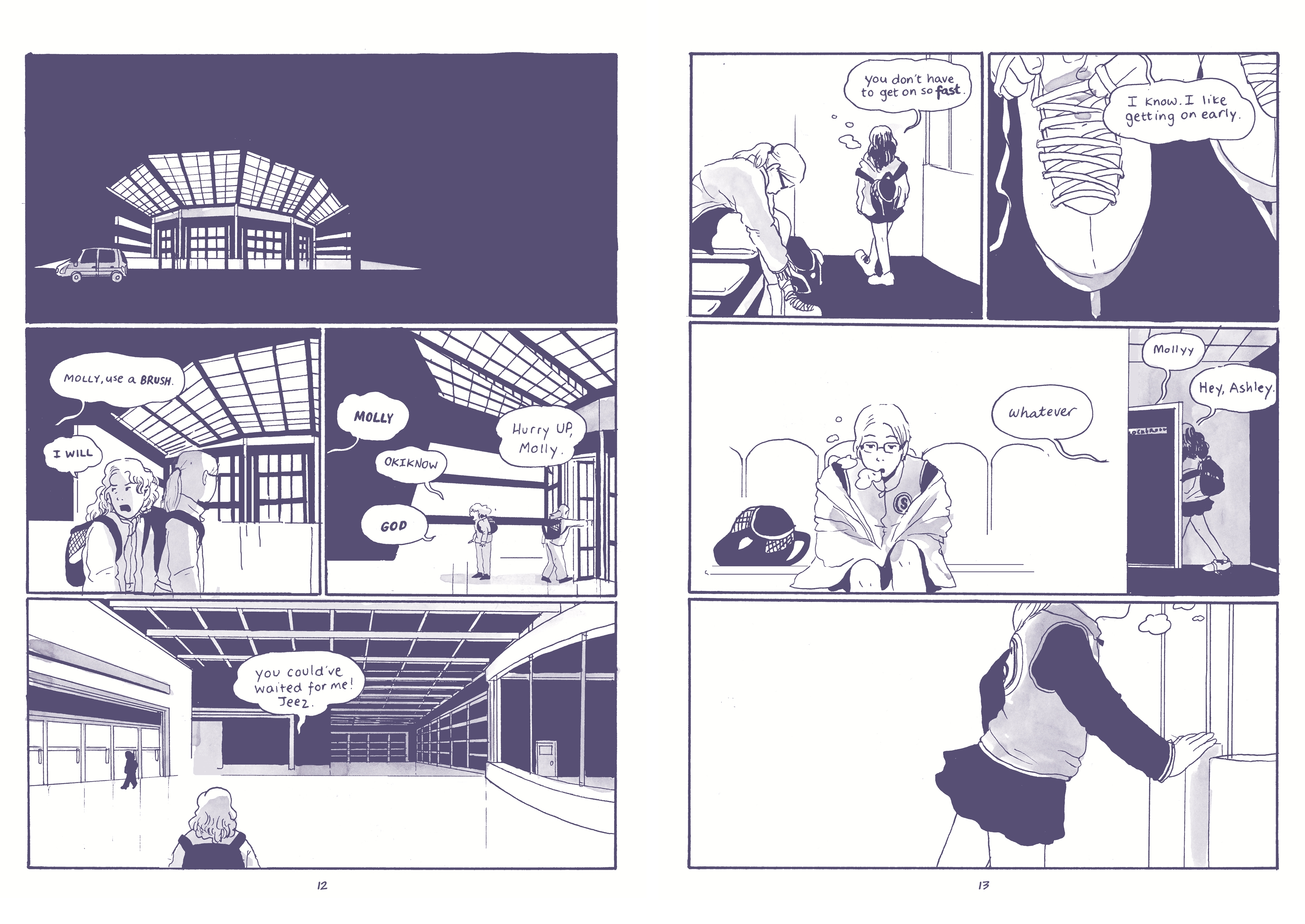
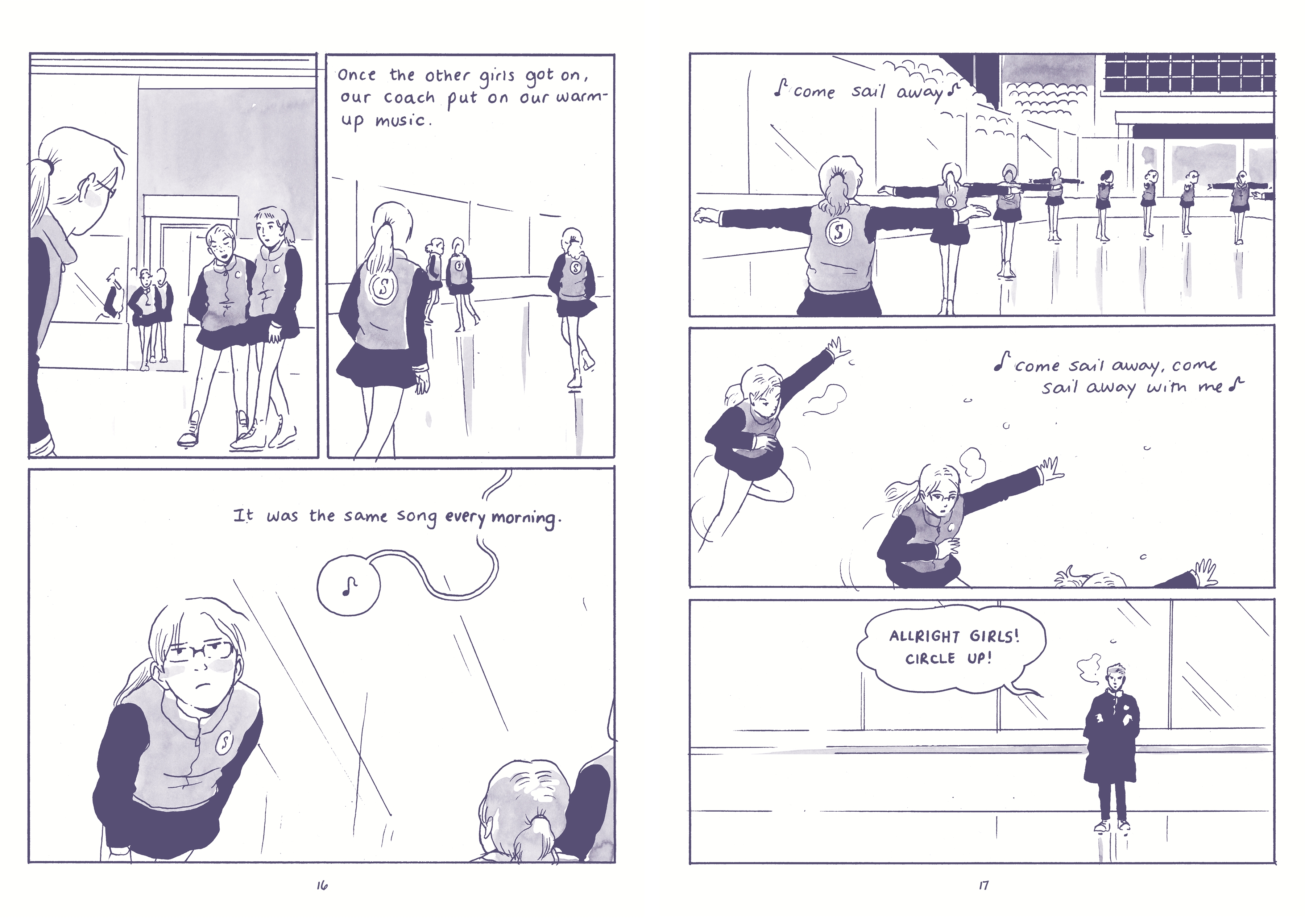
Sensitive but visceral, Tillie quietly tells her story. The rigor of her skating routine, the loneliness of practice and traveling without her parents and the stress of competition. She talks about her first love, and the pain of enforced separation. It’s a coming of age story that teenagers will embrace. Tillie speaks plainly, but with powerful emotion underneath the surface. I felt her crushing depression and anxiety as I continued throughout the book; told in two-color artwork, Tillie’s often in the shadows or drawn solitary, alone, speaking volumes to the reader.

Spinning is brilliant and beautiful.  If you’ve ever competed in a sport, played an instrument, or felt alone, Tillie Walden understands you. A strong addition to graphic novel and memoir collections.

Tillie Walden is an Ignatz award winner. You can find her webcomic, On a Sunbeam, online and more of her comics at her website. Spinning has received a starred review from Booklist and mentioned in Entertainment Weekly’s LGBTQ YA Book List for 2017.

Posted in Uncategorized

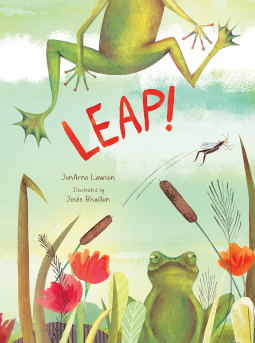
A cranky flea sets off a chain of events in Leap!

Leap!, by JonArno Lawson/Illustrated by Josée Bisaillon, (Sept. 2017, Kids Can Press), $18.99, ISBN: 9781771386784

Recommended for readers 3-6

This fun circular, rhyming story starts with a flea, who leaps into a grasshopper’s path; the startled grasshopper leaps onto a bunny. The action continues, involving a dog, bullfrog, horse, and finally, back to the dog and the flea. It’s a fun story that would make for a good storytime read; get the kids up and jumping if you have more active storytimes, or bounce for lapsits. The cadence of the rhyme is fun and energetic, but I expected to see more spreads with the full animal leaping; there were a few where the right-side page showed the back end of a leap and it felt a little cut off, choppy, for me.

I’d add this to a storytime with Kalan ‘s Jump, Frog, Jump! and add some flannels for audience interaction.

Posted in Preschool Reads

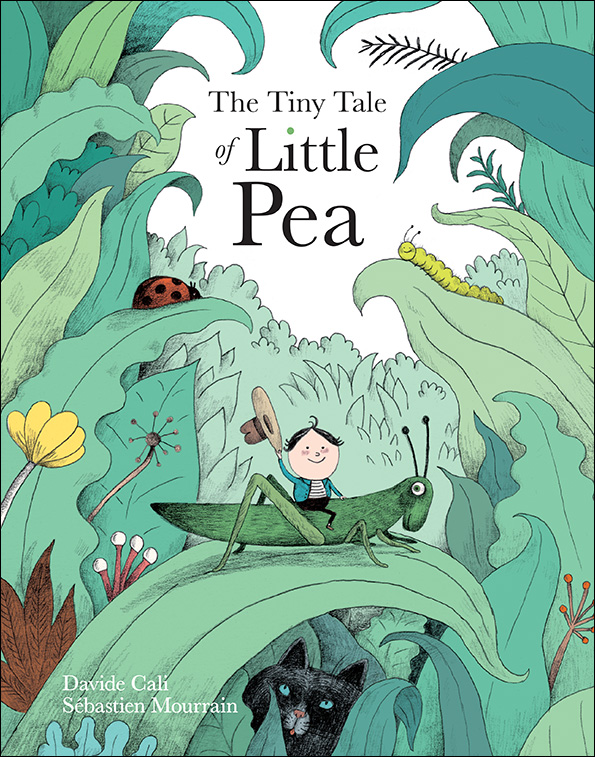
The Tiny Tale of Little Pea

The Tiny Tale of Little Pea, by Davide Cali/Illustrated by Sébastien Mourrain, (Sept. 2017, Kids Can Press), $18.99, ISBN: 9781771388436

Recommended for readers 4-7

So begins the tale of Little Pea, who could sleep in a matchbox, ride a grasshopper, and wore his doll’s shoes, while his clothes were lovingly hand-sewn by his mom. When it’s time for Little Pea to go to school, he realizes just how small he is. He’s too small for his desk. Too small to play the flute. Definitely too small for gym class. But is Little Pea’s confidence shaken? No way! He finds his own place in the world, painting postage stamps and living in a home that fits him just right.
Little Pea is a cute story with a main character who has a lot to say about resilience. He doesn’t let his perceived weakness stop him from living life on his terms; it’s a strong message for kids who hear, “You’re too little for that” once too often. Self-acceptance, creativity, and individuality drive the story, and every reader can take something away from it. Sébastien Mourrain comes up with wonderful scenes to demonstrate Little Pea’s size, bringing to mind some of my favorite parts of E.B. White’s Stuart Little. It’s a sweet story that will add to a storytime or individual reading.
Posted in Non-fiction, Non-Fiction

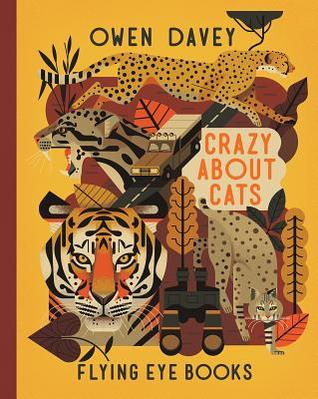
Crazy About Cats? You’ll love this book!

Crazy About Cats, by Owen Davey, (Sept. 2017, Flying Eye Books), $19.95, ISBN: 9781911171164

Recommended for readers 5-12

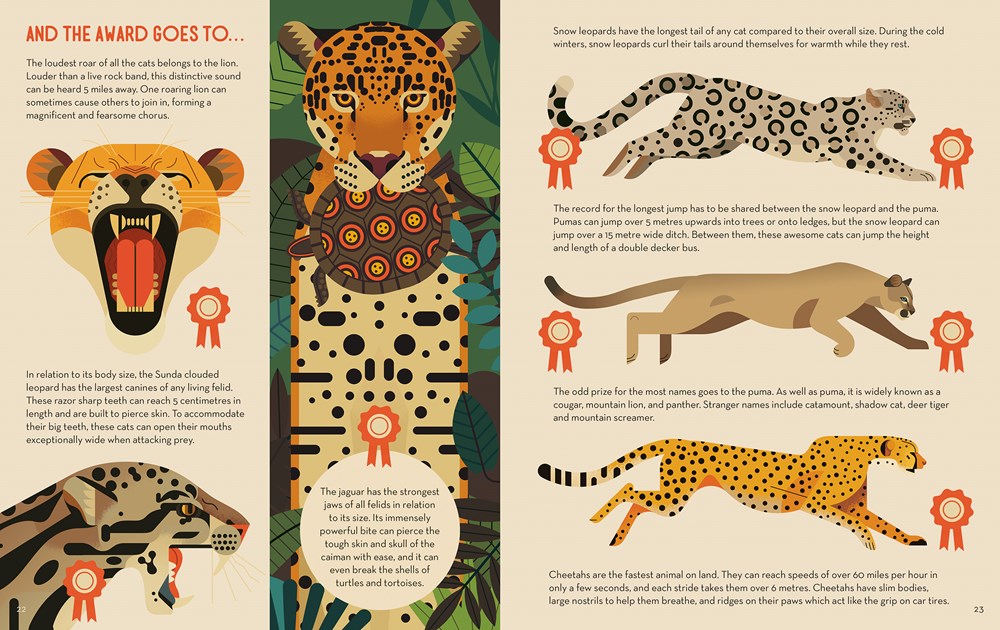
Smart About Sharks’ author-illustrator Owen Davey returns with a look at cats big and small in Crazy About Cats. The illustrated infographics give kids visuals to help them relate to age-appropriate scientific text.Did you know that the Fishing Cat has webbed paws to help it catch fish? Or that a Sand Cat’s furry paws help keep it from sinking into the desert sand?

The artwork is beautiful and bold, with just enough factoids throughout to keep feline fans happy. A nice add to nonfiction collections, especially ones that are heavy on animals.


Posted in Fantasy, Fiction, Graphic Novels, Middle Grade

Mighty Jack and The Goblin King: An incredible re-imagining of a classic tale!

Mighty Jack and the Goblin King, by Ben Hatke, (Sept. 2017, :01First Second), $14.99, ISBN: v

Recommended for readers 8-12

It’s here! The sequel to Mighty Jack (2016) is here! And the best part? It’s AMAZING.

Mighty Jack introduced us to Jack, his autistic sister, Maddy, and neighbor, Lilly. The trio discovered a magical garden that got a little out of control; Maddy was kidnapped, and Jack and Lilly set off through a portal, determined to bring her back. Mighty Jack and the Goblin King picks up with Jack and Lilly arriving in a way station of sorts; a crossroads between worlds. Lilly is injured, forcing Jack to continue alone, where he discovers the giants’ plan for his sister: to feed her to a mechanical “beast” that will grind her bones into dust, and eat her, securing their ability to rule until the next time the beast needs to be fed! Lilly, meanwhile, has been rescued and is being cared for by goblins, who plan to marry her to their goblin king.

Spoiler alert: It’s not David Bowie.


Posted in Historical Fiction, Realistic Fiction, Teen

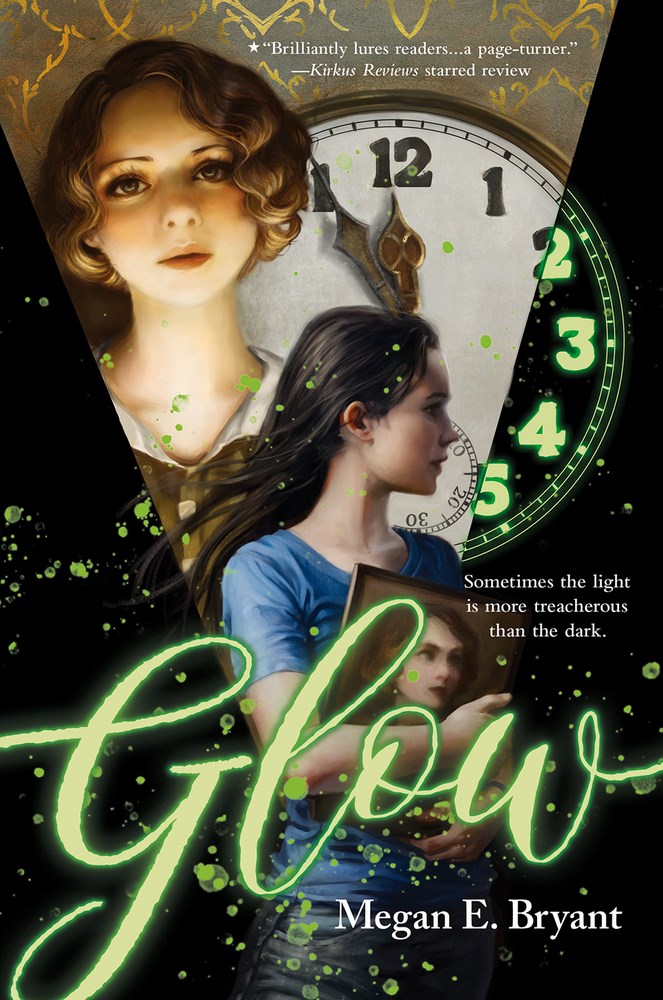
Radium Girls meets YA fiction with Glow

Glow, by Megan E. Bryant, (Sept. 2017, Albert Whitman), $16.99, ISBN: 9780807529638

Recommended for readers 12+

Julie should be starting college in the fall, but she used up all her savings to bail her mother out of debt. Frustrated and embarrassed, especially when her friend drops money on crazy shopping trips while Julie counts every cent. They wander into a thrift store where Julie discovers an antique painting that reveals a hidden, glowing image in the dark. Locating the rest of the paintings becomes Julie’s obsession; as she tracks down the paintings and the painter’s identity, she discovers that the paintings were made by and tell the story of the Radium Girls – young women who worked in factories, using radium paint to make glow-in-the-dark watches for the soldiers in the trenches of World War I.

The dual narrative keeps the novel moving at a fast pace, but it is Liza and Lydia’s story – the Radium Girls – that gripped me even more than Julie’s. If you haven’t yet read Kate Moore’s Radium Girls, I highly recommend it; the story of the women who were slowly poisoned over time is heartbreaking and infuriating, but so important to read and know. Glow is a great introduction to the subject on a middle school/YA level; the letters from Lydia to her betrothed, Walter, a World War I soldier, give readers the full horror of radium poisoning. These girls – some as young as 13 – were led to believe that the radium paint was safe, even beneficial – one floor manager brags about mixing some into his pudding for health reasons; girls paint their nails, their faces, even paint jewelry on their bodies before they go out on dates. Hindsight, for the reader, is 20/20; I wanted to shriek at them as Lydia described each detail.

That said, there are some moments I felt could have been stronger. I didn’t love the romance that felt pushed into the narrative to make it more attractive to teen readers, and the subplot tension between Julie and her mother feels like it’s there just to make readers understand why Julie would be shopping in thrift stores. The driving story here is Lydia and Liza’s story, though; that’s what will stay with you long after the story has ended and you’ve closed the book. An author’s note at the end talks about the Radium Girls and the indignities they suffered when they became ill and tried to come forward.

This one is going on the shelves at my library, and I’ve already told my son’s girlfriend that she has to read it the second it hits shelves. Glow has a powerful, heartbreaking story at its core that you should not miss.
Posted in Intermediate, Middle Grade, Non-fiction, Non-Fiction

September Non-Fiction: Engineering, Nutrition, and the Planets

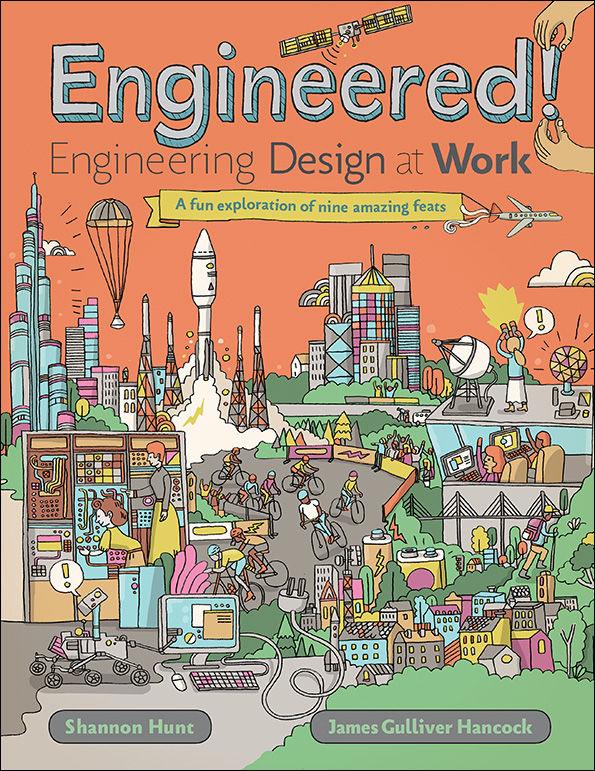
Engineered! Engineering Design at Work, by Shannon Hunt/Illustrated by James Gulliver Hancock, (Sept. 2017, Kids Can Press), $18.99, ISBN: 9781771385602

Recommended for readers 9-13

Nine engineering specialties -Aerospace Engineering, Biomedical Engineering, Chemical Engineering, Mechanical Engineering, Electrical Engineering, Civil Engineering, Geomatics Engineering, Computer Engineering, and Environmental Engineering – in this look at engineering design, which introduces readers to the step-by-step process by using eye-catching icons and nine case studies, one for each field. Team member bios that introduce kids to new scientists and what they do; new fields of engineering, like geomatics, are explained and illustrated, as are new technologies, like the incorporation of 3-D printing into biomedical engineering. Cartoony illustrations make the science more appealing to anyone who may think they can’t *do* science. Kids will learn that engineering can be found everywhere, from sending the rover to Mars, to saving animals from extinction, to replacing a sewer system to clear pollution from a lake. A glossary helps with new engineering terms readers come across.

Engineered! is a fun introduction to the basics of engineering and can be used equally in a science class, makerspace, or on career day.


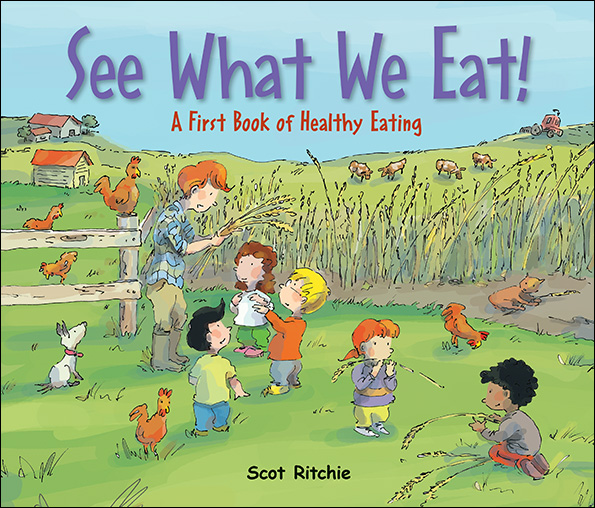
See What We Eat! A First Book of Healthy Eating, by Scot Ritchie, (Sept. 2017, Kids Can Press), $16.99, ISBN: 9781771386180

Recommended for readers 5-8

A group of friends takes a trip to a farm, run by one girl’s aunt. They’re there for pick apples and make an apple crisp for the potluck harvest dinner. Yulee’s aunt takes them on a tour of the farm, teaching the kids about growing grains and vegetables, getting enough nutrients, dairy, and protein – and addresses food allergies and alternative methods of getting those nutrients. Kids learn about transporting food to farmer’s market, stores, and all over the world. Ritchie addresses composting and recycling, and includes a tasty Harvest Apple Crisp recipe to try. A glossary helps readers with new words like pasteurize, carbohydrate, and nutrient.

The illustrations are soft, cartoony realistic, with a multicultural group of friends coming together to learn and eat. The room where the Harvest Celebration takes place has a line of hanging global flags as the families dine on pierogies, tamales, and apple crisp. With bolded facts and questions to encourage deeper thinking, this is a fun introduction for younger learners to nutrition and sustainability.


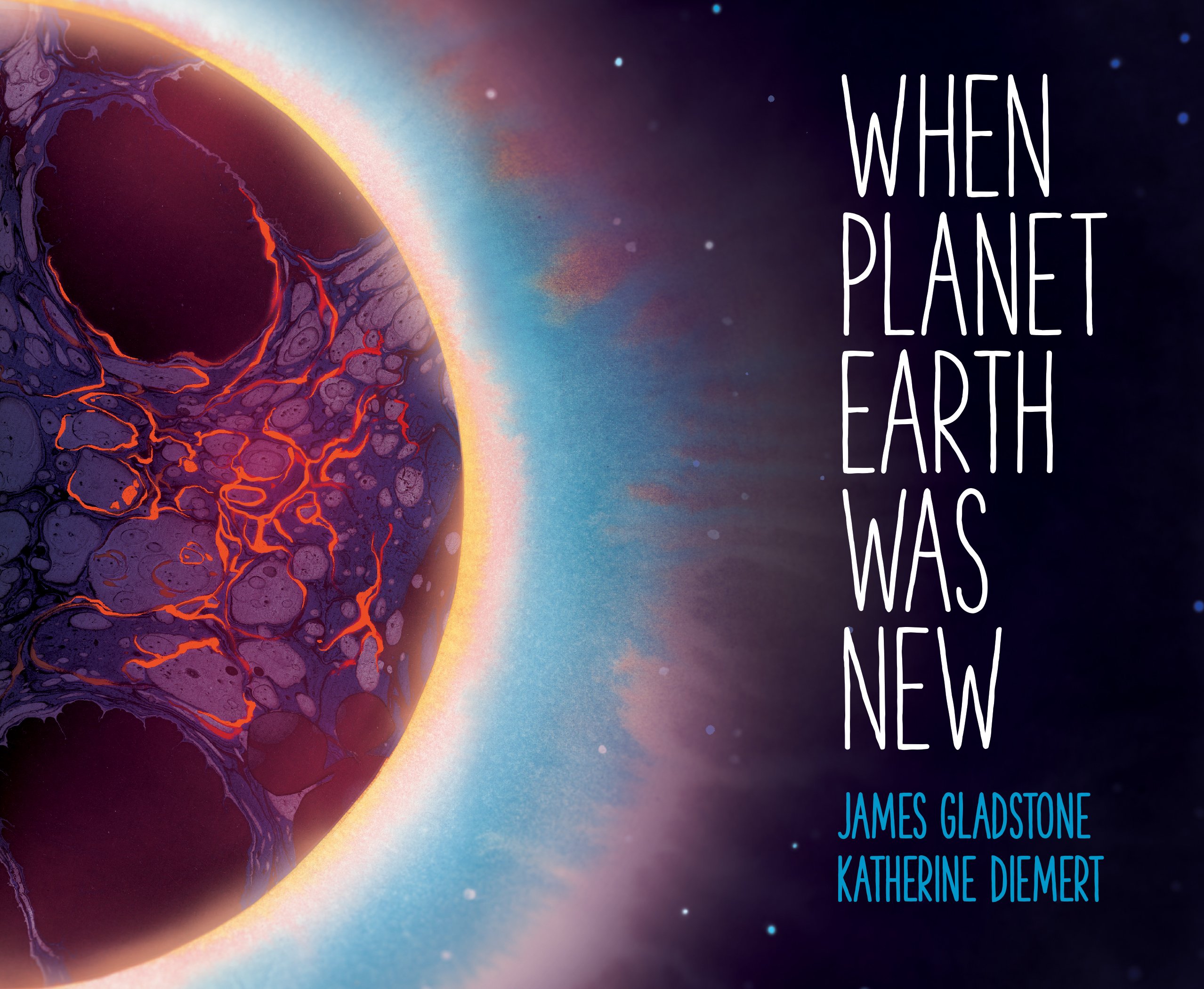
When Planet Earth Was New, by James Gladstone/Illustrated by Katherine Diemert, (Sept. 2017, OwlKids Books), $18.95, ISBN: 9781771472036
Recommended for readers 4-7
Take a trip through time and space and discover how our planet – and life on our planet – evolved. Beginning billions of years ago when Earth was forming, When Planet Earth Was New follows our planet’s formation through volcanoes and comet bombardment; through the formation of the oceans and evolution of life in the oceans and on the land. Beautiful, digitally-enhanced watercolor spreads showcase colorful artwork of each moment captured, with brief descriptive text that preschool and early elementary audiences will find breathtaking. A gorgeous spread showcases life on Earth today: a blue whale, birds flying overhead, and a marching line of animals, including a human being. A section at the end of the book presents each spread in thumbnail format, with additional explanatory text, and a glossary and list of sources round out this introduction to astronomy for young readers.
My 5 year-old loves this book; the spare text is just right for him and he’s fascinated with the changes our planet went through on its journey to the present. It’s a beautiful-looking book, and a great addition to elementary nonfiction collections. I can’t wait to display a copy in my library.