Posted in Preschool Reads, Toddler Reads

Duck & Hippo get lost and found!

Duck and Hippo: Lost and Found, by Jonathan London/Illustrated by Andrew Joyner, (Aug. 2017, Two Lions/Amazon), $17.99, ISBN: 978-1542045629

Recommended for readers 3-7

Duck and Hippo: Lost and Found, the second book in Froggy author Jonathan London’s new buddy series is every bit as sweet as the first one, Duck and Hippo in the Rainstorm. In this latest tale, the friends go on a picnic with their friends Turtle, Elephant, and Pig. Everyone’s brought something to share… except for Hippo, who forgot! Determined to make things right, he sets off into the forest in search of wild berries. As night falls, Duck and friends worry that Hippo’s gotten lost, but what should they do?

There are great themes at work here: friendship, the main plot point that drives the Duck and Hippo adventures; sharing and caring for one another emerge as the story progresses. Kids will appreciate Duck’s decision to search for her friend, and the decision to stay in a group and loudly call for Hippo will provide relief to parents, who likely give the same advice to kids in the event of a separation (I know I do). Repeated phrases provide kids with the chance to jump in and be part of the Hippo search party. I love Andrew Joyner’s cheerful art, and the colorful, emphasized fonts that add to a reading. Andrew Joyner offers free, downloadable activity pages on his website, too – the kids at my library love the coloring sheets, which have been a staple of my summer coloring club.

Jonathan London has written more than one hundred children’s books, including the bestselling Froggy series, illustrated by Frank Remkiewicz. He is the author of the popular Duck and Hippo series, illustrated by Andrew Joyner. Many of his books explore nature, among them Flamingo Sunset, illustrated by Kristina Rodanas, and Little Penguin: The Emperor of Antarctica, illustrated by Julie Olson. He is also author of the Aaron’s Wilderness middle-grade series, illustrated by his son Sean London. Jonathan lives in Graton, California. Learn more online at www.jonathan-london.net.

Andrew Joyner is an illustrator, author, and cartoonist based in South Australia. He has illustrated a number of picture books, and he wrote and illustrated a chapter book series about a warthog named Boris. He is the illustrator of the popular Duck and Hippo series, written by Jonathan London. He has also illustrated for newspapers and magazines, including the Wall Street Journal, Reader’s Digest, and Rolling Stone magazine, among others. Learn more online at www.andrewjoyner.com.au.

Giveaway!

Two Lions is offering a set of the Duck and Hippo books–DUCK AND HIPPO IN THE RAINSTORM and DUCK AND HIPPO LOST AND FOUND–to one lucky winner (U.S. addresses only, please). Just enter this https://widget-prime.rafflecopter.com/launch.jsecopter.com/rafl/display/bbc165de19/" rel="nofollow" data-raflid="bbc165de19" data-theme="classic" data-template="" id="rcwidget_scf2jfhw">a Rafflecopter giveaway</a> https://widget-prime.rafflecopter.com/launch.js“>Rafflecopter giveaway!
Posted in Intermediate, Middle Grade, Non-fiction, Non-Fiction

Andrew Carnegie, The Man Who Loved Libraries

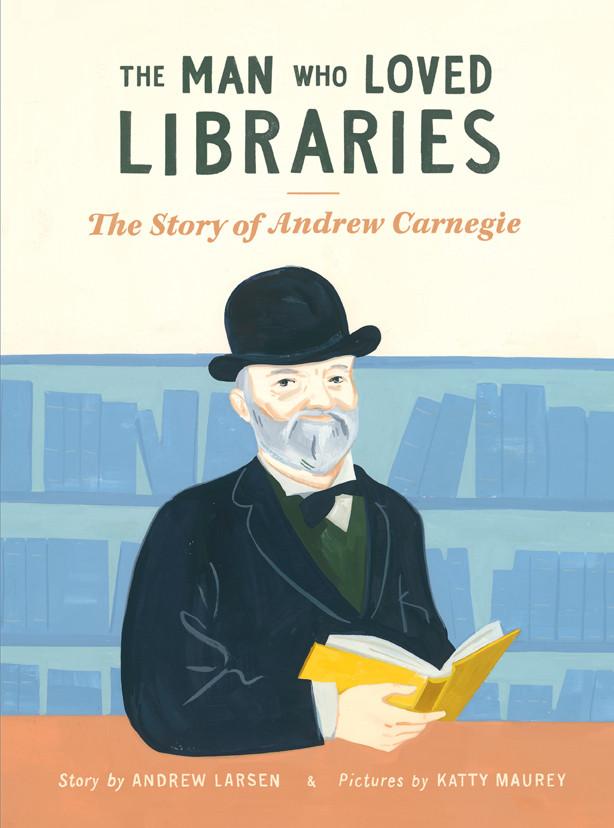
The Man Who Loved Libraries: The Story of Andrew Carnegie, by Andrew Larsen/Illustrated by Katty Maurey, (Aug. 2017, OwlKids Books), $16.95, ISBN: 9781771472678

Recommended for readers 8-10

Andrew Carnegie started out in life in Scotland, the son of a weaver. He and his family came to the United States, where he went to work; first, in a cotton mill, then as a messenger boy. He knew the key to success was in learning, and took advantage of the opportunities afforded by a local businessman, who made his private library collection available. As he became wealthier, he considered it his duty to help others help themselves: he built libraries. He built a library in the Scottish village where he was born, and went on to build over 2500 public libraries worldwide.

Andrew Larsen gives readers a concise biography of a premier industrialist and philanthropist, with a strong emphasis on the power of education and philanthropy. Award-winning illustrator Katty Maurey creates beautiful artwork to accompany Larsen’s text, framing her subjects with buildings and storefronts, and creating depth with her full-page art to show us a young Carnegie, standing on a library ladder as he explores Colonel Anderson’s private collection, and an older Carnegie in front of a map of the Americas (and Greenland), basket of yellow flags on one arm, surrounded by books and his dog as he maps out his library plans.

Andrew Larsen is an award-winning children’s author. Find more about his books and link to his blog by visiting his author website.

Posted in Fiction, Graphic Novels, Intermediate

Crafty Cat heads to Crafty Camp!

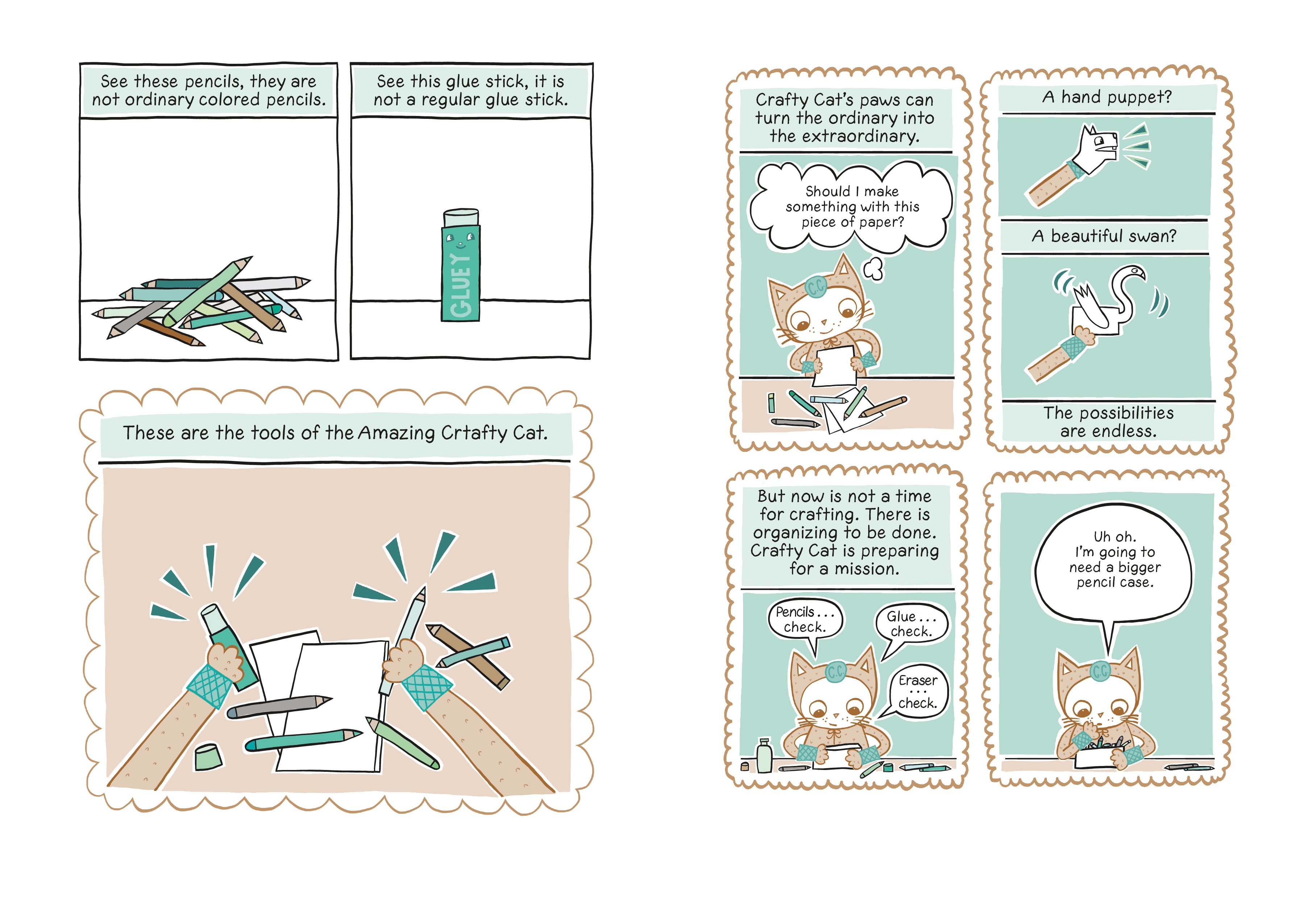
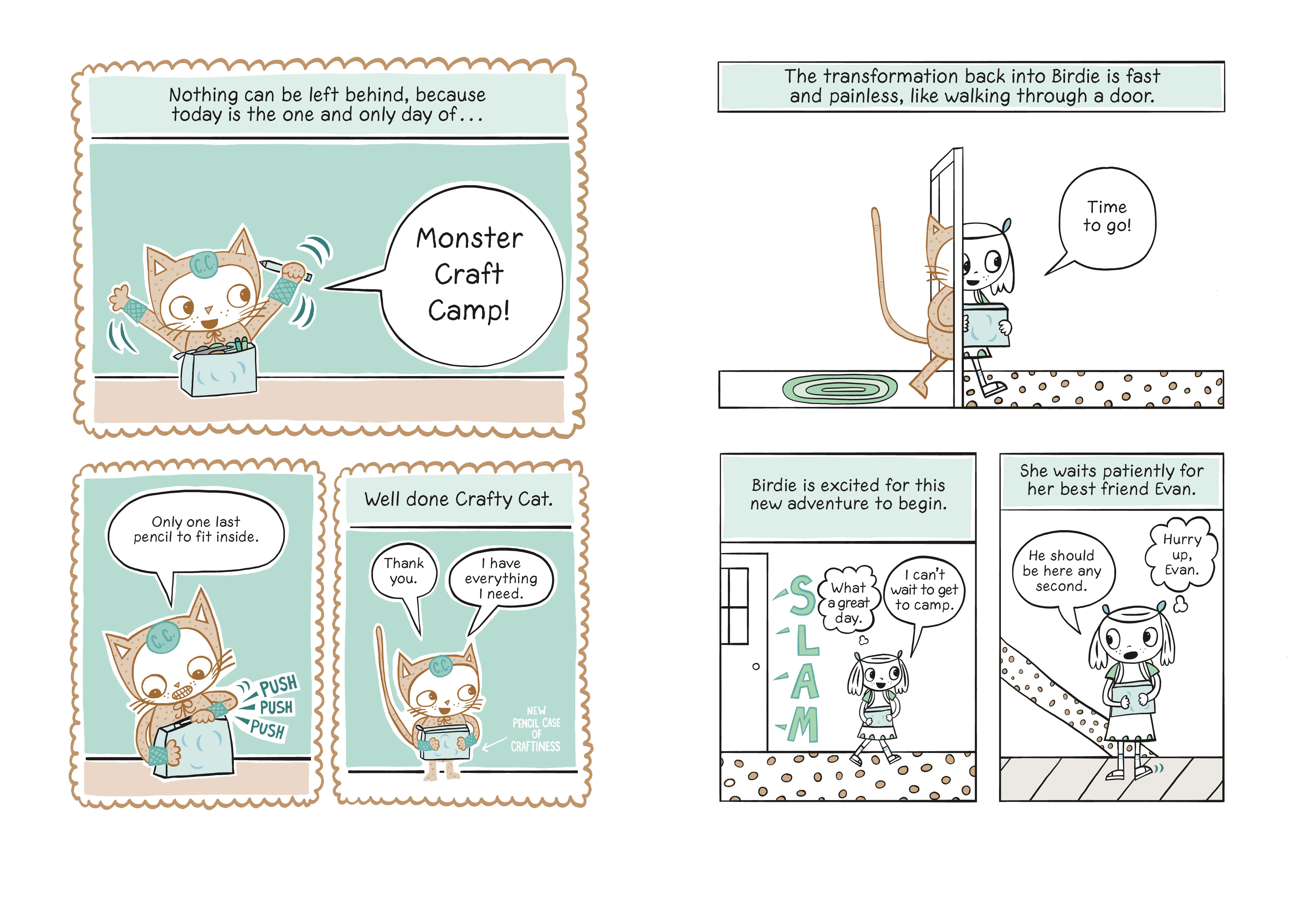
Crafty Cat and the Crafty Camp Crisis, by Charise Mericle Harper, (Aug. 2017, 01FirstSecond), $13.99, ISBN: 9781626724853

Recommended for readers 6-9

Birdie is headed to Monster Craft Camp! It’s a day of crafting at school, headed up by the custodian, but it’s a day of crafting, and Birdie – who’s alter ago is Crafty Cat – is prepared! Now, if only her best friend, Evan would show up on time… and oh, Anya, the meanest girl in school, is here today, too. Looks like this may be a job for Crafty Cat!

This latest installment of Crafty Cat tackles handling a difficult member of a group project how to make the best out of a situation when things don’t go as planned. Monster Craft Camp isn’t exactly what Birdie thought it would be, and Anya is being her rude, mean self, but just when Birdie finds herself getting frustrated and sad, Crafty Cat takes over and saves the day! It’s a fun way to communicate resiliency, optimism, and working with difficult partners.

As with the previous Crafty Cat adventure, there are crafts and at the end of the book.  A handy supply list tells readers what they need, and step-by-step directions walk little crafters through their own monster crafts. There are templates available for photocopying.

This is such a fun little series for younger readers! A definite add to the graphic novel shelf.

Posted in Preschool Reads

Kisses for Kindergarten starts them off right

Kisses for Kindergarten, by Livingstone Crouse/Illustrated by  Macky Pamintuan, (June 2017, Silver Dolphin Books), $17.99, ISBN: 978-1-62686-703-1

Recommended for readers 4-6

Stella Isabella Harden declares that she doesn’t have to go to kindergarten: her puppy told her so! A girl and her pup spend the days together, reimagining kindergarten by chasing squirrels, having fun on the swings, having tea parties, making pillow forts, and having pillow fights. Things change at storytime, though, when Stella realizes that she can’t read a storybook to her dog. Looks like it’s time for kindergarten after all!

With protagonists inspired by the artist’s daughter and golden retriever, Kisses for Kindergarten is a fun way to ease kids into a new school year. Kids will love Stella Isabella Harden’s assertion that she can learn far more from her puppy than she can from school, and the dynamic duo’s exciting day at the park. Caregivers can explain that she can learn so much from her dog, sure, but when it comes to reading, even her wise pup understands that she’s got to go to school. It’s a gentle easing of fears, and having her dog begin and end the day with her gives her something to look forward to. Ask kids what they want to come home to: a favorite toy? Storytime with family? Stella’s day ends with a family storytime and kisses: it’s a pretty good rule of thumb. Endpapers illustrate Stella and pup’s day together.

Posted in Realistic Fiction, Teen, Young Adult/New Adult

Goodnight, Boy is beautiful and raw

Goodnight, Boy, by Nikki Sheehan, (July 2017, One World), $12.99, ISBN: 978-1-78607-210-8

Recommended for readers 12+

The novel of a boy and his dog is brutal and beautiful, all at once. JC is a Haitian child who’s already experienced a brutal life on the streets and orphanages of Haiti when the earthquake strikes. He’s adopted by a rescue worker and her husband and brought to America, but when his new mother is back in Haiti, his stepfather locks JC and his dog, Boy, in a kennel. The story, told in the form of conversations JC has with Boy, unfolds and we learn about JC’s life, and the terrible moment where he and Boy were banished to the kennel.

Goodnight, Boy goes to dark places, but JC’s voice is strong, clear, and stands as a beacon for Boy and for readers. He always holds out hope that things will get better, taking comfort in the smallest moments of light, like hearing children play or seeing balloons from the kennel. As he tells Boy – and us – his story, we learn about grief and loss, but we learn about perseverance and hope, all the same. An intense read, Goodnight Boy is a strong addition to YA bookshelves and can easily cross over to adult reading. It’s a great book for discussion.

Posted in Horror, Middle Grade, Tween Reads

Dark middle grade fantasy: Room of Shadows

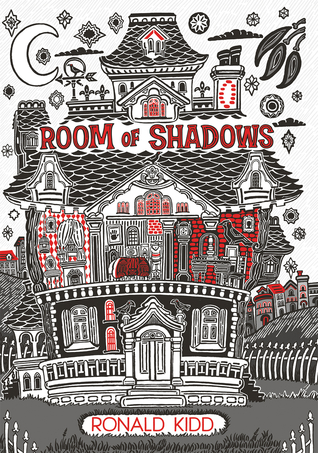
Room of Shadows, by Ronald Kidd, (Aug. 2017, Albert Whitman), $16.99, ISBN: 9780807568057

Recommended for readers 10-13

David finds himself with a lot of anger lately. I mean, it’s justified: his dad abandoned his mom, and they’ve been forced to move into this creepy old house. When a school bully messes with him on a bad day, David beats him up, earning some in-house grounding from his mom. That’s where he discovers the room: a secret room with an old desk and a carving of a Raven, signed, “EP”. The weird dreams start shortly after. When the incidents start at school, all involving people who David’s tangled with, everyone starts looking at him differently, including his mom and the police. How can David prove he isn’t The Raven – the person responsible for the incidents, who leaves a signed note each time? And how can he keep himself safe from The Raven, who’s fixated on him?

With a background in Edgar Allan Poe’s history, I dove eagerly into Room of Shadows. The author takes Poe into very dark territory here, for reasons that become clear as the story progresses. It’s an interesting concept, but one I had a hard time with. I didn’t really get to know David or his best friend, Libby; I felt like their character development took more of a backseat, allowing the Poe storyline to drive the plot. I did like the nod to some of Poe’s greatest hits in the story, including The Tell-Tale Heart, The Black Cat, and The Pit and the Pendulum; it’s always great to discover Poe in new fiction. This one wasn’t my book, but middle grade horror fans who are ready for something weightier than Goosebumps and Haunted Mansion may sit down with this one.

Posted in Fantasy, Fiction, Middle Grade, Science Fiction, Tween Reads

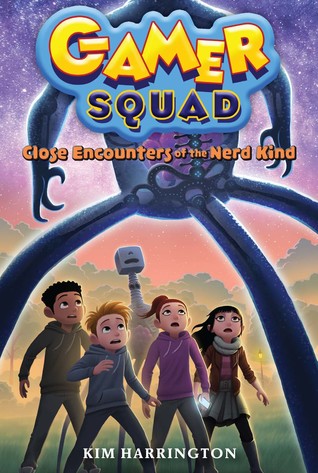
Gamer Squad takes on video game monsters in the real world!

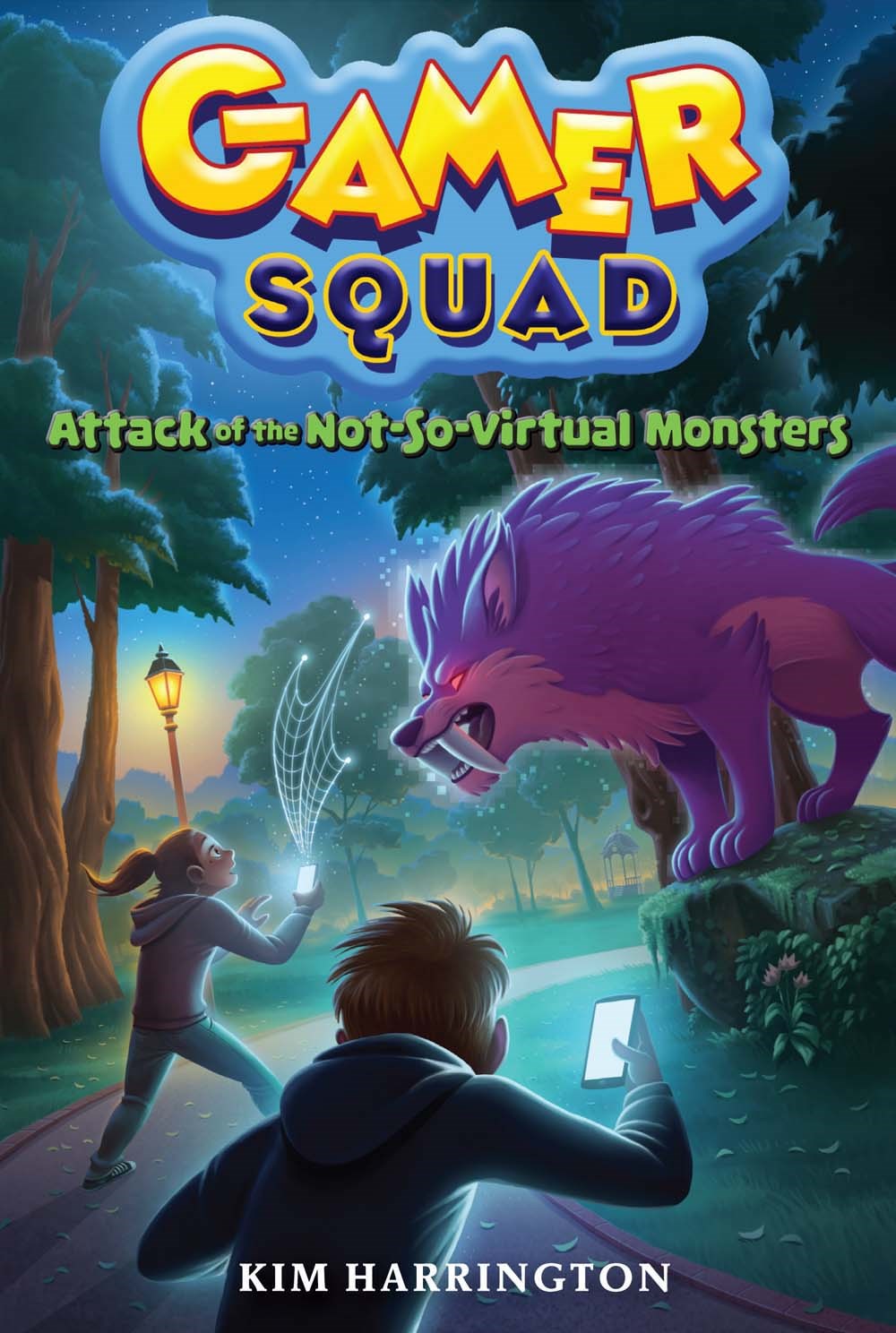
Gamer Squad: Attack of the Not-So Virtual Monsters, by Kim Harrington, (Aug. 2017, Sterling), $6.95, ISBN: 9781454926122

Recommended for readers 8-12

Bex is a gamer, and her game of choice is Monsters Unleashed: an augmented reality game where you hunt and capture monsters using your smartphone and the game app. (Pokemon Go players, you got this.) She and her best friend, Charlie, love playing the game until a mishap with a strange machine at Charlie’s grandfather’s place causes a WiFi gitch and empties Bex’s monster catalog… into the real world! Now, it’s up to Bex, Charlie, and a frenemy Willa to track them all down and get them back before the monsters overrun their town.

Gamer Squad is one of those series you just know the kids are going to swarm when you get them on the shelves. It brings handheld gaming to middle grade fiction with fun and adventure, and author Kim Harrington manages to give us a strong female protagonist, a story about friendship, and addresses bullying all at once. It’s a fast-moving story with likable characters, excitement, and leaves you ready for the sequel, which in this case, released on the same day.

Gamer Squad: Close Encounters of the Nerd Kind, by Kim Harrington,
(Aug. 2017, Sterling), $6.95, ISBN: 9781454926139

A no-brainer for your gamer kids and a nice fiction-y wink to add to your STEM program displays. I’ve just ordered both for my library; the third book hits shelves this Fall.

Posted in Preschool Reads

Pepper’s perfect pattern

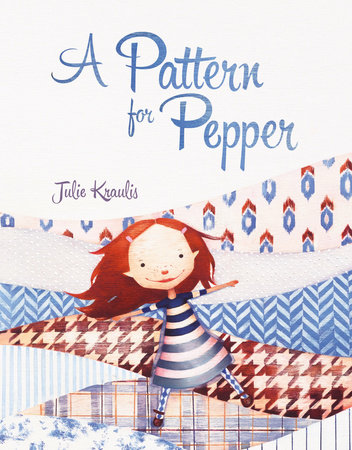
A Pattern for Pepper, by Julie Kraulis, (Aug. 2017, Tundra Books), $16.99, ISBN: 978-1101917565

Recommended for ages 4-8

A young girl needs a dress for a very special occasion; her mom takes her to a dressmaker to have one specially made, and together, Pepper and the dressmaker search through patterns until they find the perfect one for Pepper’s dress.

This fun story about the search for a perfect fabric pattern also provides some background on patterns both popular and exotic; from Houndstooth to Ikat, Seersucker to Argyle, Pepper relates each pattern’s history to her own life: Seersucker, for instances, comes from the Persian words for milk and sugar, to describe the bumpy textures; Pepper prefers her tea strong, without milk or sugar, so she passes. When she finally finds her perfect pattern, the dressmaker allows her to help out, and we get a glimpse at the pattern-making process; pieces pinned onto fabric to be cut out and sewn together. Pepper’s dress is done, and we learn the special occasion: tea with her grandmother, who is wearing a dress made from her own perfect pattern.

The oil and graphite art, rendered on board, gives a textured feel to the story. Subdued colors make this a relaxing read, and visuals related to each pattern’s history – a bagpiper for Tartan, a hound and his Houndstooth-wearing master, a photograph of Pepper’s grandmother in her Dotted Swiss wedding dress – are superimposed over each fabric, provide further meaning and connection to each pattern’s history.

This is a sweet, beautifully rendered book about fashion and history, and a loving multigenerational tale, woven through the main story.  Extend a storytime by adding a textile component; bring in different fabrics to have kids look at, touch, and identify, like cotton t-shirts, fake fur, wool, and denim; if you have any patterned fabric, bring them in to let the kids get an up-close look at them, too, and ask them what patterns are familiar to them.


Posted in Fiction, Intermediate, Middle Grade, Middle School, Non-Fiction, Non-fiction, Realistic Fiction, Tween Reads

Summer of STEAM: Girls Who Code Two-Fer!

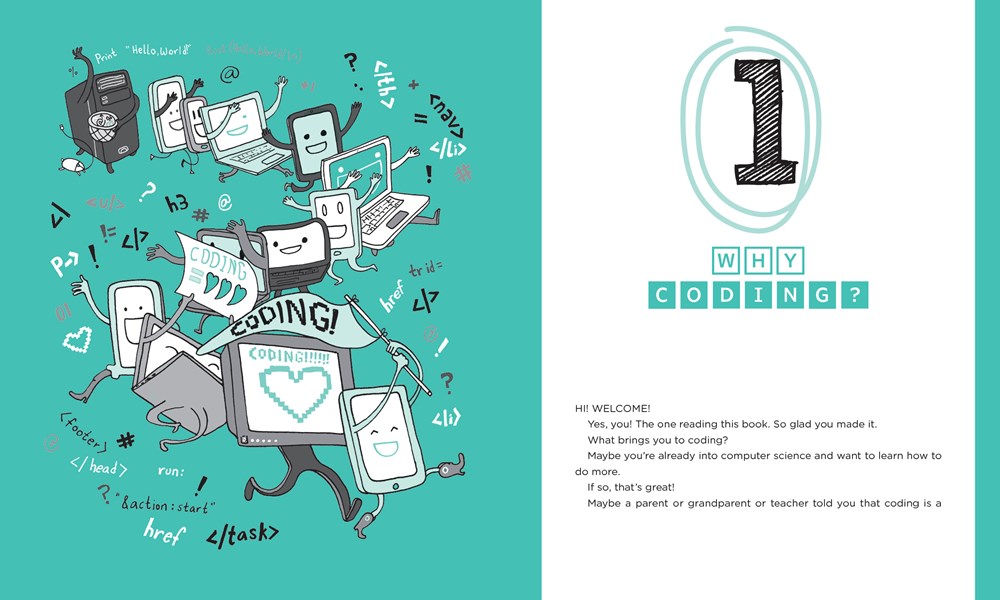
I love coding and playing around with computer science-y type stuff. In my mind, I look like this:

When I create this.  (This is actually mine! I created it using Scratch.)

I do my best to get science in front of my own kids, and my library kids, at every opportunity. The kids here at my library are Minecrafters, so I feel like I’ve got an in and am working on building a nice, tech-friendly nonfiction section; the next additions on my list are from the organization, Girls Who Code.  If you aren’t familiar with Girls Who Code, they are a New York-based organization on a mission to close the gender gap in the tech industry and the classroom. They teach girls to embrace tech and to code, to create, and most importantly, not to fear science and math. Andrea Gonzalez and Sophie Hauser, two GWC grads, wrote Girl Code: Gaming, Going Viral, and Getting It Done, where they talk about their GWC experience.

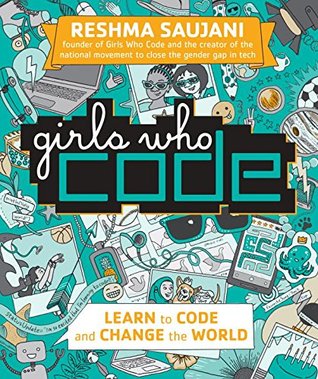
Now, Reshma Saujani, Girls Who Code founder, is releasing her own book, Girls Who Code: Learn to Code and Change the World (Aug. 2017, Viking, $17.99, ISBN: 978-0425287538). It’s a coding beginner’s guide, a spotlight on women in the computer science industry, an empowering career guide, and introduction to STEM for girls, all rolled up into one volume. It’s fun and easy to read, with Reshma speaking to readers in a comfortable, friendly voice; she gets some help from a group of illustrated, diverse girls: Lucy, Erin, Sophia, Leila, and Maya. The illustrated group of friends (more on them later) explain concepts and act as a step-by-step example of different stages of coding and creating.

What sets Girls Who Code: Learn to Code and Change the World apart from all the other coding books out there? Glad you asked. The tone, for starters, is fun, light, and personal. Reshma and her group of illustrated friends are talking straight to readers. The two-color illustrations are fun, like those you’d find in a middle grade novel, and feature characters from different ethnicities; Leila rocks a hijab, Maya is an Asian fashionista with a sleek bob; Lucy is African-American, Sophia is Latina, and Erin is a blonde. The group of friends come together to create apps and problem solve their coding; we’re invited along for the ride. Not sure you want to go into computer science? That’s no problem, either: GWC points out how many careers and hobbies incorporate coding these days, from baking, to politics, to social justice, sports, and art.  You’ll learn new terms, like pseudocode – that’s when you write out the steps of your program in plain language, to brainstorm and go over your program before starting to code. There are further Web resources and a glossary to complete this trusty guide to STEM life. Trust me, you’ll never look at the mere making of a peanut butter and jelly sandwich again after you read this.

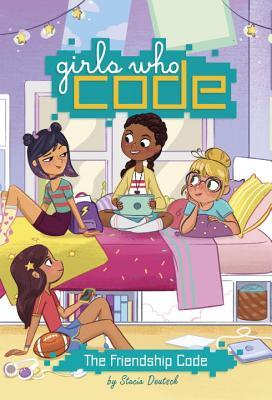
Also arriving the same day as Girls Who Code: Learn to Code and Change the World is the first in a new GWC series of fiction chapter books, starring the Girls Who Code we met in the previous book: Lucy, Erin, Sophia, and Maya (Leila’s arriving in the next book) come together thanks to a coding club in the new adventure, The Friendship Code, by Stacia Deutsch.

Girls Who Code: The Friendship Code, by Stacia Deutsch, (Aug. 2017, $12.99, ISBN: 9780399542510)


We get some background on each character: there’s been some past drama between Lucy and Sophia; Erin is an army brat who’s new in town; Maya is the fashionista who has a fashion column in the school newspaper; Sophia’s an athlete, and Lucy is fixated on learning to code so she can create an app to help her sick uncle remember to take his medicine. Thanks to the Coding Club, the girls learn that coding is more than just banging out numbers on computers (sometimes, to Lucy’s chagrin). With a fun mystery thrown in, the GWC series is like a Babysitter’s Club for a new group of tech-savvy kids. The series is great for intermediate-level readers; black and white illustrations and a quick pace make this novel a fun read that introduces younger middle graders to beginning coding terms and STEM. The mystery is even written in pseudocode – maybe a fun thing to introduce to your kids! Slip a pseudocode note into a lunchbox here, introduce a pseudocode scavenger hunt there… the possibilities stretch far and wide. Where Girls Who Code: Learn to Code, Change the World is best for your middle schoolers and upper middle graders, Girls Who Code: The Friendship Code is a great way to get younger middle graders familiar with the characters, the language of coding, and the fun of STEM.

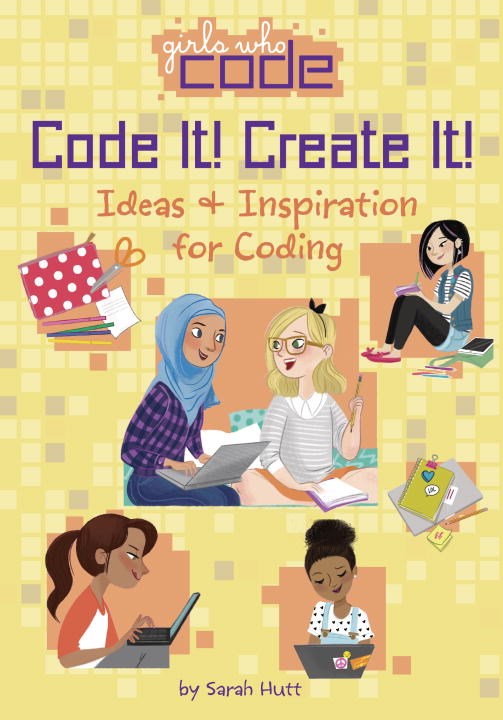
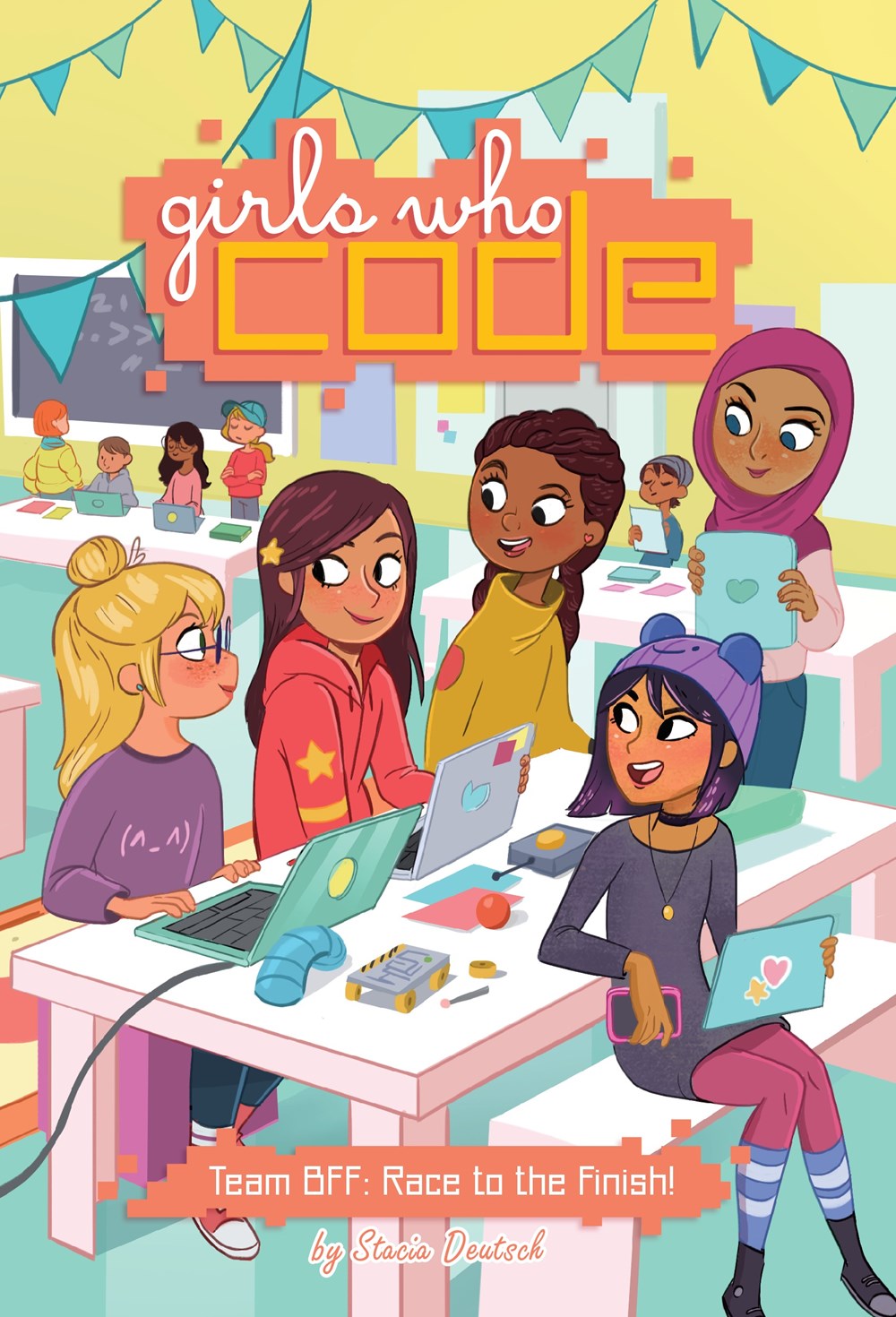
In October, we’re getting another nonfiction/fiction GWC combo, when Code It! Create It! and Team BFF: Race to the Rescue! hit shelves. I’ll be waiting!