Posted in Fiction, Fiction, Historical Fiction, Middle Grade, Realistic Fiction, Tween Reads

The Last Cherry Blossom remembers Hiroshima

cherry-blossomThe Last Cherry Blossom, by Kathleen Burkinshaw, (Aug. 2016, Sky Pony Press), $16.99, ISBN: 9781634506939

Recommended for ages 10-14

Narrated in the first person by 12 year-old Yuriko, The Last Cherry Blossom tells the story of a family living in Hiroshima during the last year of World War II. Yuriko lives with her widowed father, her aunt Kimiko, and obnoxious 5 year-old cousin, Genji. She and her best friend Machiko stealthily listen to American Jazz records; Machiko’s father got rid of (almost) all of their records because the government wants to be rid of any American influence. She’s used to the air raid drills, even if they annoy her, but when her neighbor is called to fight for Japan, and then Machiko is called to leave school to work at the factory, Yuriko starts feeling the impact of war. She hears whispers from the neighborhood – and her father does run a newspaper – that Japan is not faring as well as the radio and newspapers would have you believe. When the true horror of war is brought to Yuriko’s door, we see, through her eyes, the devastation that the bombing of Hiroshima brought.

The Last Cherry Blossom is powerful. Even as an account of a family’s life during World War II, it’s a strong book, because it shows readers – in parallels we can make today – that the “enemy” isn’t an entire country; an entire group of people. The enemy were children teasing one another, rolling their eyes at annoying aunts and cousins, worried about their parents remarrying, and secretly listening to music that their parents may not approve of. The enemy loved eating sweet treats and held celebrations and cried when they lost people they loved in war, just like we did. Inspired by the author’s mother’s own life living as a child in Hiroshima, Ms. Burkinshaw writes so beautifully, yet packs a literary gut-punch that left me biting back tears.

There has been some strong World War II realistic/historical fiction for middle grade in the last couple of years, for which I am grateful. I’m very happy to see fiction that explores life outside the U.S. during World War II: we need perspective; reminders to look outside ourselves; to see the cost that war demands on everyone.

An author afterword tells readers about the author’s mother, and how her daughter’s class visits eventually led to the book being written. There’s also a bibliography, notes on the use of honorifics in the story, a glossary, and statistics about Hiroshima, complete with sources.

This is a good add to historical and realistic fiction collections. Booktalk with Sandy Brehl’s World War II books, taking place in Norway under the Nazi occupation; Sharon McKay’s End of the Line, taking place in Amsterdam, and most closely related to Burkinshaw’s work, Sadako and the Thousand Cranes (and please have tissues available).

Posted in Early Reader, Fantasy, Fiction, Fiction, Intermediate

Blog Tour: Kid Crazy and the Kilowatt King rocks out!

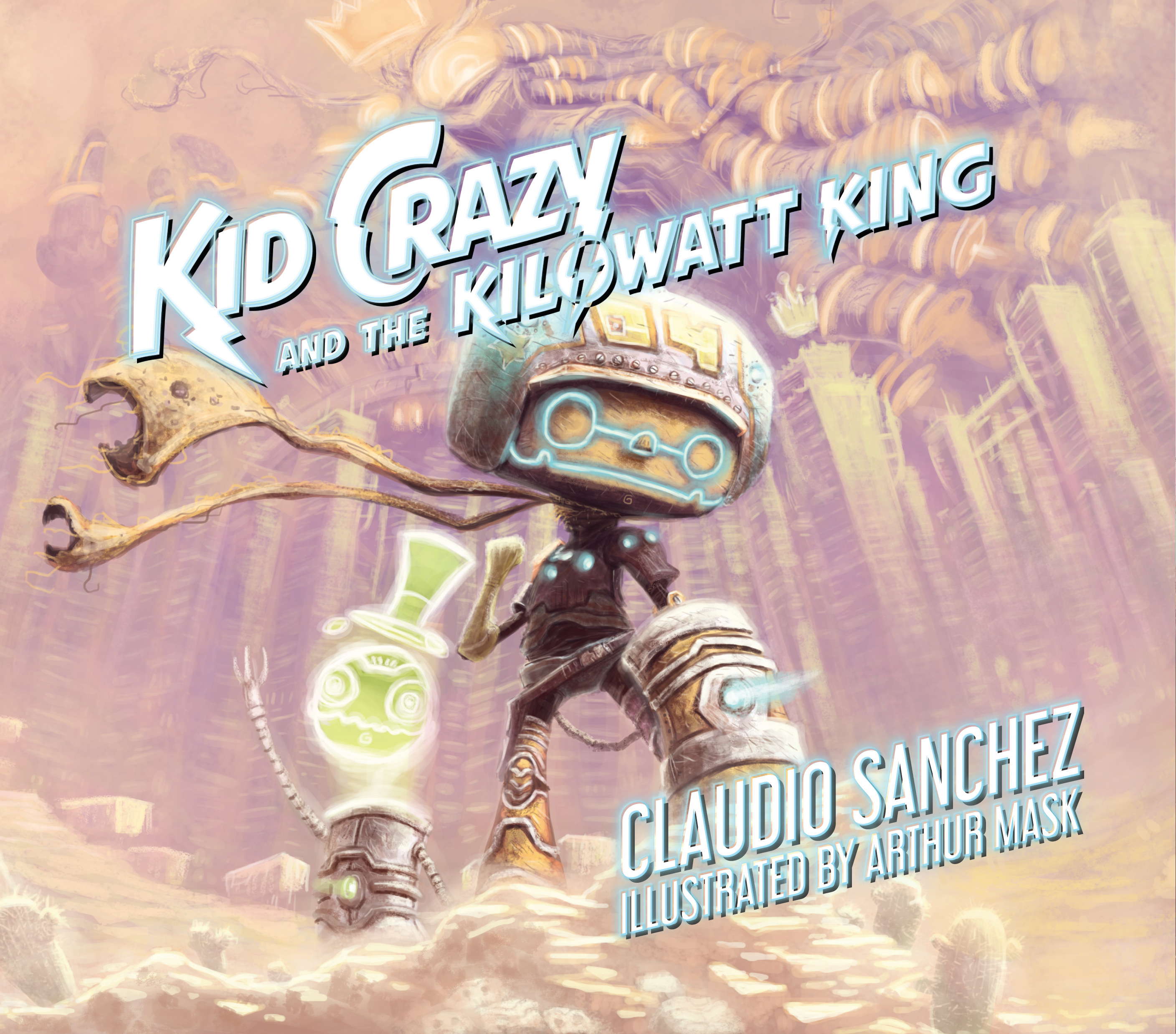
Kid Crazy is a kid living in a desert, dying to go on adventures in the dazzling City of Ever. When he encounters a droid named Denunzio, who overhears him wishing he could visit the City, the droid tells him that the king is rude and sour – a real creep, really. Kid Crazy doesn’t want to hear it – as soon as Denunzio admits that he can get Kid inside the castle, he’s off. They head off in a car made of bread and travel to the castle where, sure enough, the king is rude as all get out. He demands that Kid Crazy sing him a song, but Kid’s not having it. He decides it’s time the king learned some manners! He tells the king a riddle that brings home how rude he’s been, then teaches him the power of one simple word: Please.


KKC_jacketKid Crazy and the Kilowatt King, by Claudio Sanchez/Illustrated by Arthur Mask, (Oct. 2016, One Peace Books), $24.95, ISBN: 978-1-944937-03-4
Recommended for ages 5-8

A wild ride through a retro-futuristic, tech-y landscape and a rhyming story about a kid teaching a monarch manners – this book is too much fun! The 80-page length may give younger readers some pause – my 4 year old fizzled out about halfway through – but school-age kids  and independent readers will get into this fun fantasy tale with a great message. Arthur Mask’s illustrations give life to the text, and you can tell that our author, Claudio Sanchez, is a musician, because the text flows beautifully; they’re lyrics in a song about a better world beginning with one person: you. Mask lets his imagination run wild on the pages and it’s to the reader’s benefit, because there’s so much to see. The landscapes, the droids in the City (I love the teddy bear bot), the king with his floating crown and electric beard – it’s a book you experience.

I’d add this to my collections and booktalk it to my school-age kids and parents. I may try to read an abbreviated version at my all-ages storytime, which brings in a lot of preschoolers and kindergarteners, and I think I’ll write up a discussion guide to be able to talk this one up at school visits. When I get it written, I’ll post it here.

This is a blog tour, so I’d be remiss if I didn’t have links for you, to show where you can get a copy of Kid Crazy and the Kilowatt King. There are several exclusive book bundles Sanchez’s own Evil Ink Comics website, www.evilink.com; one wild collectible is a Kid Crazy Limited Coke-Bottle-Green 7″ Vinyl, featuring an original song and the Kid Crazy and the Kilowatt King audiobook read by Claudio Sanchez. You can also get copies on Indiebound, Merchnow, and Amazon.

About the Creators

csanchez_creditmanelcasanova_13Claudio Sanchez (author) is the front man for the conceptual rock band Coheed and Cambria, with over 3 million albums sold worldwide. He is also the creator of several comic books, including The New York Times best-selling series The Amory Wars, and the critically acclaimed titles Translucid, Key of Z and Kill Audio, co-written with his wife, Chondra Echert. He is on tour in 2016 for Coheed and Cambria’s latest album, “The Color Before the Sun: Deconstructed.” He lives in Brooklyn with his wife and their son, Atlas. You can find him on Facebook, Twitter, and Instagram. EvilInk is on Facebook, Twitter and Instagram. You can see his video, “A Friend to Enemies”, written for Kid Crazy and the Kilowatt King, on Facebook.


Arthur Mask (illustrator) illustrates books, magazines, games and comics. An eclectic mix of passions inspire him: from horror movies and music to retro video games. His mother says his first drawing was of a mosquito, but now he prefers to draw monsters. He lives in Sao Paolo, Brazil.

Chondra Echert Sanchez (editor) is a comic book writer and the creative co-director of Evil Ink Comics. She is also co-founder of The Social Co., a social media agency. She writes about life on the road with her husband, Claudio Sanchez, and their 2-year-old son, Atlas, at http://www.ourtransientlife.com.

You can find the publisher, One Peace Books, on Facebook.


Posted in Fiction, Graphic Novels, Humor, Middle Grade

Oh No! The Lunch Witch is Knee Deep in Niceness!

lunch-witchThe Lunch Witch #2: Knee-Deep in Niceness, by Deb Lucke, (Oct. 2016, Papercutz), $14.99, ISBN: 9781629915036

Recommended for ages 8-12

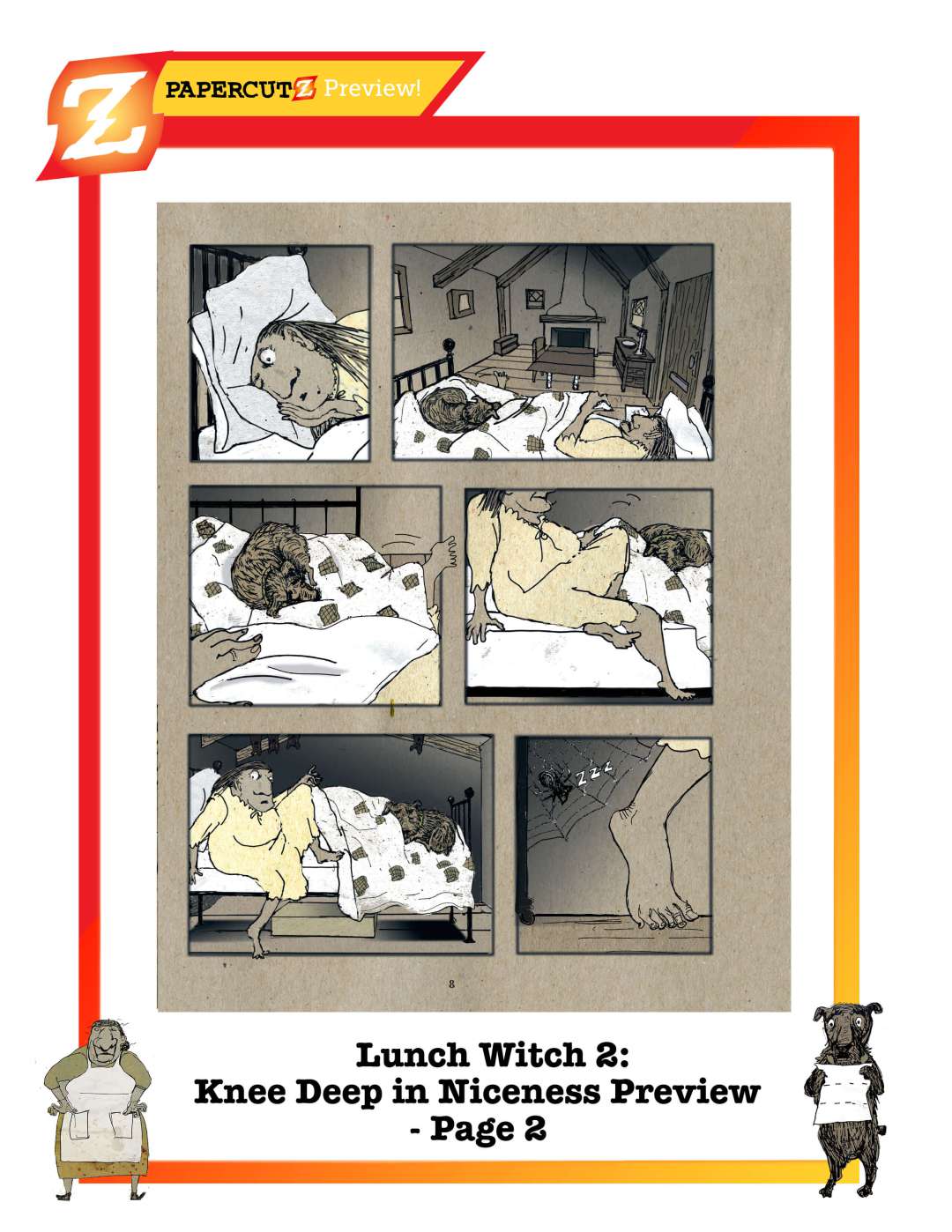
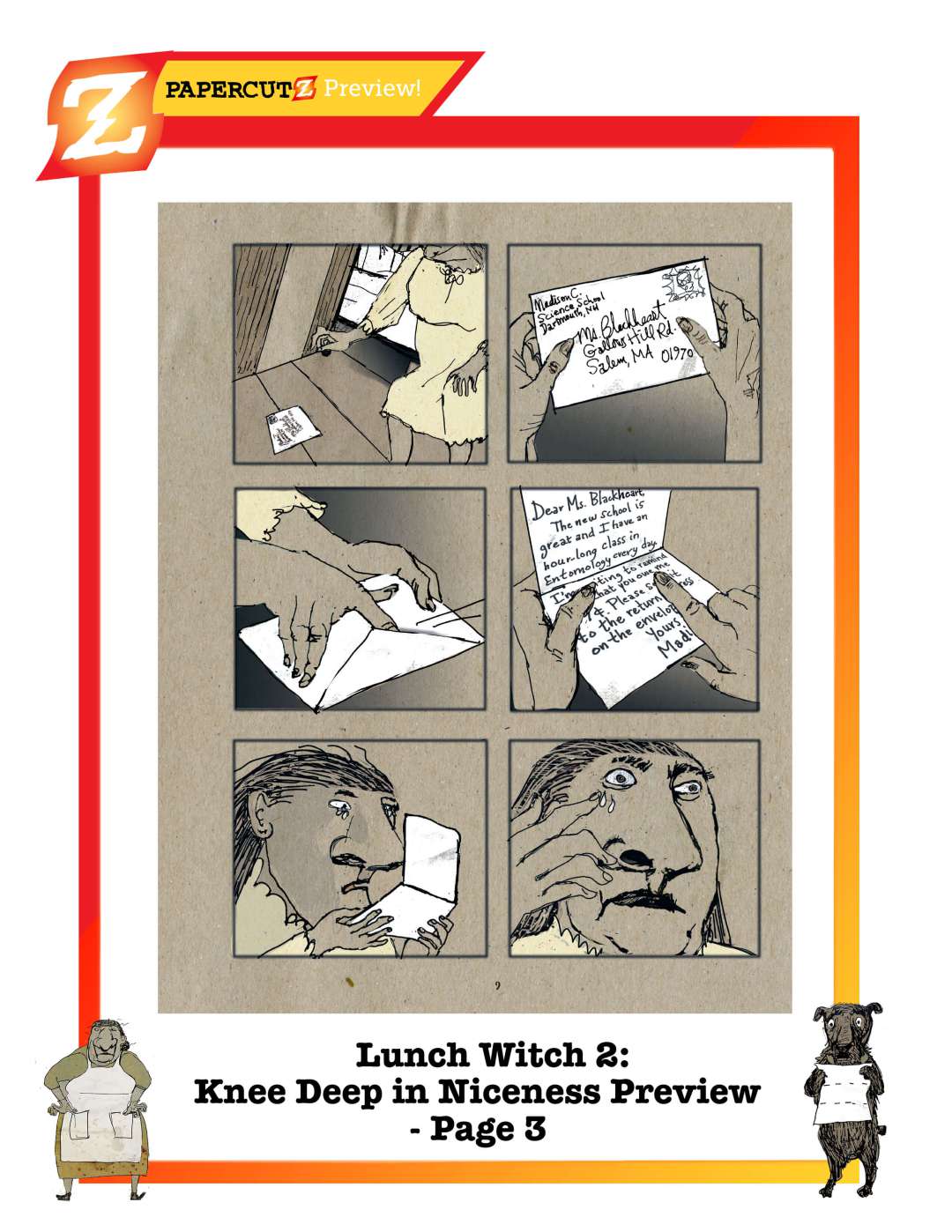
In this sequel to 2014’s Lunch Witch, Grunhilda is still pulling shenanigans at the school cafeteria – lately, she’s been putting chopped-up pink erasers into the ham and beans – but there’s a soft spot on that black and crusty heart of hers. She tries to hide it from her ancestors and her familiars: she gets a letter from Madison, the student she kinda sorta befriended in the first book, and keeps it hidden under her mattress. But Mr. Williams, her dog, knows something’s up, and finds the letter. Distressed, he talks the familiars into finding a cure: a meanness potion from the book that IS NOT TO BE USED BY ANYONE OTHER THAN WITCHES. What could go wrong, right? Right.

Mr. Williams mixes up a positivity potion, further illustrating why the spell book is NOT TO BE USED BY ANYONE OTHER THAN WITCHES. The positive vibes spread to the whole town; the ancestors are aghast, and Brunhilda has to fix things before her own black and crusty heart gives way to the shiny happy people business that’s running rampant.

The first Lunch Witch novel is still hugely popular – it’s still circulating here in my library, and kids are still asking for it by name. Wait until I put this one up. I love the rainbow beam, almost capturing Brunhilda in its happy rays on the cover. The interior art is still wonderfully bleak, in its blacks, browns, and washed out whites; the occasional splashes of color are fun and add effect (and humor, especially when Mr. Williams has to wee). Add this one to your graphic novel collections and give a copy to your Lunch Witch fans; they’ll lap it up.

the_lunch_witch_2_preview_page_01the_lunch_witch_2_preview_page_02the_lunch_witch_2_preview_page_03


Teaching Lunch Witch in your classroom? There’s an Educator’s Guide on the Papercutz website – I hope they add one for the new book, but you can always expand on the first one by creating new vocabulary lists and creating some discussion questions about the new story. Visit The Lunch Witch’s website for “recipes”, character profiles, and a Bad Advice section.

Posted in Fiction, Fiction, Graphic Novels, Intermediate, Middle Grade

Barbie goes graphic via Papercutz: Fashion Superstar #1

barbie_1Barbie: Fashion Superstar, by Sarah Kuhn/Illustrated by Alitha Martinez, (Oct. 2016, Papercutz), $7.99, ISBN: 9781629915876

Recommended for ages 6-10

Papercutz continues their graphic novel license domination with every little girl’s (okay, just about every little girl) best friend, Barbie. In this first graphic novel under Papercutz, we get a brief history of Barbie comics (first published by Dell in 1962, later, in the ’90s, by Marvel) and an original Barbie story where she tackles a big fashion show panic with her enthusiasm and quick thinking. Her best friend, Liz, helps Barbie make everything fall right into place, and mega-fashion designer Whitney Yang is grateful when the dynamic duo save the day.

Alitha Martinez’s art is on point. It’s bright, fun, and looks consistent with other Barbie illustrated books and media. The friends talk about what inspires their creativity, embrace science (Barbie even creates a special ink to help her combine her doodling and fashion design), and think on their feet to solve problems. A diverse cast of characters makes this an all-around fun read for Barbie fans to enjoy. There’s a preview for the second volume of the Papercutz import series, Sisters, at the end.

I’ll add this one to my shelves – Barbie has a strong fan following here at my library; I can think of two sisters in particular that will be thrilled to see this appear on my graphic novels shelf. I may buy one copy for now, just to get it on the shelves, but invest in the hardcover copy when it’s published in January.

Posted in Early Reader, Fiction, Fiction, Intermediate

Isabella is a Girl in Charge as she channels historic women

isabella_covIsabella: Girl in Charge, by Jennifer Fosberry/Illustrated by Mike Litwin, (Oct. 2016, Sourcebooks Jabberwocky), $16.99, ISBN: 9781492641735

Recommended for ages 4-8

Isabella, the little purple-haired girl with the big imagination, is back in her fourth adventure: this time, she’s going all the way to the nation’s capital! Isabella wakes her parents up bright and early; they’ve got a big day ahead of them and Isabella doesn’t want to miss a second. As she and her family get ready to head out, Isabella imagines she’s different females politicians, first in their fields, from the first mayor to the first Supreme Court Justice. Isabella and her family have an important day to be part of: history is being made!

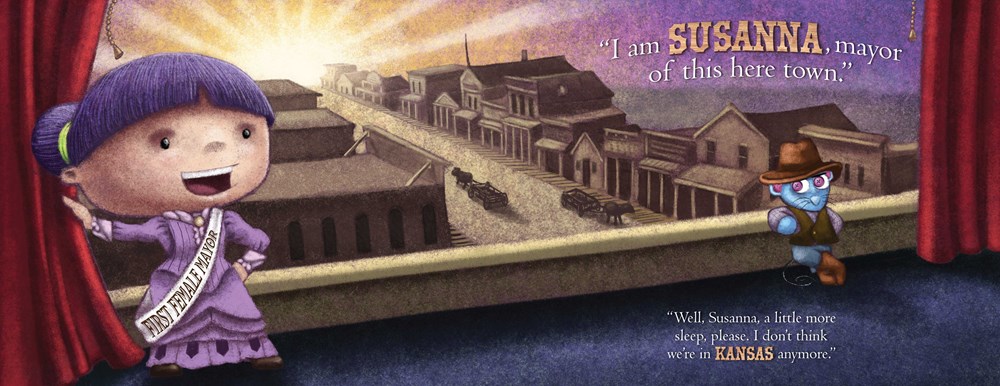
A good idea in theory, younger readers may need some prompting when first hearing the story; these names will largely be unfamiliar to them. Anyone reading the story out loud should mention beforehand that the women Isabella names are the first women in politics and what office they held. Kids will be better able to pick up subtle in-jokes in the text, too; for instance: When Isabella claims to be “Susanna, mayor of this here town,” her mother responds, “I don’t think we’re in Kansas anymore.” If the children understand that Susanna Salter was the first female mayor, and she was mayor in Kansas, it’ll be more fun for them. Isabella’s adorable stuffed friend is with her, dressed in period clothing, in each spread – see if your readers can spot him (or her, if they like)!

isabella_1

Mike Litwin’s art, done with blueline pencil and Adobe Photoshop, is fun and emphasis on key words like names and identifying characteristics adds some punch. Brief biographies, quotes, and a timeline of women in politics, along with a list of books and websites for further reference, round out Isabella’s latest adventure.

isabella_2

The book is a good start for introducing younger readers to women in politics, and how long we’ve been around! It’s more of a companion volume to a lesson rather than a standalone. I haven’t seen an educator’s guide or activity kit yet, but there are some great resources about women and politics online, including printouts at Time for Kids. Most of the available information is branded for Women’s History Month, but we’re at a historic crossroads in history – celebrate women in politics NOW!

Jennifer Fosberry and Sourcebooks both offer links to Educator Guides for other books in the Isabella series and the companion book, My Name is Not Alexander. Illustrator Mike Litwin has samples of his artwork and animation on his site.